If your car keeps overheating, or you keep topping up the coolant every few days, you’re not imagining things. Your radiator might be on its last legs. Radiators don’t usually fail overnight-they give you plenty of warning signs if you know what to look for. Most people wait until their car shuts down on the side of the road before they act. But catching radiator trouble early can save you a lot of cash, and even a tow bill.
Your Coolant Level Keeps Dropping
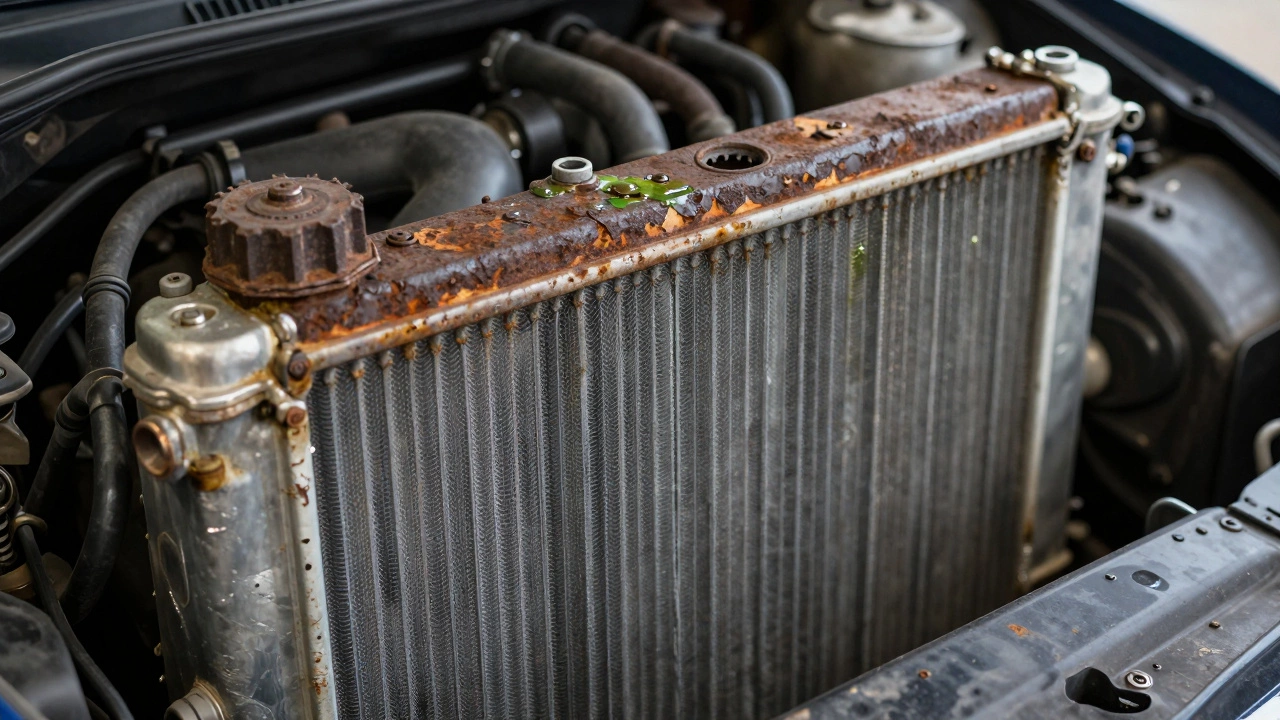
If you’re refilling your coolant reservoir every week or two, something’s wrong. A healthy cooling system shouldn’t lose fluid unless there’s a leak. Coolant doesn’t just disappear. It doesn’t burn off like oil. If you’re constantly adding it, you’ve got a leak somewhere-and the radiator is the most common culprit. Check under the car for puddles. Look for crusty white or greenish residue around the radiator cap, hoses, or seams. That’s dried coolant. It smells sweet, like candy. If you see it, don’t ignore it. A small leak now becomes a big repair later.
Visible Rust or Corrosion
Radiators are made of aluminum or brass, with plastic tanks on either end. Over time, coolant breaks down, and if it’s not changed regularly, it turns acidic. That eats away at the metal. Look at the radiator from underneath the car. If you see flaky rust, pitting, or holes in the metal fins, it’s corroded. Even if the leak is small now, corrosion spreads. A radiator with heavy corrosion won’t transfer heat properly. That means your engine runs hotter than it should, even if the coolant level looks fine. In the UK, with our damp winters and salty roads, corrosion happens faster than you think. A radiator that’s 8+ years old with visible rust is a ticking time bomb.
Overheating, Even With Full Coolant
This one’s tricky. You fill the coolant, drive for a few miles, and the temperature gauge climbs into the red. But when you check again, the reservoir is still full. That means the radiator isn’t doing its job. The coolant is there, but it’s not circulating properly or releasing heat. This usually happens when the internal passages are clogged with sludge or the fins are blocked with debris. Road dirt, bugs, and leaves can pack into the radiator’s front surface. A dirty radiator can’t cool. And if the internal tubes are gunked up, coolant flows too slowly. Both lead to overheating. If your car overheats on short drives or in traffic, and you’ve ruled out a thermostat or water pump issue, the radiator is next.
Discoloured or Sludgy Coolant
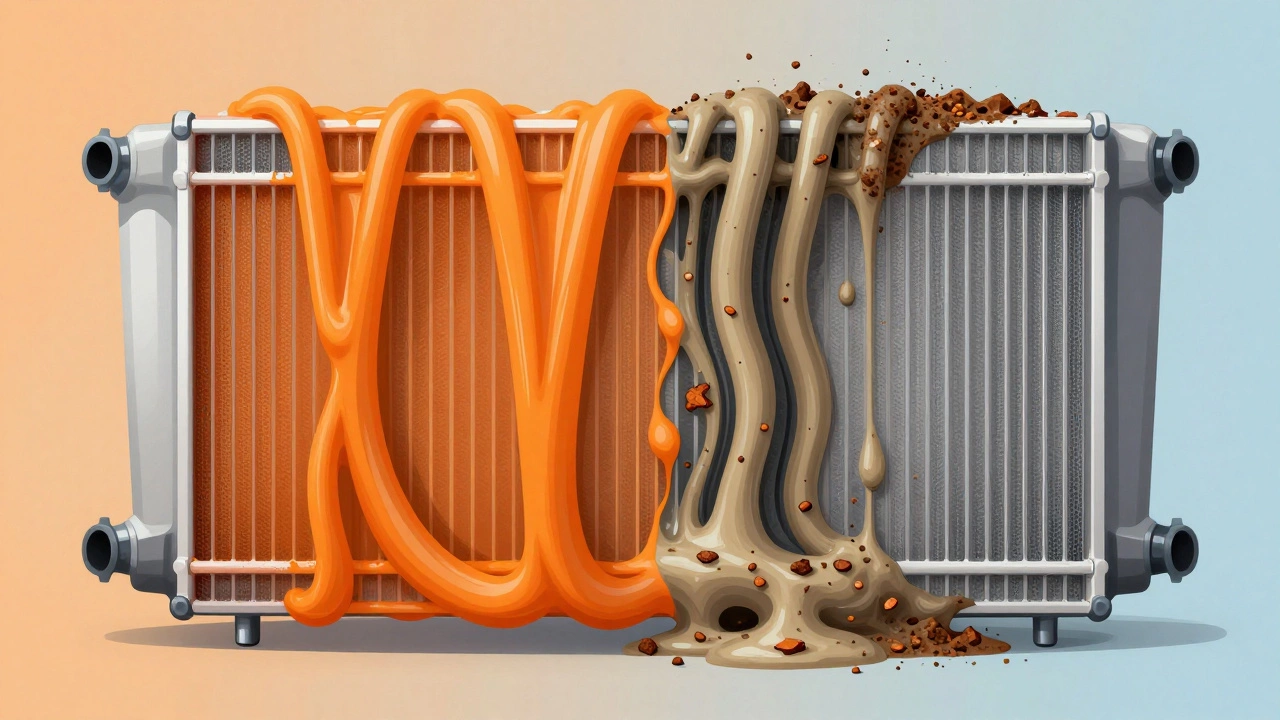
When you open the coolant reservoir, what colour is the fluid? Fresh coolant is bright green, red, or orange, depending on the type. If it looks brown, murky, or has floating flakes, it’s bad. That sludge comes from rust and debris inside the radiator and engine. It clogs narrow coolant passages. It stops heat from moving out of the engine. A simple coolant flush might fix it-if the radiator itself is still in good shape. But if the coolant is sludgy and you’ve already flushed it twice, the radiator is likely the source. You can’t flush out corrosion that’s eating away at the metal from the inside. Replacing the radiator is the only real fix.
Oil in the Coolant (or Coolant in the Oil)
Open your oil dipstick. If the oil looks milky, like a milkshake, you’ve got coolant mixing with oil. That’s bad. It usually means a cracked engine block or head gasket. But sometimes, it’s the radiator. Older radiators with internal oil coolers (common in automatic transmission vehicles) can develop tiny cracks between the coolant and oil chambers. That lets them mix. Check the transmission fluid too-if it’s pink or milky, the radiator’s oil cooler is leaking. This isn’t just about overheating. Oil and coolant mixing destroys engine bearings and transmission parts. If you see this, get the radiator checked immediately. It’s not a "when I get around to it" problem.
Physical Damage or Dents
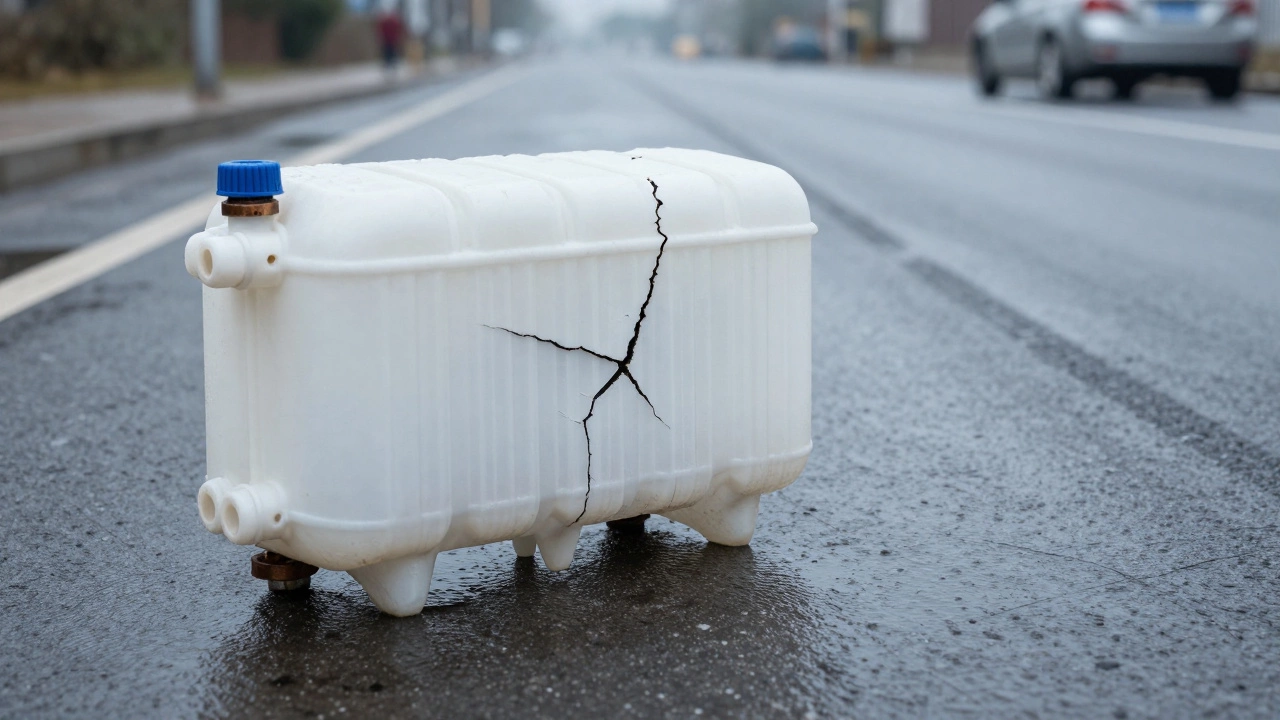
Ever hit a pothole hard? Or had a stone fly up and smack the front of your car? Radiators are right there, behind the bumper. A single impact can crack the plastic end tanks or bend the metal core. Even a small dent can restrict coolant flow. You might not notice it right away. But over time, that dent creates stress points. Heat expands and contracts metal. That’s normal. But a bent radiator can’t handle it. Eventually, it cracks. If you’ve had a front-end collision, even a minor one, have the radiator inspected. A visual check from below can reveal hairline cracks or bulging tanks.
Age and Mileage
Radiators don’t have a magic expiration date. But most last between 8 and 12 years, or 100,000 to 150,000 miles. If your car is older than 10 years and you’ve never replaced the radiator, you’re playing Russian roulette. Even if it’s not leaking yet, the materials degrade. Plastic tanks become brittle. Metal cores thin out. Coolant additives wear off. In the UK’s weather-cold winters, wet roads, salt spray-radiator life is shorter. If your car is approaching 12 years or 120,000 miles, consider replacing the radiator as preventive maintenance. It’s cheaper than a blown engine.
What Happens If You Ignore It?
Ignoring a bad radiator doesn’t just mean overheating. It means your engine runs too hot for too long. That causes warped cylinder heads, cracked blocks, blown head gaskets. Those repairs cost £1,500 to £4,000. A new radiator? £200 to £500, including labour. You’re not saving money by waiting. You’re risking your entire engine. And if you’re in Bristol and your car dies on the M4, you’re looking at a recovery charge, a hire car, and maybe a long wait for a mechanic. Don’t wait for the warning light to flash. Pay attention to the small signs.
What Should You Do Next?
If you’ve noticed one or more of these signs, don’t guess. Take your car to a mechanic who can pressure-test the cooling system. That’s a simple test: they pump air into the system and watch for leaks. It’s quick, cheap, and tells you exactly where the problem is. If the radiator is leaking, corroded, or clogged, replace it. Use an OEM or high-quality aftermarket part. Cheap radiators fail faster. And always use the right coolant mix-50/50 with distilled water. Tap water has minerals that speed up corrosion.
Replacing a radiator isn’t glamorous. But it’s one of the smartest things you can do for your car’s longevity. It’s not about being a mechanic. It’s about being smart. Pay attention. Act early. Your engine will thank you.
Can a radiator be repaired instead of replaced?
Sometimes, yes-but rarely. Small leaks at the seams or end tanks can be soldered or patched. But if the core is corroded, clogged, or dented, repair won’t last. Most shops won’t even attempt it because the risk of failure is too high. Replacing it is cheaper and safer in the long run.
How often should I flush my radiator coolant?
Every 2 to 5 years, depending on the coolant type. Traditional green coolant needs changing every 2 years. Long-life orange or red coolants can last up to 5 years. Always check your owner’s manual. Skipping flushes leads to sludge, corrosion, and eventual radiator failure.
Can I drive my car if it’s overheating?
No. If the temperature gauge hits the red zone, pull over immediately. Continuing to drive can warp the cylinder head or crack the engine block. Let the engine cool for at least 30 minutes before checking coolant levels. Never open the radiator cap while it’s hot-steam can burn you.
Do aftermarket radiators last as long as OEM ones?
Some do, some don’t. Brands like Behr, Denso, and Valeo make reliable aftermarket radiators that match OEM quality. Avoid no-name brands from online marketplaces. They often use thinner metal, weaker plastic tanks, and cheaper seals. You’ll save money upfront, but pay for it with a replacement in 2 years.
Is a radiator replacement covered by warranty?
If your car is still under manufacturer warranty and the radiator failed due to a defect, yes. But if it’s due to neglect-like skipping coolant changes or using the wrong fluid-warranty won’t cover it. Most warranties require proof of maintenance. Keep your service records.