Most car owners hear "change your oil every 3,000 miles" like it’s a law. But that rule hasn’t been true for over a decade. Modern engines, better oils, and smarter sensors mean your car can go way farther than you think-if you know what you’re driving and how you drive it.
What’s the Real Oil Change Interval Today?
Most new cars today recommend oil changes between 7,500 and 10,000 miles. Some, especially those using full synthetic oil, can stretch to 15,000 miles. Honda, Toyota, and Hyundai manuals often list 10,000 miles as the standard. Ford and GM models with their dexos-approved oils also push toward 10,000-15,000 miles under normal conditions.
But here’s the catch: those numbers assume ideal driving. If you’re hauling heavy loads, idling for hours, or driving mostly short trips in cold weather, your oil breaks down faster. That 15,000-mile interval? It’s not a free pass-it’s a maximum under perfect conditions.
Oil Type Matters More Than You Think
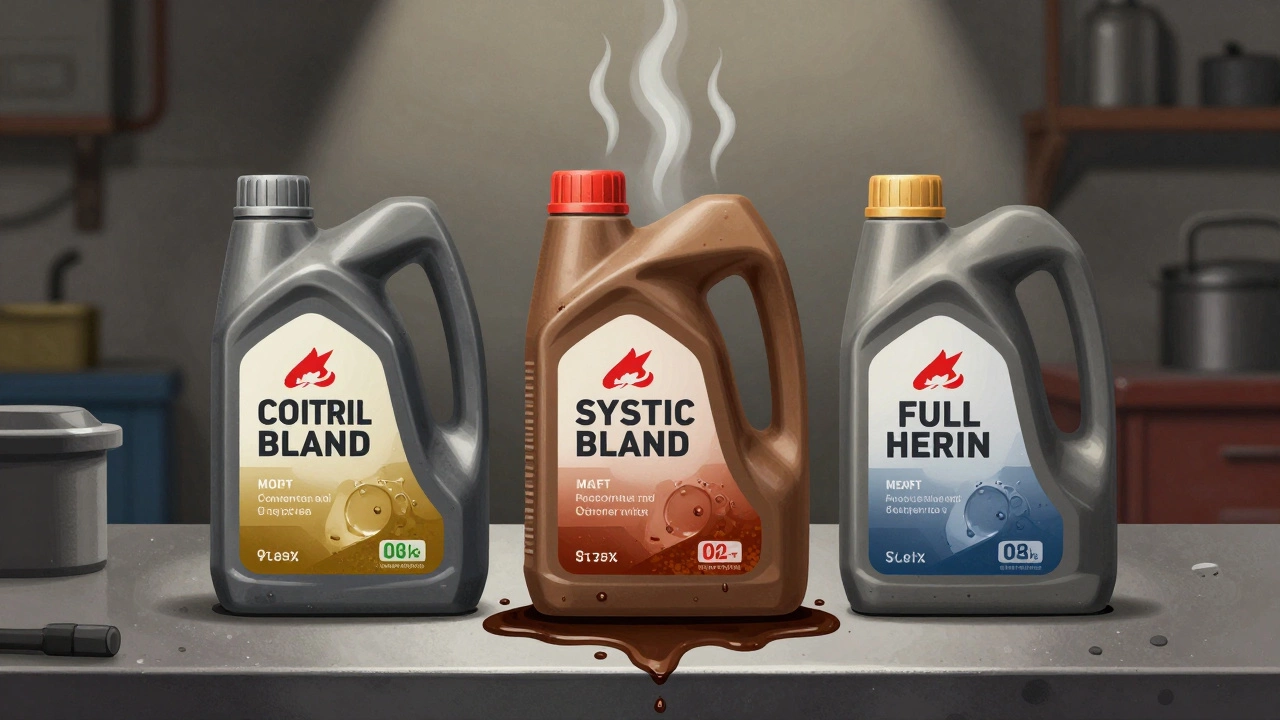
Not all oils are created equal. There are three main types:
- Conventional oil: Basic mineral oil. Lasts about 3,000-5,000 miles. Still common in older cars.
- Synthetic blend: Mix of conventional and synthetic. Handles heat better. Good for 5,000-7,500 miles.
- Full synthetic: Engineered for performance and longevity. Can last 10,000-15,000 miles. Used in most new cars since 2015.
Check your owner’s manual. If it says "use full synthetic," don’t switch to conventional. You’re not saving money-you’re risking engine wear. Synthetic oil resists thickening in cold starts and breaks down slower under heat. That’s why it lasts longer.
Your Driving Habits Are the Hidden Factor
Two people with the same car, same oil, same mileage-can have totally different oil life. Why? Driving patterns.
If you drive 50 miles on the highway every day, your oil stays clean. The engine warms up fully, moisture evaporates, and the oil circulates smoothly.
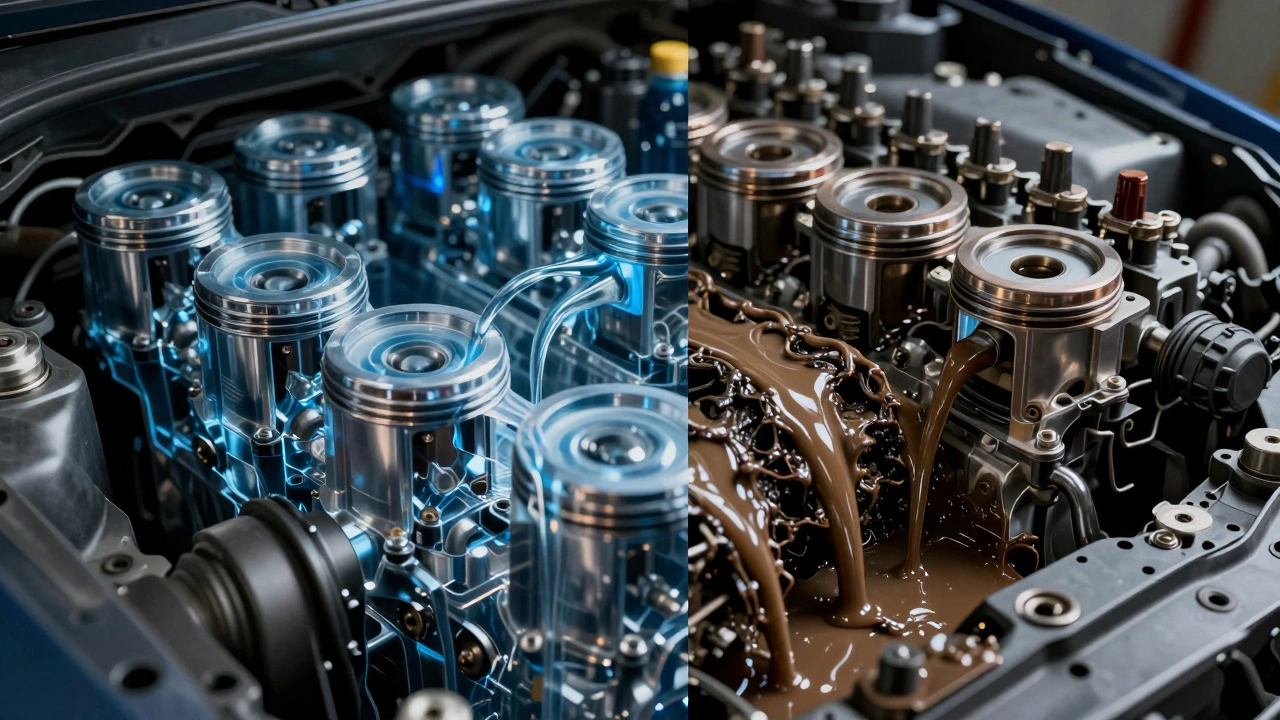
But if you mostly drive short trips-say, under 5 miles each time-you’re killing your oil. Why? The engine never reaches full operating temperature. Water from combustion doesn’t burn off. It mixes with oil and creates sludge. That sludge clogs tiny oil passages, and sludge is one of the top causes of premature engine failure.
Same goes for:
- Stop-and-go traffic in hot cities
- Towing trailers or carrying heavy cargo
- Driving in dusty or sandy areas
- Idling for long periods (delivery drivers, rideshare)
These conditions stress the oil. They’re not "extreme"-they’re common. And they cut oil life by 30-50%.
Modern Cars Don’t Just Guess-They Monitor
Your car isn’t clueless. Most vehicles made after 2010 have an oil life monitoring system. It doesn’t track miles. It tracks:
- Engine temperature cycles
- Time spent idling
- Driving speed patterns
- Oil pressure and viscosity estimates
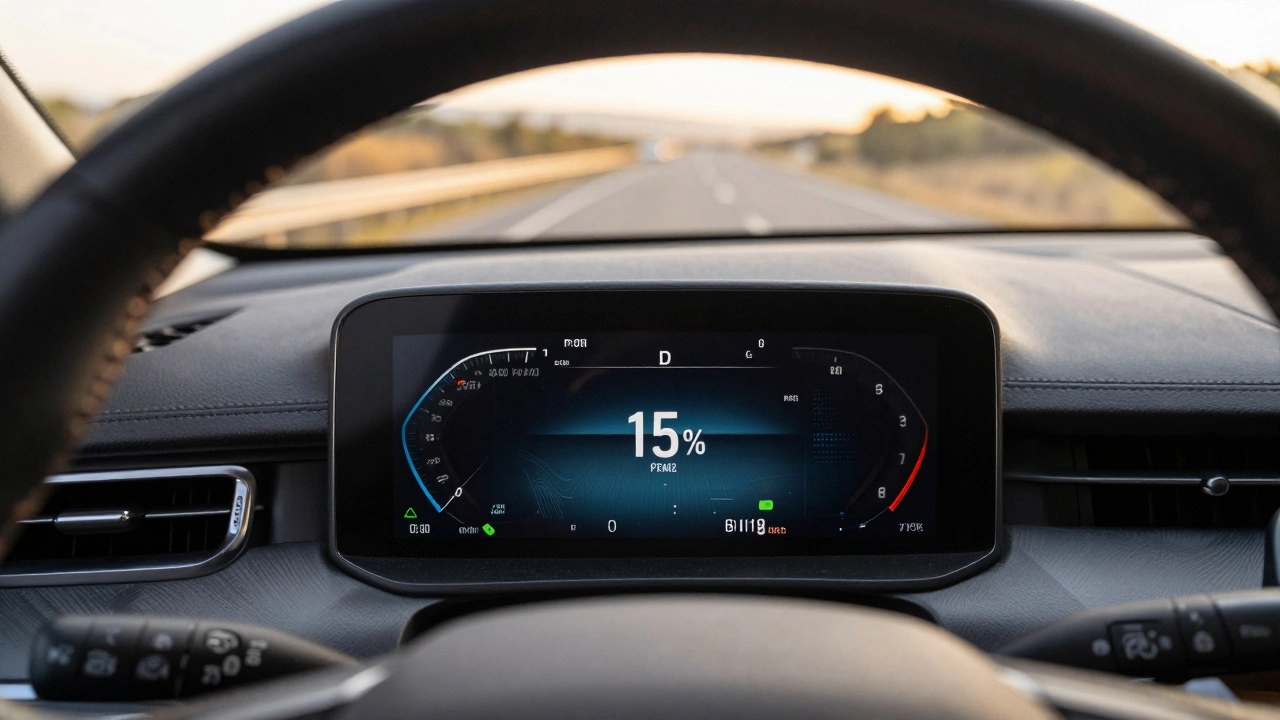
Then it calculates when the oil’s protective additives are depleted. That’s why your dashboard might say "Oil Life: 15%" even if you’ve only driven 4,000 miles. Or it might say "45%" after 9,000 miles of highway driving.
Trust this system. It’s more accurate than any calendar or mileage rule. But don’t ignore it. If it says "Change Oil Soon," don’t wait another 1,000 miles. You’re gambling with engine health.
What Happens If You Wait Too Long?
Oil doesn’t just "get dirty." It changes chemically. Over time, additives that prevent wear, control heat, and stop sludge get used up. The oil starts to oxidize. It thickens. It turns acidic.
At 15,000+ miles without a change, you risk:
- Increased friction between moving parts (pistons, valves, bearings)
- Sludge buildup that blocks oil galleries
- Overheating from poor heat transfer
- Worn camshafts or timing chains from lack of lubrication
Some engines will keep running-barely. Others fail suddenly. A 2023 study by the Automotive Aftermarket Industry Association found that 28% of engine failures linked to neglected maintenance were caused by oil degradation, not filters or leaks.
And repairs? Replacing a damaged engine costs $3,000-$8,000. An oil change? $50-$100.
When Should You Change It? A Simple Rule
Here’s the practical advice you can use right now:
- Check your owner’s manual. Use the number listed for your oil type.
- If you drive mostly short trips or in stop-and-go traffic, cut that number in half.
- If your car has an oil life monitor, follow it-but never go past 15,000 miles or 12 months, whichever comes first.
- Never ignore warning lights. If the oil pressure light comes on, stop immediately.
For most people with a modern car using synthetic oil and mostly highway driving: 10,000 miles is safe. For city drivers, short trips, or older cars: 5,000-7,500 miles is smarter.
Oil Change Myths That Cost People Money
Let’s clear up a few lies you’ve heard:
- Myth: "You need to change oil every 3,000 miles." Truth: That was for 1970s engines with poor oil. Modern cars don’t need it.
- Myth: "Dark oil means it’s time." Truth: Oil turns dark quickly. That’s normal. It’s doing its job-trapping dirt and particles.
- Myth: "Synthetic oil is too expensive." Truth: It costs $20-$30 more per change. But it lasts twice as long. You save money over time.
- Myth: "I drive slowly, so it lasts longer." Truth: Slow driving means more idling. More idling means more moisture. More moisture means faster oil breakdown.
What About Oil Filters?
Oil filters are part of the equation. Most are designed to last the full oil change interval. But if you’re extending beyond 10,000 miles, consider upgrading to a high-mileage filter. They have better filtration and can handle more contaminants.
Never reuse an old filter. Even if you’re just going 500 miles over the limit, a clogged or worn filter can starve your engine of oil-even with fresh oil in the system.
Bottom Line: Don’t Guess. Know Your Car.
Your car isn’t a one-size-fits-all machine. The answer to "How long can I go?" depends on:
- The type of oil you use
- Your driving habits
- Your car’s age and engine design
- Whether you follow the oil life monitor
There’s no magic number. But there is a smart approach: read your manual, listen to your car, and don’t let convenience cost you thousands.
Change your oil before it’s too late. Not because someone told you to. But because you know what’s really at stake.
Can I go 15,000 miles without an oil change?
Yes, but only if you’re driving a modern car with full synthetic oil and under ideal conditions-mostly highway driving, no towing, no short trips. Most manufacturers set 15,000 miles as the maximum for synthetic oil, but only if you meet all those conditions. If you drive in the city, haul cargo, or idle often, 10,000 miles is the safer limit.
Does synthetic oil really last longer?
Yes. Synthetic oil is engineered to resist breakdown under heat and pressure. It maintains viscosity better than conventional oil, which means it keeps protecting your engine longer. While conventional oil might need changing at 5,000 miles, full synthetic can go 10,000-15,000 miles without losing performance.
What if my car doesn’t have an oil life monitor?
If your car is older and lacks a monitor, follow the manufacturer’s recommendation in the owner’s manual. For cars made after 2010, that’s usually 7,500-10,000 miles. If you’re unsure, 5,000 miles is a safe fallback for any car, especially if you drive in stop-and-go traffic or cold weather.
Is it okay to change oil every 6 months even if I haven’t hit the mileage?
Yes. Oil degrades over time, even if you don’t drive much. Moisture builds up, additives settle, and oxidation occurs. Most manufacturers recommend changing oil at least once a year, regardless of mileage. If you drive less than 5,000 miles a year, go with the 6-12 month rule.
Can I just top off oil instead of changing it?
No. Topping off oil doesn’t remove contaminants, sludge, or metal particles. It just adds fresh oil to dirty oil. That’s like adding clean water to a muddy puddle-it doesn’t clean it. You need a full drain and filter change to restore protection.