Air Filter: What It Does, Why It Matters, and What Happens When It Fails
When you think about your car’s health, you probably focus on tires, brakes, or the engine—but the air filter, a simple but critical component that blocks dirt and debris from entering your engine and cabin. Also known as engine air filter, it’s one of the few parts that directly affects both performance and air quality inside your car. Most drivers don’t check it until something goes wrong. That’s a mistake.
The cabin air filter, a separate filter that cleans the air coming into your car’s interior through the HVAC system. Also known as interior air filter, it keeps dust, pollen, and smoke out of your breathing space. If this one clogs, your AC struggles, windows fog up faster, and you start sneezing every time you turn on the fan. Both filters—engine and cabin—are cheap to replace, but expensive to ignore. A dirty air filter forces your engine to work harder, burns more fuel, and can even trigger check engine lights. In dusty or polluted areas like Indian cities, these filters get clogged faster than you think.
People often confuse the two filters. The engine air filter sits under the hood, usually in a black plastic box. The cabin air filter is behind the glove box or near the base of the windshield. They’re not interchangeable. Replacing one doesn’t fix the other. And neither lasts forever. Most manufacturers say 12,000 to 15,000 miles, but if you drive on dirt roads, near construction sites, or in heavy traffic, you might need to swap it every 6,000 miles.
What happens if you skip it? Dust gets into your engine’s cylinders. That’s like sandpaper on pistons. Over time, it wears down valves, rings, and even the cylinder walls. You won’t notice it at first. Then one day, your car loses power, sputters on acceleration, or won’t start. The fix? A full engine rebuild. That’s thousands of rupees. Meanwhile, a clogged cabin filter doesn’t just make your ride uncomfortable—it can trigger allergies, asthma, and even reduce driver alertness from poor air quality.
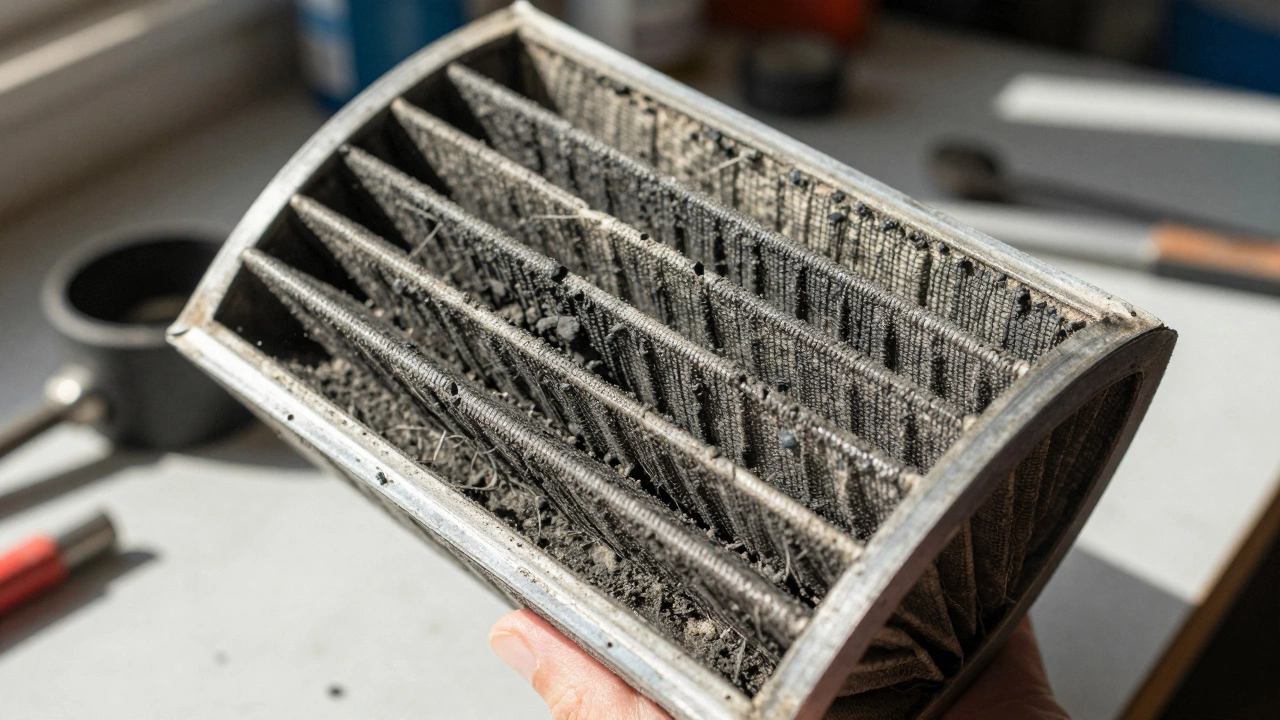
You don’t need a mechanic to check either filter. Pop the hood, pull out the engine filter, and hold it up to the light. If you can’t see through it, replace it. Same with the cabin filter—pull it out and shake it. If dust falls out, it’s done. Both cost less than a tank of petrol. And you can do it in under 15 minutes.
Below, you’ll find real stories from drivers who ignored their filters—and what it cost them. You’ll also learn how to pick the right type, when to replace it, and why some aftermarket filters are a waste of money. No fluff. Just what works.
-
2 Dec
-
27 Jul

Signs Your Air Filter Needs Changing: How to Spot a Dirty Filter in Your Car
Learn how to tell if your air filter needs changing, spot the warning signs, and keep your car running smoothly with simple, real-life tips anyone can use. -
20 Jul

How Often Should You Change Your Air Filter? Car Air Filter Replacement Guide
Learn how often you should change your air filter, why it matters, and practical tips for better engine performance. Easy, detailed, and packed with real-world advice you can use. -
13 Apr

How to Tell if Your Air Filter Needs Cleaning
A clean air filter is key to a healthy indoor environment, ensuring good air quality and efficient HVAC performance. But how do you know it's time to clean it? This article dives into the tell-tale signs an air filter needs attention, from noticeable dust and allergy symptoms to unusual HVAC noises. With these tips, keeping your air filter in top shape becomes hassle-free.
- Recent
- Popular