Replace Shocks: Signs You Need New Shock Absorbers and What Happens If You Don't
When you replace shocks, you're not just fixing a noisy ride—you're restoring control, safety, and tire life. Shock absorbers, components that control spring movement and keep tires in contact with the road. Also known as dampers, they work every time you hit a bump, corner, or pothole. Without them, your car bounces uncontrollably, brakes poorly, and wears tires unevenly. Most drivers don’t realize how much shocks affect daily driving until they’re gone.
Driving with worn shocks doesn’t just feel uncomfortable—it’s dangerous. Your car takes longer to stop because the tires lose grip during braking. Steering becomes sluggish, especially in emergency maneuvers. You might notice your vehicle dipping forward when you brake or swaying side-to-side on highways. These aren’t just annoyances; they’re warning signs that your suspension system, the network of parts connecting wheels to the chassis, including springs, struts, and shocks is failing. And if you ignore it, you’ll end up replacing more expensive parts like control arms, ball joints, or even tires prematurely.
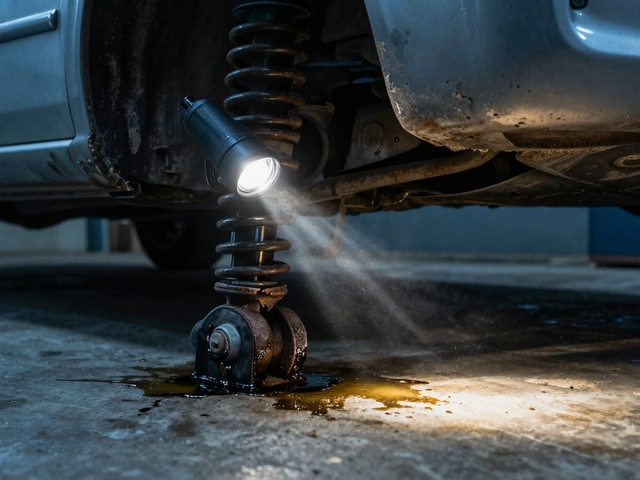
How do you know it’s time to replace shocks? Look for these clues: excessive bouncing after hitting a bump, oil leaking from the shock body, uneven tire wear (especially cupping), or a nose dive when braking. You can do a quick bounce test—press down hard on one corner of the car and let go. If it bounces more than once or twice, the shocks are worn out. Many people wait until they hear clunking or feel every crack in the road, but by then, damage is already done.
Shocks don’t just affect ride comfort—they’re part of your car’s safety system. Studies show that worn shocks can increase stopping distances by up to 20% in wet conditions. That’s the difference between avoiding a collision and hitting it. And if you drive in India’s rough roads, where potholes and uneven surfaces are common, good shocks aren’t optional—they’re essential.
When you replace shocks, you’re not just buying new parts—you’re investing in predictable handling, better tire life, and fewer surprises on the road. You’ll also reduce stress on other suspension components, saving you money down the line. The best time to replace them isn’t when they’re completely dead—it’s when you notice the first signs of wear.
Below, you’ll find real-world guides on what happens when suspension fails, how to spot broken suspension sounds, why bad shocks ruin tire wear, and how to tell if your car’s handling has gone downhill. These aren’t theory pieces—they’re practical checklists from drivers who’ve been there. Whether you’re thinking about a DIY swap or just trying to understand why your car feels off, the posts here will show you exactly what to look for—and what to do next.
-
16 Jun
- Recent
- Popular