Clutch Replacement Time Estimator
How Long Will Your Clutch Replacement Take?
Estimate time based on your vehicle type and skill level
Estimated Time
Select your vehicle details to see estimated time
Replacing a clutch kit isn’t like changing your oil. It’s one of those jobs that sounds simple until you’re under the car with a jack, a torque wrench, and a whole lot of sweat. If you’ve been told your clutch is slipping, grinding, or feeling spongy, you’re probably wondering: how long does it take to do a clutch kit? The answer isn’t one-size-fits-all. It depends on your car, your skill, and whether you’re doing it in a garage or a driveway.
Typical Time for a Clutch Kit Replacement
Most professional mechanics will tell you a clutch kit replacement takes between 4 and 8 hours. That’s a full workday. For a DIYer with decent experience and the right tools, it’s often 6 to 10 hours - sometimes longer if things get tricky. This isn’t a weekend hobby project you can rush. You’re removing the transmission, realigning components, and re-torquing bolts to exact specs. One mistake, and you’re looking at a new flywheel, damaged input shaft, or a clutch that fails in a week.
Why so long? Because the clutch isn’t just a single part you swap out. A clutch kit includes the clutch disc, pressure plate, release bearing, and sometimes the pilot bearing or input shaft seal. You have to disconnect the transmission from the engine, slide it back, and then carefully install the new parts without contaminating the friction surfaces. Even a drop of oil on the clutch disc can cause it to slip under load.
What Affects the Time?
Not all cars are built the same. A 2010 Ford Focus takes about 5 hours for a skilled tech. A 2023 Volkswagen Golf GTI? Closer to 7 because the engine is mounted transversely and the transmission is heavier. On the other hand, a 2005 Toyota Corolla might only take 4 hours - simple layout, easy access, no fancy electronics.
Here’s what makes the job longer:
- Engine placement: Front-wheel drive cars usually take longer than rear-wheel drive because the transmission has to be pulled straight back through a tight space.
- Access: Some cars have the clutch housing buried under the exhaust, fuel lines, or suspension components. Removing those first adds hours.
- Transmission type: Manual transmissions are easier to swap than dual-clutch or automated manuals, which often require special tools and software resets.
- Condition of surrounding parts: If the flywheel is cracked, the pilot bearing is seized, or the input shaft is worn, you’ll need to replace those too. That’s extra parts, extra labor, and extra time.
One common mistake people make? Assuming the flywheel is fine because it "looks okay." But a warped or heat-damaged flywheel will ruin a new clutch in days. Most shops recommend resurfacing or replacing the flywheel every time you replace the clutch. That adds 1 to 2 hours to the job - but it’s not optional if you want the new clutch to last.
DIY vs Professional: What’s the Real Difference?
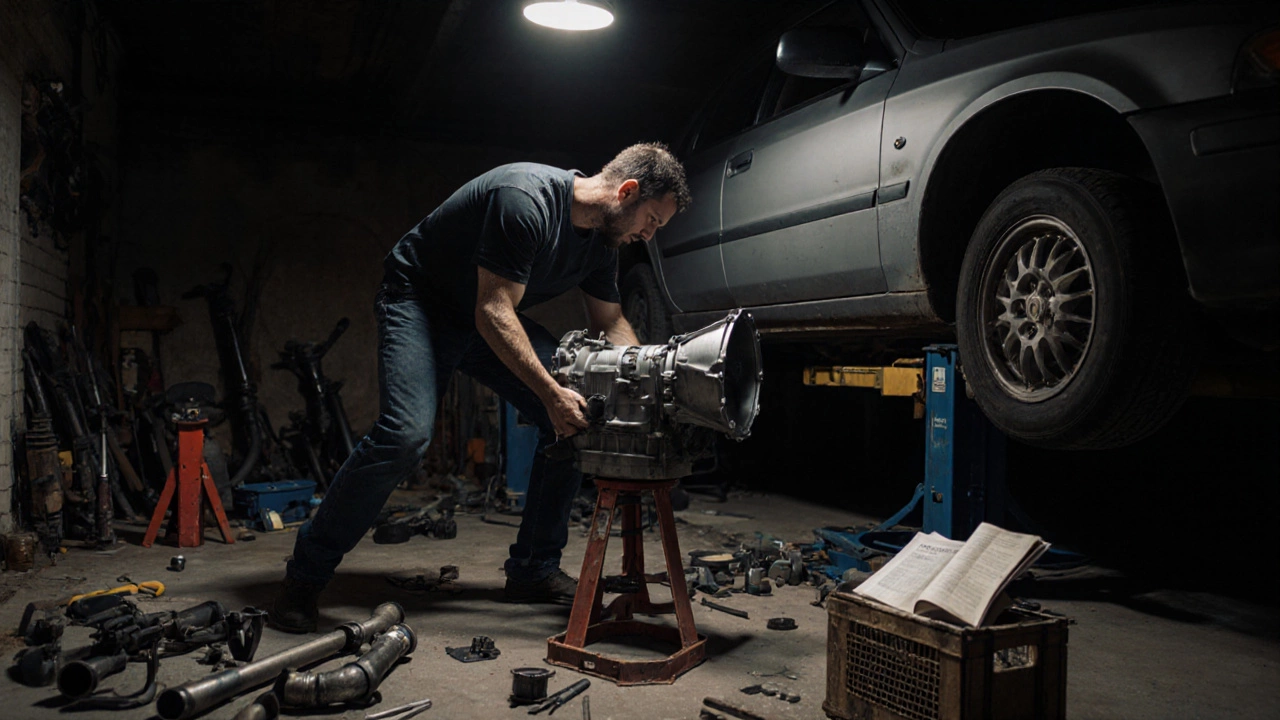
If you’re thinking of doing it yourself, you need more than just a socket set. You need a transmission jack, a torque wrench, alignment tools for the clutch disc, and a helper to hold the transmission steady while you slide it in. You also need space - a garage with a lift is ideal. Doing it on jack stands in a driveway? You’re asking for a back injury or a transmission that won’t line up.
Professional shops have the tools, the experience, and the factory service manuals. They know which bolts to loosen first, which ones to torque to 35 Nm versus 42 Nm, and how to bleed the hydraulic system if it’s a cable-operated clutch. They also have spare parts on hand. If the release bearing seizes during removal, they don’t have to order a new one - they’ve got it in stock.
For most people, paying a shop $600 to $1,200 (depending on the car) is worth it. Labor rates in the UK average £70-£95 per hour. Multiply that by 6 hours, and you’re looking at £420-£570 just for labor. Parts for a clutch kit range from £150 to £400, depending on brand and vehicle. A full job can easily hit £800-£1,100.
What to Expect During the Process
If you take your car to a garage, here’s what usually happens:
- They lift the car and drain the transmission fluid.
- They disconnect the battery, shift linkage, clutch cable or hydraulic line, and exhaust components.
- The transmission is unbolted from the engine and carefully lowered.
- The old clutch disc, pressure plate, and release bearing are removed.
- The flywheel is inspected. If it’s scored, cracked, or warped, it’s replaced or resurfaced.
- The new clutch kit is installed, aligned with a pilot tool, and torqued to spec.
- The transmission is reinstalled, all connections are reattached, and the system is bled if hydraulic.
- They test the clutch engagement, check for leaks, and road test the car.
Most reputable shops will give you a warranty on both parts and labor - often 12 months or 12,000 miles. That’s peace of mind you don’t get when you DIY.
Signs You’re Not Ready to DIY
Even if you’ve changed brakes or spark plugs, the clutch is a different beast. Here’s when you should walk away:
- You’ve never worked under a transmission before.
- You don’t have a torque wrench or a transmission jack.
- Your car has an electronic clutch system (like some BMWs or Audis).
- The clutch pedal feels fine, but the car won’t go into gear - that could be a synchronizer issue, not a clutch problem.
- You’re on a tight schedule. A clutch job can’t be rushed. If you’re pressed for time, you’ll make mistakes.
There’s no shame in handing it off. A bad clutch job can leave you stranded on the motorway - and it’s way more expensive to fix than paying upfront for a pro.

How to Save Money Without Cutting Corners
You don’t need to pay dealership prices. Independent garages in Bristol often charge 30% less than main dealers. Ask for a quote that breaks down labor and parts separately. Make sure they’re using OEM-equivalent parts - brands like LUK, Sachs, or Valeo are reliable. Avoid cheap no-name kits from eBay or Amazon. They might save you £100 upfront, but they’ll wear out in 10,000 miles instead of 100,000.
Another tip: Replace the clutch and flywheel at the same time. If you do the clutch now and the flywheel fails next year, you’re paying for labor twice. Do it right the first time.
What Happens If You Delay the Job?
Waiting too long to replace a worn clutch doesn’t just make driving annoying - it can destroy your transmission. When the clutch disc wears down, metal can start grinding against the flywheel. That debris gets into the gearbox. A damaged input shaft or worn synchronizers can cost you £2,000+ to repair. A clutch kit? £800. That’s a no-brainer.
Also, a slipping clutch puts extra strain on the engine. You’re not just losing power - you’re burning more fuel and overheating components. If you’re noticing the revs climbing but the car isn’t accelerating, don’t ignore it. Get it checked before it gets worse.
Final Thoughts
So, how long does it take to do a clutch kit? If you’re a pro? 4-8 hours. If you’re a DIYer? 6-10 hours, maybe more. But the real question isn’t about time - it’s about safety, reliability, and cost over the long run. Don’t cut corners. Don’t rush. And if you’re not 100% confident, take it to someone who does this every week. Your wallet - and your transmission - will thank you.
Can you drive with a bad clutch?
Technically, yes - but you shouldn’t. A slipping or grinding clutch makes gear changes hard, causes jerky acceleration, and can overheat the engine. If the clutch fully fails, you won’t be able to engage gears at all. Driving with a bad clutch risks damaging the transmission, which costs far more to fix than replacing the clutch.
How do I know if I need a new clutch kit?
Signs include: clutch pedal feeling softer or higher than usual, the engine revving without the car accelerating, grinding noises when shifting, or the car slipping out of gear under load. If you smell burning clutch material - like hot metal or electrical burning - that’s a clear warning. Get it checked immediately.
Do you always need to replace the flywheel with the clutch?
Not always, but it’s strongly recommended. If the flywheel is scored, cracked, or warped, it will ruin a new clutch within weeks. Most mechanics resurface it if it’s in good condition, or replace it if it’s worn past repair. Skipping this step is the #1 reason new clutches fail early.
How long should a clutch kit last?
A quality clutch kit lasts between 80,000 and 120,000 miles under normal driving. Aggressive driving, frequent stop-and-go traffic, or riding the clutch pedal can cut that in half. Diesel cars and heavy-towing vehicles often see shorter lifespans - sometimes as low as 50,000 miles.
Can you replace just the clutch disc and not the pressure plate?
It’s not advisable. The pressure plate and clutch disc wear together. Replacing only one part creates imbalance and uneven pressure, which leads to premature failure. Clutch kits are sold as matched sets for this reason. Always replace the full kit.