Oil Change Interval Calculator
Your Oil Change Calculator
Get personalized recommendations based on your driving habits and oil type
Why This Matters
Oil breaks down over time - Even if you don't drive much, oil degrades from moisture and heat. Your UK climate and driving habits affect this more than you think.
Sludge buildup - After 10,000 miles without an oil change, sludge can clog vital engine passages. This can lead to costly repairs like the £4,200 Honda Civic incident mentioned in the article.
Your Recommended Oil Change Interval
No calculation yet
Most drivers in the UK know they need an oil change, but few know exactly when it becomes too late. You might’ve heard "every 3,000 miles" from your uncle, or seen a dealership pushing a 6,000-mile service. The truth? It’s not one-size-fits-all. Skip your oil change by too long, and you’re not just risking a warning light-you’re risking engine damage that costs thousands to fix.
What Happens When Oil Goes Too Long?
Engine oil doesn’t just get dirty. It breaks down. Heat, pressure, and combustion byproducts turn fresh oil into a thick, gunky sludge. After 10,000 miles or more without a change, that sludge starts clogging tiny oil passages. The result? Critical parts like camshafts, valve lifters, and turbochargers starve for lubrication. In cold weather, old oil thickens even more. If you’re driving a diesel in Bristol’s winter rain, and your oil hasn’t been changed in 18 months? You’re already in danger zone.
Modern engines run hotter and under more stress than older ones. That means oil degrades faster. Synthetic oil lasts longer than conventional, but even full synthetics lose their protective additives over time. By 12,000 miles, the anti-wear agents (like zinc and phosphorus) are mostly gone. Without them, metal parts grind against each other. You won’t feel it. You won’t smell it. But the damage is happening.
Factory Recommendations Are Just a Starting Point
Most car manuals say "change oil every 7,500 to 10,000 miles" or "every 12 months". That’s under ideal conditions: steady highway driving, mild temperatures, no towing, no stop-and-go traffic. Most UK drivers don’t live in those conditions.
Take a typical commute: 10 miles to work, 10 miles back, mostly under 40 mph, with idling at traffic lights. That’s 200 miles a week. In 50 weeks, that’s 10,000 miles. But you’ve also been doing short trips where the engine never fully warms up. That means moisture from combustion doesn’t evaporate. It mixes with oil, creating acid. Acid eats bearings. Acid corrodes crankshafts. And that’s why many mechanics in Bristol recommend a 5,000- to 6,000-mile interval for city drivers-even if your manual says 10,000.
Same goes for towing, driving in dusty areas, or using your car for delivery work. If you’re hauling a caravan or carrying heavy loads regularly, cut your oil change interval in half. No exceptions.
Oil Type Matters More Than You Think
Not all oils are created equal. Here’s what you actually need to know:
- Conventional oil: Breaks down fastest. Change every 3,000-5,000 miles.
- Blended oil: A mix of synthetic and conventional. Lasts 5,000-7,000 miles.
- Full synthetic: Designed for high heat and long life. Can go 7,500-10,000 miles under normal use.
- High-mileage oil: For engines over 75,000 miles. Contains seal conditioners. Change every 5,000-7,000 miles.
Many newer cars come with synthetic oil from the factory. That’s good-but it doesn’t mean you can ignore the clock. If your car uses 0W-20 synthetic and you drive 12,000 miles a year? You’re overdue if you haven’t changed it in 12 months. Time matters as much as mileage.

The 6-Month Rule (Even If You Don’t Drive Much)
Here’s the hidden trap: if you drive less than 5,000 miles a year, you still need to change your oil every six months. Why? Because oil doesn’t just wear out from use-it wears out from sitting.
Moisture builds up in the crankcase. Fuel dilution from short trips thins the oil. Additives settle or break down. A 2023 study by the UK Automotive Research Group found that cars driven under 4,000 miles annually had 37% more sludge buildup after 9 months-even if the oil looked clean.
If you only use your car on weekends, or you’re keeping it in storage? Change the oil before you start driving again. Don’t wait for the dashboard light. Don’t wait for a service reminder. Oil doesn’t care if you drove 200 miles or 2,000. It’s still aging.
Signs You’ve Waited Too Long
You don’t need a dipstick to know something’s wrong. Watch for these red flags:
- Engine noise: Tapping, ticking, or knocking sounds-especially on cold starts.
- Oil smell inside the cabin: That’s a sign of oil leaking into the ventilation system or burning.
- Check engine light: Often triggered by low oil pressure or sludge-related sensor errors.
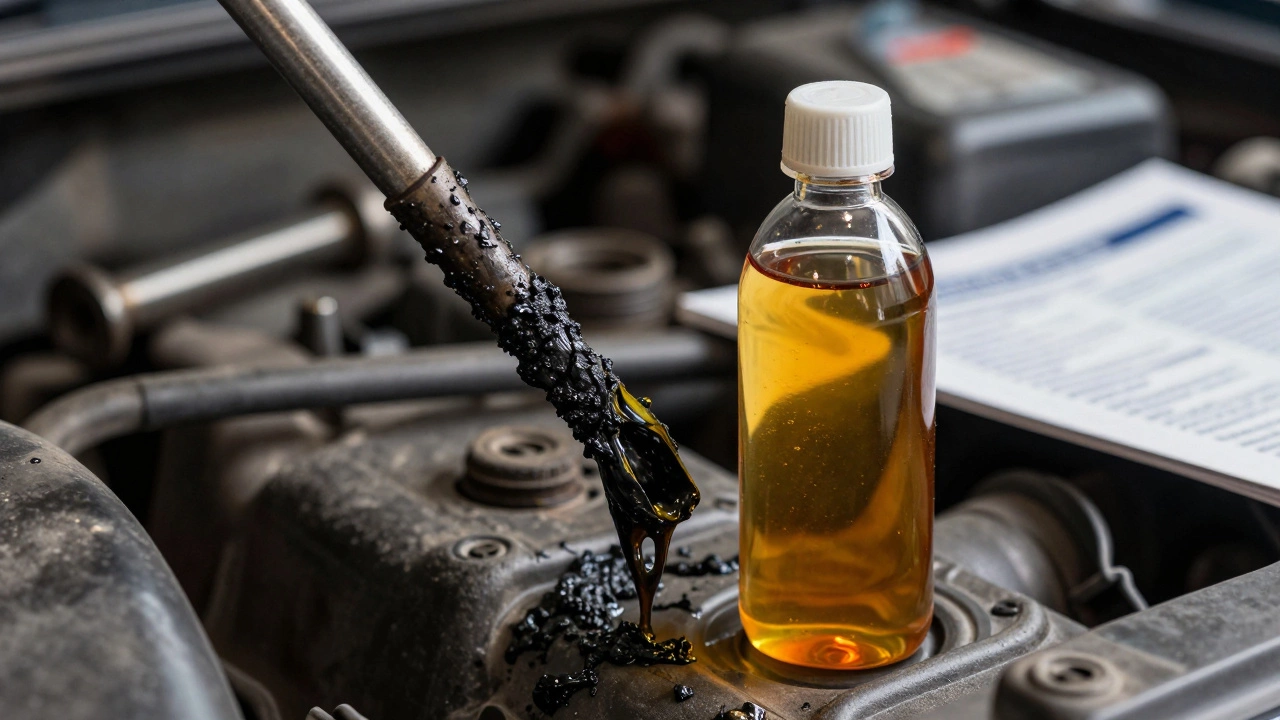
- Dark, gritty oil: If your dipstick shows thick, black sludge instead of smooth, amber fluid, it’s past its prime.
- Overheating: Poor lubrication increases friction, which creates excess heat.
One mechanic in Bristol told me about a 2019 Honda Civic that went 18,000 miles without a change. The owner ignored warnings. When the engine seized, the repair cost £4,200. The oil change? £55.
What About Oil Life Monitors?
Most cars from 2015 onward have oil life monitors. They use algorithms based on mileage, temperature, and driving patterns. They’re generally accurate-but they’re not magic.
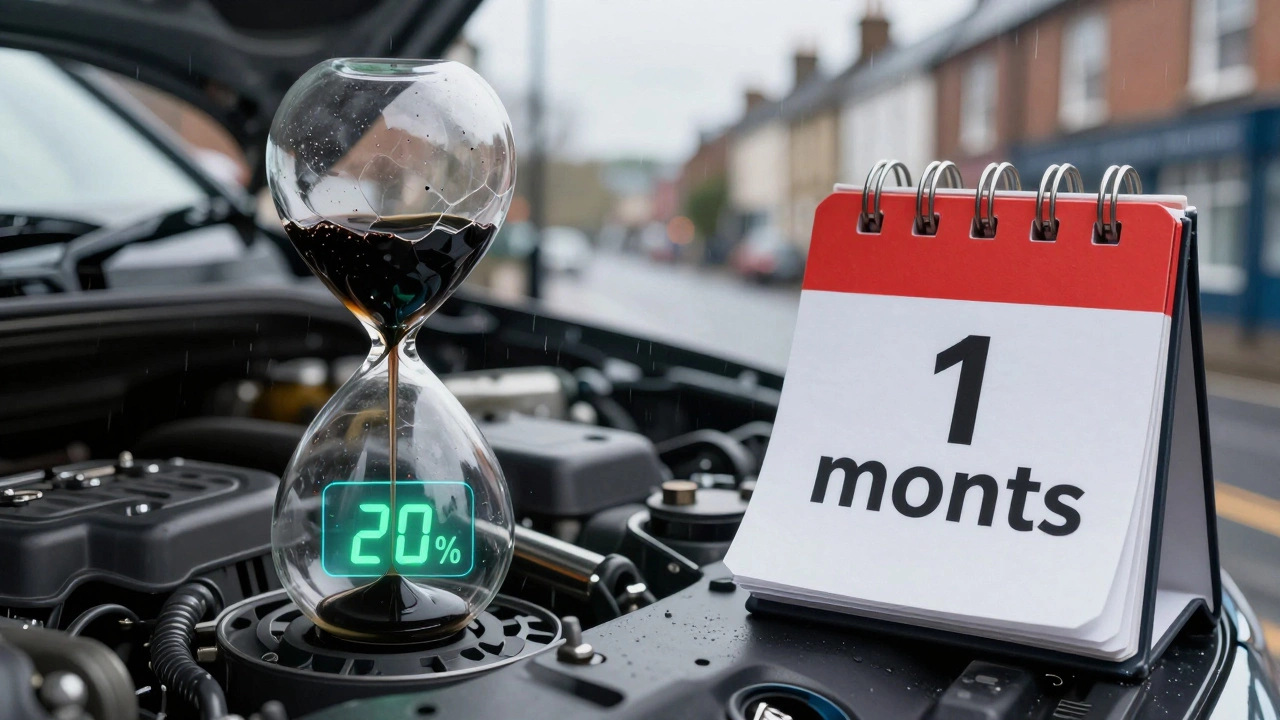
They assume you drive like a test driver. If you do a lot of short trips, stop-and-go traffic, or live in a damp climate like the West Country, the monitor will overestimate oil life. Always double-check. If the monitor says you’ve got 20% life left, but it’s been 11 months since your last change? Change it anyway.
Also, if you reset the monitor after a DIY oil change and forget to reset it again? It’ll give you false confidence. Always keep a log. Paper, phone app, or even a sticky note on the dashboard-it works.
How to Set Your Own Schedule
Forget the manual. Here’s a simple system that works for most UK drivers:
- If you drive under 5,000 miles/year → Change oil every 6 months.
- If you drive 5,000-10,000 miles/year → Change every 7,500 miles or 12 months, whichever comes first.
- If you drive over 10,000 miles/year → Change every 7,500 miles if you use conventional oil; every 10,000 if you use full synthetic.
- If you tow, haul, or drive in dusty conditions → Cut all intervals by 30%.
And if you’re unsure? Go to a trusted independent garage. Ask them to check your oil’s condition. A simple oil analysis test (around £20) can tell you exactly how much life is left. No guesswork.
What’s the Worst That Can Happen?
Let’s say you ignore the signs. You go 15,000 miles without a change. Your engine starts running rough. Then it misfires. Then it won’t start.
You take it to a garage. They find:
- Sludge blocking the oil pickup tube.
- Worn camshaft lobes from lack of lubrication.
- Carbon buildup on valves from fuel dilution.
- Oil pump failure from debris.
Repair cost? £3,500 to £7,000. That’s a new engine or a major rebuild. For a car worth £8,000? Not worth it. You’re better off selling it for parts and walking away.
That’s not hypothetical. In 2024, the AA reported a 22% increase in engine failures linked to neglected oil changes. Most of those were cars under 5 years old.
Final Rule: When in Doubt, Change It
Oil is cheap. An engine isn’t. You don’t need to change it every 3,000 miles. But you also don’t need to wait until the dashboard screams. The sweet spot? Stay ahead of the curve.
If you drive normally, change it every 7,500 miles or 12 months. If you drive hard or short trips, do it every 5,000 miles or 6 months. Keep a record. Mark it on your calendar. Set a phone reminder.
It’s not about being perfect. It’s about being smart. Your engine doesn’t care about your budget. It only cares about clean oil, flowing on time.