Bent Suspension Risk Calculator
Select all symptoms you are experiencing:
Select symptoms and click "Assess Risk & Costs" to see your risk level and estimated repair costs.
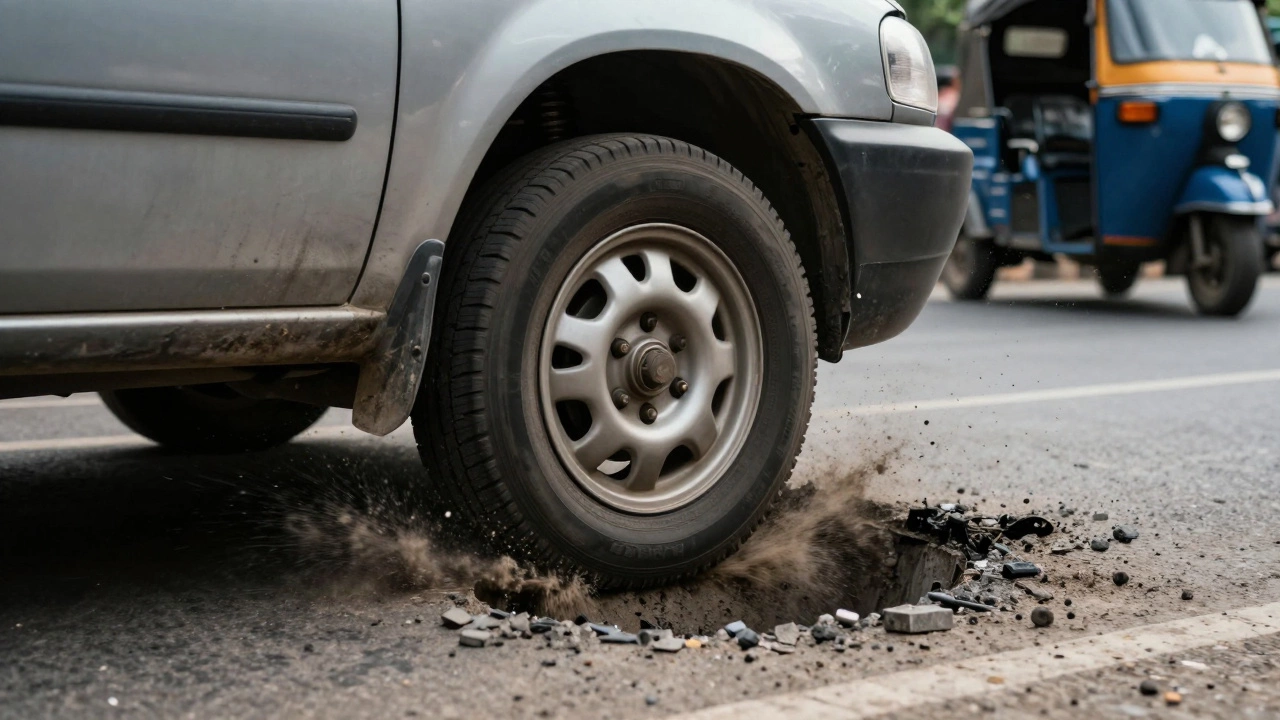
Imagine pulling out of your driveway, only to feel the steering wheel tug violently to the left. Or worse, hear a loud clunk as you hit a pothole, followed by a strange vibration that won’t go away. Your instinct might be to drive slowly to the nearest mechanic. But here is the hard truth: driving with a bent suspension component is rarely just an inconvenience. It is often a ticking time bomb.
The short answer is no, you should not drive with a bent suspension. While you might physically be able to move the car forward for a very short distance-like from your garage to a tow truck-the risks escalate with every mile. A bent control arm, strut, or tie rod doesn't just affect how the car looks; it fundamentally breaks the geometry that keeps your wheels attached to the ground and pointing in the right direction.
The Immediate Dangers of Driving on Broken Geometry
Your Suspension System is the network of springs, shock absorbers, and linkages that connects your vehicle to its wheels. Its job isn't just comfort. It manages three critical things: traction, braking stability, and steering response. When one part bends, the entire system fails.
First, consider tire wear. A bent suspension forces your tires to scrub against the road rather than roll smoothly. This creates "feathering" or uneven tread loss. You could ruin a set of expensive all-season tires in just fifty miles. Second, look at braking distance. If your rear axle is twisted due to a bent trailing arm, your weight distribution shifts during hard stops. This can cause your front end to dive excessively or your rear to slide out, turning a normal stop into a skid.
Most dangerously, there is the risk of catastrophic failure. Metal fatigues when bent. A control arm that has been straightened or is already cracked may snap under load. If a control arm breaks while you are driving at highway speeds, the wheel can collapse inward. The result? Instant loss of control, potential rollover, and severe injury.
How to Spot a Bent Suspension Component
You don't need a lift to know something is wrong. Your car talks to you through vibrations and noises. Here are the specific signs that point directly to suspension damage:
- Pulling to one side: If the car drags left or right even on a flat, straight road, your alignment is shot. This usually means a bent tie rod or control arm.
- Uneven tire wear: Check your treads. If one side of the tire is bald while the other is fine, the camber angle is off due to structural bending.
- Clunking noises over bumps: Healthy suspension moves silently. Loud metal-on-metal clunks mean loose bushings or broken links caused by impact damage.
- Steering wheel vibration: If the shake happens at high speeds (55+ mph), your wheels are likely out of balance due to a bent rim or hub assembly.
- Visible gaps: Look at the gap between your tire and fender. If it is significantly wider on one side than the other, the frame or subframe may have shifted.
If you notice any of these symptoms after hitting a curb, deep pothole, or being involved in a minor collision, assume the worst. Do not ignore them.
Common Components That Bend and Their Specific Risks
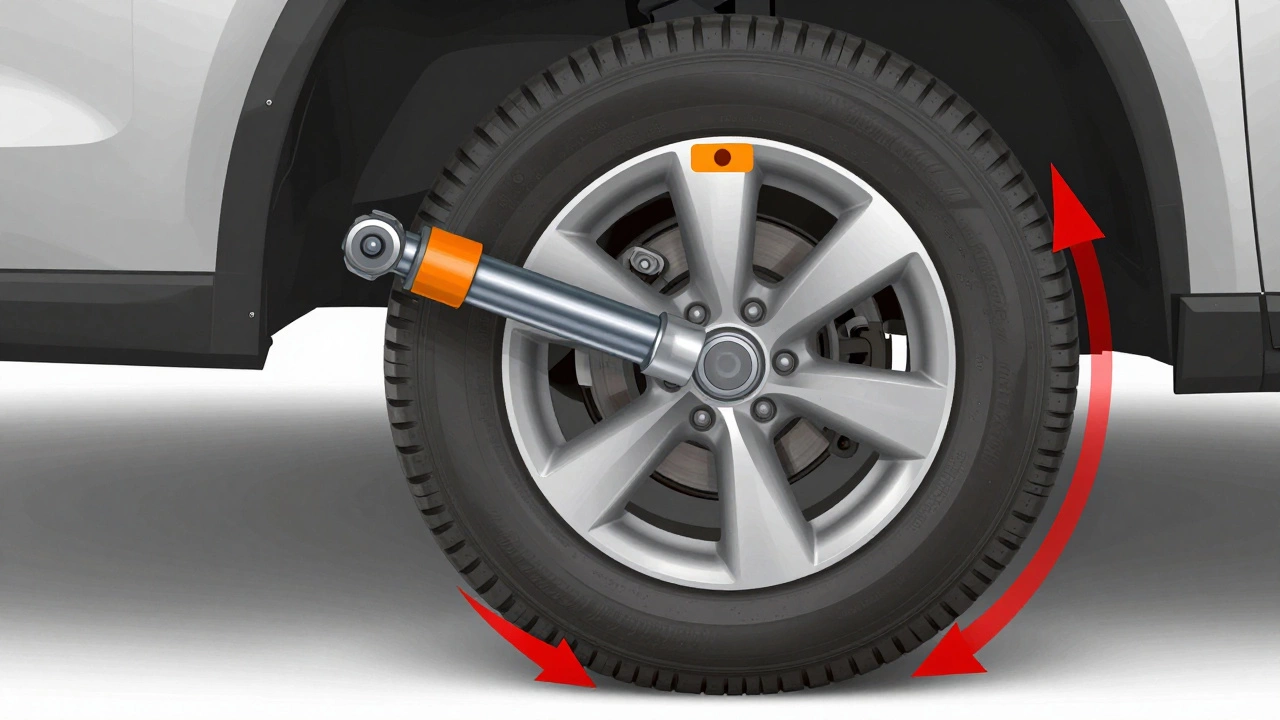
Not all suspension parts fail the same way. Understanding which part is damaged helps you gauge how dangerous it is to move the vehicle.
| Component | Typical Cause of Damage | Risk Level if Driven | Primary Symptom |
|---|---|---|---|
| Control Arm | Hitting curbs or large potholes | High (Can snap) | Pulling, uneven tire wear |
| Tie Rod End | Side impacts or debris strike | Critical (Loss of steering) | Loose steering, wandering |
| Strut/Shock Absorber | Deep impacts compressing the spring | Medium (Poor handling) | Bouncing, nose-diving brakes |
| Wheel Hub/Spindle | Direct impact to wheel well | High (Bearing failure) | Grinding noise, vibration |
| Subframe | Major collisions or extreme off-roading | Critical (Structural integrity) | Drifting, misaligned panels |
Note that tie rods and control arms are the most common victims of everyday city driving hazards like parking curbs. Struts often suffer from repeated abuse over rough roads. Subframes are usually damaged in accidents. If your subframe is bent, the car is structurally compromised and should never be driven.
Can You Straighten a Bent Control Arm?
This is a question many owners ask to save money. The answer is almost always no. Modern suspension components are made from stamped steel or aluminum alloys designed for specific tensile strength. When you bend them, you alter their molecular structure.
Even if a shop uses a hydraulic press to straighten a control arm, it will never return to its original factory tolerance. The metal becomes brittle at the bend point. Under the stress of daily driving-especially cornering and braking-that weak spot will eventually crack. Replacing the part is cheaper than paying for a new transmission or engine mount later, which can happen if a failed suspension component tears through surrounding hardware.
Furthermore, alignment machines measure angles based on the assumption that the mounting points are perfect. If you try to align a car with a bent arm, the technician will adjust the other sides to compensate. This puts abnormal stress on the rest of the suspension, leading to premature failure of ball joints and bushings elsewhere.
What Should You Do Instead?
If you suspect your suspension is bent, follow this protocol:
- Stop driving immediately. If you are on a highway, pull over to the shoulder safely. Do not continue to your home or work.
- Inspect visually. Get down low (safely) and look for obvious bends, cracks, or fluid leaks from struts.
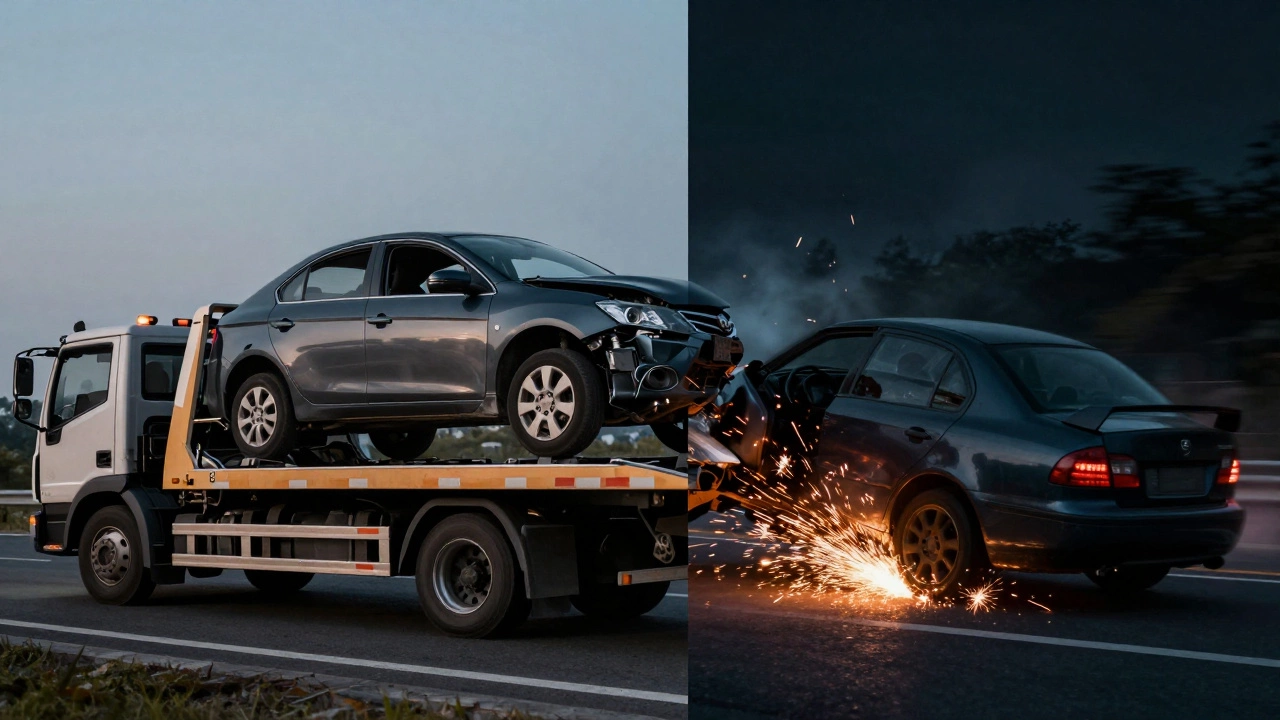
- Call a tow truck. This is the safest and often cheapest option. Towing prevents further damage to your tires, brakes, and steering rack.
- Get a professional inspection. Take the car to a reputable suspension specialist, not just a quick-lube shop. They need to check the frame rails and subframe, not just the visible arms.
If you absolutely must move the car-for example, if you are stuck in a dangerous location-you should drive it at walking speed (under 5 mph) with gentle steering inputs. Do not brake hard. However, this is only an emergency measure, not a solution.
The Cost of Ignoring the Problem
Let’s talk numbers. A new control arm might cost $100-$300 depending on your vehicle. An alignment runs $75-$150. Total repair: roughly $200-$450.
Now, calculate the cost of ignoring it. Ruined tires: $400-$800. Damaged steering rack due to misalignment: $1,500-$2,500. Accident liability due to loss of control: Priceless. The math is simple. Prevention is vastly cheaper than reaction.
Can I drive a few miles to the mechanic with a bent suspension?
It depends on the severity. If the car pulls slightly but steers normally, you might make it at low speeds. However, if the steering feels loose, vibrates heavily, or makes clunking noises, do not drive it. The risk of the component snapping increases with distance and speed. Towing is always the safer bet.
Will an alignment fix a bent suspension part?
No. An alignment adjusts the angles of the wheels relative to each other and the road. It cannot straighten a bent metal arm or spindle. In fact, trying to align a car with bent parts can force the technician to use up all the adjustment range on the good sides, leaving no room for future adjustments and causing rapid tire wear.
How much does it cost to replace a bent control arm?
Parts typically range from $100 to $400 per side, depending on whether you buy OEM or aftermarket. Labor adds another $100 to $200 per hour. Since alignment is required after replacement, expect a total bill of $250 to $600 for one side.
Can a bent suspension cause my car to fail inspection?
Yes. Most state and regional inspections check for unsafe conditions. Uneven tire wear, excessive play in the steering, or visible suspension damage are automatic failures. Additionally, insurance companies may deny claims if they determine that driving with known suspension damage contributed to an accident.
Is it safe to drive on a bent rim instead of a bent suspension?
A bent rim is less immediately dangerous than a bent structural suspension component, but it still causes vibrations and air leaks. Small bends might be straightened by a wheel specialist. Large bends or cracks require replacement. Driving on a severely bent rim can lead to a blowout, especially at highway speeds.