Air Filter Replacement Calculator
Your Vehicle Information
Your Driving Conditions
Recommended Replacement
Most drivers don’t think about their air filter until the engine starts acting up. But a clogged air filter doesn’t just hurt performance-it can cost you money in fuel and repairs. So how often should air filters be changed? The answer isn’t one-size-fits-all. It depends on your car, your driving habits, and where you live.
Engine Air Filter vs. Cabin Air Filter
First, you need to know which filter you’re talking about. There are two: the engine air filter and the cabin air filter. They do completely different jobs.
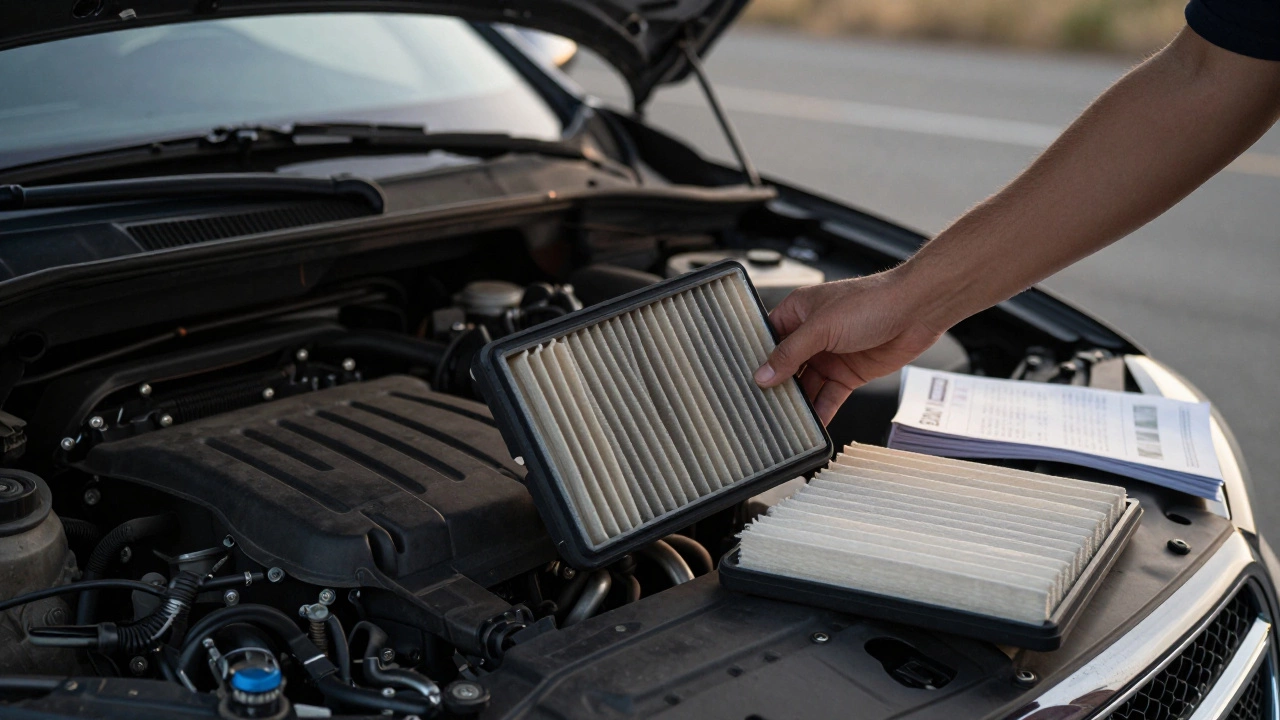
The engine air filter sits in the intake system and keeps dirt, dust, and debris out of your engine. If it gets too dirty, your engine can’t breathe properly. That means less power, worse fuel economy, and even long-term damage.
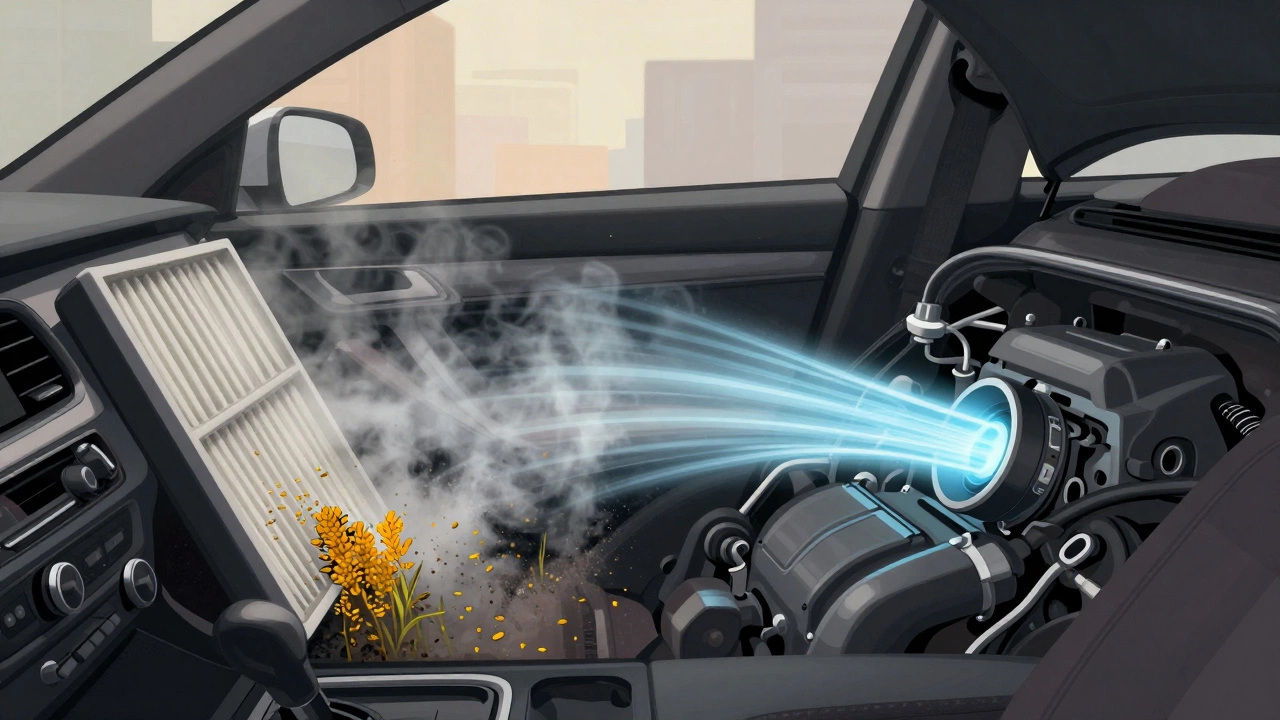
The cabin air filter cleans the air coming into your car’s HVAC system. It stops pollen, mold, exhaust fumes, and even bugs from blowing into your face when you turn on the AC or heater. If this one clogs, you’ll notice bad smells, weak airflow, or foggy windows.
They’re not interchangeable. One protects your engine. The other protects your lungs. Both need attention.
How Often Should You Change the Engine Air Filter?
Most manufacturers recommend replacing the engine air filter every 15,000 to 30,000 miles. But that’s just a baseline.
If you drive mostly on paved roads in a city with low dust, you might get 30,000 miles out of it. But if you drive on gravel roads, in construction zones, or in dry, dusty areas like the Southwest U.S., you could need a new one every 10,000 miles.
Here’s a real-world example: A 2021 Toyota Corolla driven 12,000 miles a year on suburban streets might only need a filter change every 2 years. But the same car driven 15,000 miles a year through desert areas in Arizona could need a new filter every year.
How do you know if it’s time? Pull it out and hold it up to the light. If you can’t see light through it, it’s clogged. If it looks like a sponge covered in dirt, replace it. No need to wait for a warning light-your car won’t give you one.
How Often Should You Change the Cabin Air Filter?
Cabin air filters usually last longer than engine filters-around 15,000 to 30,000 miles, or every 1 to 2 years. But again, environment matters.
If you live in a city with heavy traffic, your filter will collect exhaust particles, brake dust, and smog. If you drive through areas with high pollen counts in spring, it’ll clog faster. People with allergies should check it annually.
Signs your cabin filter is bad:
- Weak airflow from vents, even on high settings
- Musty or moldy smell when you turn on the AC
- Foggy windows that won’t clear, even with defroster on
- More sneezing or congestion during drives
Many people ignore this filter until they can’t breathe in their own car. Don’t wait for that.
Driving Conditions That Speed Up Filter Wear
Not all driving is equal. Here’s what makes your filters wear out faster:
- Dusty or sandy areas-deserts, rural roads, unpaved driveways
- Heavy traffic-more exhaust, brake dust, and pollutants
- High pollen seasons-spring and early summer in many regions
- Driving with windows down-lets in dirt, bugs, and leaves
- Towing or hauling-puts more strain on the engine, which pulls more air
If you do any of these regularly, shorten your replacement schedule. For example, if you drive a pickup truck and haul firewood every weekend, change your engine filter every 10,000 miles. No exceptions.
What Happens If You Don’t Change the Filter?
Skipping a filter change doesn’t cause instant failure. But it slowly breaks down your car’s efficiency.
A dirty engine air filter forces the engine to work harder to pull in air. That means:
- 5% to 10% drop in fuel economy
- Slower acceleration and reduced engine power
- Increased carbon buildup on valves and pistons
- Potential damage to the mass airflow sensor (an expensive repair)
For the cabin filter, ignoring it means breathing in pollutants. In extreme cases, mold can grow inside the HVAC system, leading to expensive cleaning or even replacement of the blower motor.
One mechanic in Ohio told me about a 2018 Honda CR-V that came in with a weak AC and a weird smell. The cabin filter hadn’t been changed in 6 years. It was packed with leaves, dirt, and what looked like a dead mouse. Replacing it cost $35. Cleaning the HVAC system cost $420.
Can You Clean and Reuse an Air Filter?
Some high-performance cars use washable filters, but 99% of standard cars don’t. Paper filters are meant to be replaced, not cleaned.
Trying to vacuum or rinse a paper filter won’t restore it. You’ll just push dirt deeper into the fibers. Even if it looks clean, the structure is damaged. You’re risking engine damage.
Only reusable filters-like those made by K&N or other performance brands-are designed to be cleaned. They’re expensive upfront and require special cleaning kits. For most drivers, replacing a $15-$30 paper filter is smarter.
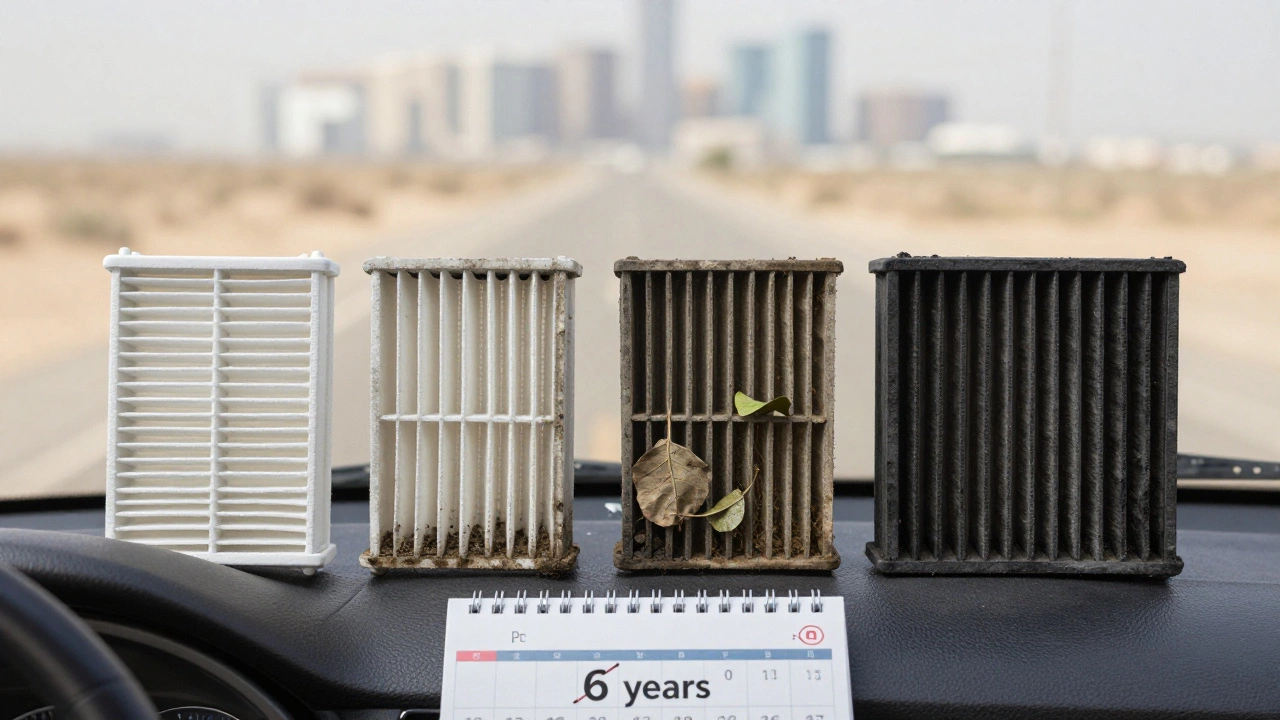
How to Check Your Air Filter (Step-by-Step)
You don’t need tools or training. Here’s how to check both filters in under 10 minutes:
- Engine air filter: Open the hood. Find the black plastic box near the engine. It usually has clips or screws. Open it. Pull out the filter. Hold it up to a bright light. If you can’t see light through it, replace it.
- Cabin air filter: This one’s trickier. It’s usually behind the glove box or under the hood near the windshield. Check your owner’s manual for the exact location. Some models require removing the glove box. Pull it out. Look for debris, mold, or a dark gray color. If it looks like old coffee grounds, replace it.
Most replacements take 5 minutes. You can buy filters at AutoZone, O’Reilly, or Amazon for under $25. No mechanic needed.
When to Replace Based on Time vs. Mileage
Time matters as much as mileage. Even if you drive 5,000 miles a year, filters still degrade.
Here’s a simple rule:
- Engine air filter: Replace every 2 years or 30,000 miles-whichever comes first.
- Cabin air filter: Replace every 1 to 2 years, regardless of mileage.
Why? Filters collect moisture, dust, and chemicals over time. Even if you drive little, the material breaks down. Mold grows. Filters get brittle. You’re not just saving your engine-you’re saving your health.
Pro Tips for Better Air Filter Maintenance
- Keep a log in your glove box. Write down the date and mileage each time you change a filter.
- Change both filters at the same time during your annual service. It’s easier to remember.
- Buy OEM or reputable brands like Fram, K&N, or Mann-Filter. Cheap filters can fall apart or leak.
- Replace filters before long road trips. You’ll notice better performance and cleaner air.
- If you buy a used car, change both filters immediately. You have no idea what condition they’re in.
It’s one of the cheapest maintenance tasks you can do-and one of the most overlooked.
Can I drive without an air filter?
No. Driving without an engine air filter lets unfiltered dirt into your engine. That can scratch cylinders, ruin valves, and destroy the mass airflow sensor. Even a short drive can cause thousands of dollars in damage. Never run your car without a filter.
Do electric cars need air filters?
Yes. Electric cars still have cabin air filters to clean the air entering the cabin. Some also have filters for the battery cooling system. They don’t have engine air filters since there’s no internal combustion engine, but the cabin filter is just as important.
Is it better to change filters more often than recommended?
If you drive in extreme conditions-dusty roads, heavy traffic, or high pollen-it’s smart to change filters more often. But if you drive in clean conditions, sticking to the 15,000-30,000 mile range is fine. Changing too often doesn’t improve performance and just wastes money.
Can a dirty air filter cause the check engine light to come on?
Yes. A severely clogged engine air filter can trigger a check engine light, especially if it causes the mass airflow sensor to send bad data to the engine computer. Codes like P0171 (system too lean) or P0102 (mass airflow sensor low voltage) are common.
How much does it cost to replace an air filter?
A cabin air filter costs $10-$25. An engine air filter costs $15-$35. If you do it yourself, that’s the total cost. At a shop, labor can add $30-$60, but it’s rarely worth it unless you’re not comfortable working under the hood.