Spark Plug Visual Diagnosis Tool
Select the appearance of your spark plug tip and any symptoms you're experiencing to get a probable diagnosis.
--
Select an appearance to see the results.
Key Signs Your Spark Plugs are Failing
Before you even open the bonnet, your car usually tries to tell you something is wrong. If you're experiencing a rough idle-that rhythmic shaking you feel through the steering wheel while stopped-you're likely dealing with a misfire. This happens when the spark plug is a device that delivers an electric spark to ignite the fuel-air mixture in the combustion chamber can no longer jump the gap between the electrodes. Have you noticed your fuel gauge dropping faster than usual? When a plug fails, the fuel doesn't burn completely, meaning you're essentially throwing petrol out the exhaust. You might also see the 'Check Engine' light pop up on the dashboard, which usually points to a cylinder misfire. If your car struggles to start on a cold morning, it's another huge red flag that the ignition system is compromised.
The Visual Test: Reading the Tip
The most reliable way to tell if a spark plug is good is to pull it out and look at the tip. This is called "reading the plug." The color and texture of the electrode tell a detailed story about what's happening inside your engine. Normal Spark Plugs are components with a light grey or tan color on the insulator tip, indicating a healthy combustion process. If yours look like this, put them back in and forget about them for another 20,000 miles. However, if you see something else, you've got a problem. Black, dry soot indicates a "carbon fouled" plug, which usually means your air-fuel mixture is too rich-too much fuel, not enough air. On the other hand, if the tip looks wet, oily, and black, you have an "oil fouled" plug. This is a bit more serious because it suggests oil is leaking past the Piston Rings and burning in the cylinder.
| Tip Appearance | Meaning | Probable Cause |
|---|---|---|
| Light Brown / Grey | Healthy | Correct fuel mix and timing |
| Dry Black Soot | Carbon Fouled | Rich fuel mix / Dirty air filter |
| Wet Black Oil | Oil Fouled | Worn piston rings / Valve seal leak |
| White / Blistered | Overheating | Lean fuel mix / Incorrect heat range |
| Ashy / Grey-White | Worn Out | End of natural service life |
Checking the Electrode Gap
Even if the color looks perfect, a plug can be "bad" if the gap is wrong. The gap is the tiny space between the center electrode and the ground electrode. If this space is too wide, the spark won't jump. If it's too narrow, the spark will be too weak to ignite the fuel properly. To check this, you'll need a Feeler Gauge or a dedicated gap tool. You slide the tool into the gap; it should fit snugly without forcing it or leaving a huge void. Every engine has a specific gap requirement (usually measured in thousandths of an inch or millimeters). If you're using Iridium Spark Plugs or Platinum Spark Plugs, be extremely careful. These have a very fine center wire that can snap if you push the gap tool too hard. In many modern cars, these are pre-gapped and shouldn't be adjusted manually.
Physical Damage and Wear
Take a close look at the metal edges. Do you see tiny pits or melted spots? This is called "erosion." Over time, the electric arc literally eats away at the metal. If the center electrode is rounded off or looks like it's been chewed on, the plug is dead. Check the ceramic insulator as well. If you see thin black lines running down the white porcelain (called "carbon tracking"), it means the spark is leaking electricity down the side of the plug instead of jumping the gap. This is a common failure in older vehicles or those used in very humid environments. Once you see carbon tracking, the plug is garbage; there's no cleaning it.
When to Replace vs. When to Clean
You'll often see old-school advice telling you to clean spark plugs with a wire brush or a torch. In 2026, this is generally a bad idea. Modern Ignition Systems are far more precise than those from the 70s. Scouring the electrode with a brush can destroy the protective coating or change the gap, leading to poor performance. If you find a carbon-fouled plug, the real fix isn't cleaning the plug-it's figuring out why the engine is running rich. Check your Air Filter or your oxygen sensors. Replacing the plugs is cheap; ignoring the root cause of fouling can lead to a ruined Catalytic Converter, which is an incredibly expensive mistake.
The Tool Kit for Inspection
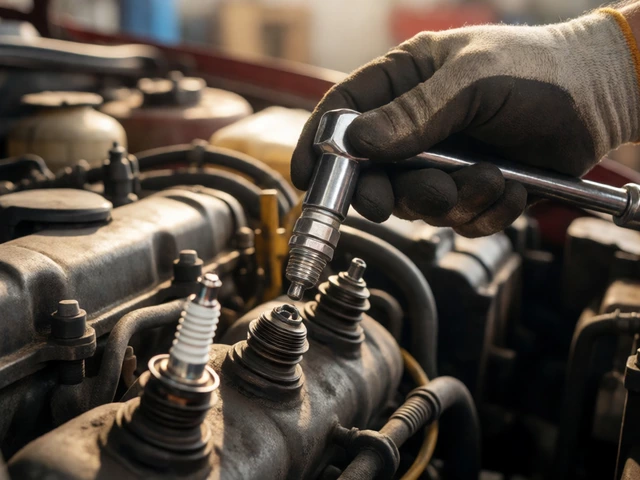
If you're doing this at home, don't wing it. Using the wrong socket can strip the threads out of your cylinder head, and that's a nightmare you don't want. You'll need a spark plug socket (which has a rubber insert to hold the plug), a ratchet, and a torque wrench. One pro tip: always remove the plugs while the engine is cool. Aluminum cylinder heads are soft; if you try to unscrew a plug from a hot engine, you risk stripping the threads. Once you've confirmed a plug is bad, don't just replace that one. Spark plugs wear out at roughly the same rate, so replace the whole set to keep the engine balanced.
Can I drive with one bad spark plug?
You can, but it's a bad idea. Driving with a misfiring cylinder puts extra stress on the other cylinders and sends unburnt fuel into your exhaust system. This will eventually clog your catalytic converter and could cause permanent engine damage if left long enough.
Does a gap tool actually make a difference?
Yes. Even a fraction of a millimeter difference in the gap can change how the spark behaves. Too wide, and the ignition coil might not have enough voltage to jump the gap; too narrow, and you won't get a strong enough spark to ignite the fuel efficiently.
How often should I check my spark plugs?
It depends on the material. Standard copper plugs might need a look every 20,000 to 30,000 miles. Platinum and Iridium plugs can often last 100,000 miles or more. Always check your owner's manual for the specific interval recommended for your engine.
Why are my spark plugs black and oily?
This usually means oil is entering the combustion chamber. This could be due to worn-out piston rings or leaking valve stem seals. It's a sign of internal engine wear and should be diagnosed by a professional to avoid further damage.
Can I use a different brand of spark plug than the original?
Yes, as long as the heat range and gap are the same. However, sticking to the manufacturer's recommended brand (like NGK or Bosch) is usually safest because they are engineered specifically for that engine's combustion characteristics.