Clutch Kit Install: What You Need to Know Before You Start
When you hear a grinding noise when shifting, or your car won’t go into gear without stalling, it’s usually not the gearbox—it’s the clutch kit, a set of components including the clutch disc, pressure plate, and release bearing that connects your engine to the transmission. Also known as a clutch assembly, this part wears out over time, and when it does, driving becomes frustrating—or even dangerous. A clutch kit install isn’t just swapping parts. It’s about restoring smooth power transfer, preventing damage to your flywheel or transmission, and avoiding costly mistakes that come from rushing the job.
Most people don’t realize that a failing clutch doesn’t always scream for help. Sometimes it just slips—like when you press the gas and the engine revs but the car doesn’t accelerate. Or maybe the pedal feels spongy, or you need to press it all the way to the floor to shift. These aren’t just annoyances. They’re signs your clutch wear, the gradual thinning of the friction material on the clutch disc has reached a critical point. And if you keep driving, you risk frying the clutch replacement, the full process of removing the old clutch kit and installing a new one, often requiring transmission removal to cost twice as much because the flywheel got damaged too. In India, where traffic is stop-and-go and drivers often ride the clutch in heavy cities, clutch life can drop below 50,000 km if you’re not careful.
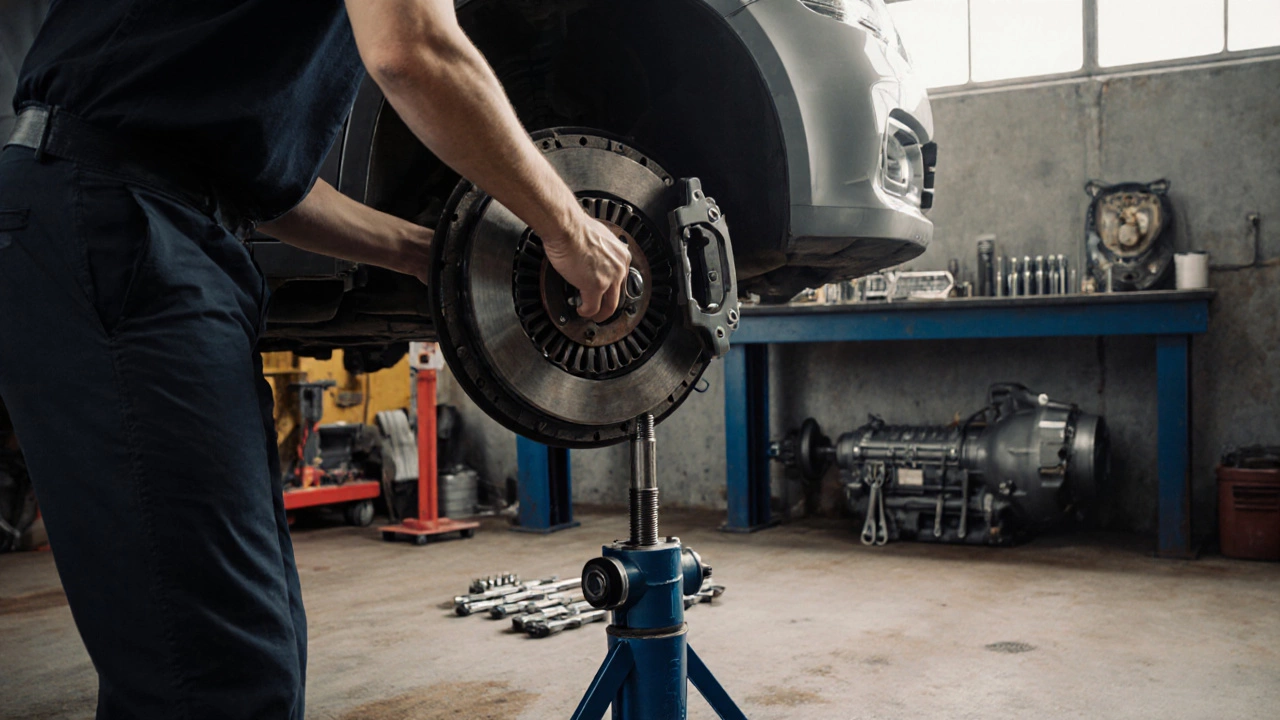
Doing a clutch kit install, the complete procedure of replacing the clutch disc, pressure plate, and release bearing as a set yourself? It’s possible, but not easy. You need a jack, jack stands, a transmission jack, torque wrench, and hours of patience. Many try it, only to find the clutch doesn’t engage right because the release bearing wasn’t aligned, or the flywheel wasn’t resurfaced. That’s why most pros recommend replacing the entire kit at once—even if only the disc looks worn. The pressure plate and bearing are just as old, and they fail soon after. And don’t forget: a bad clutch adjustment, the process of setting the correct pedal free play to ensure smooth engagement can make even a brand-new kit feel like it’s failing.
What you’ll find below are real stories from people who’ve been there—what went wrong, what saved them money, and what they wish they’d known before they started. From signs your clutch is dying to why some clutch kits last longer than others in Indian conditions, these posts give you the no-fluff facts you need to decide whether to DIY or call a mechanic. No theory. No hype. Just what actually happens when you pull the transmission out and replace that clutch kit.
-
28 Oct
- Recent
- Popular