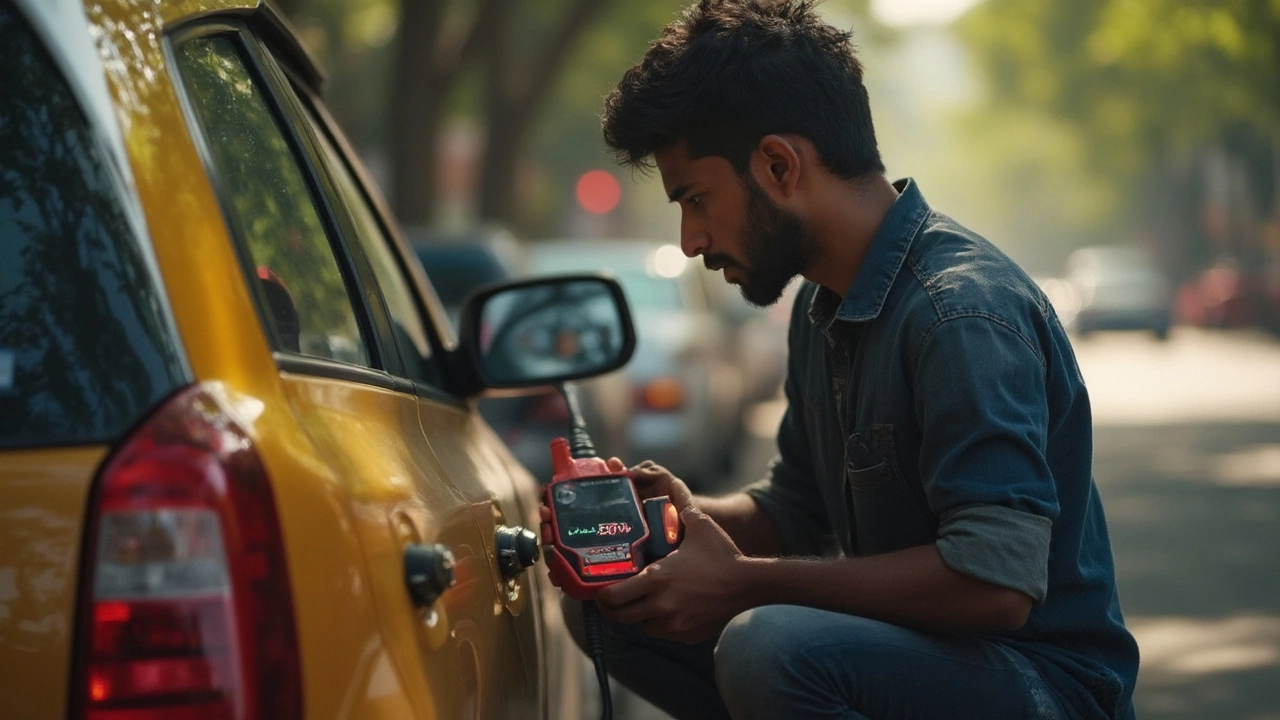
Fuel Pump Failure Symptoms: How to Spot a Bad Fuel Pump Early
When your fuel pump, the component that delivers gasoline from your tank to the engine. Also known as fuel delivery pump, it's one of the most overlooked parts in your car—until it dies and leaves you stranded. A bad fuel pump doesn’t always scream for help. Sometimes it just whispers: a slight hesitation, a weird whine from the back seat, or your engine sputtering on the highway. These aren’t random glitches. They’re warnings.
What most people miss is that low fuel pressure, the result of a weak or failing fuel pump doesn’t just make your car run poorly—it can damage your injectors, trigger false error codes, and even kill your engine mid-drive. And the fuel pump noise, that high-pitched whining you hear when you turn the key? It’s not normal. That’s the pump struggling. If you’ve ever heard a sound like a dying electric toothbrush coming from your gas tank, you’re not imagining it. It’s the pump’s bearings wearing out, or the motor overheating from running dry.
And here’s the catch: a fuel pump doesn’t always die suddenly. More often, it fades slowly. You start noticing your car hesitates when accelerating uphill. Your engine stumbles at stoplights. Your check engine light flickers on and off, but never stays on long enough for a clear code. These are classic signs. And if you’ve ever tried to start your car after it’s been sitting for a few hours, only to hear the engine crank but never catch? That’s often a fuel pump that’s lost its prime. It’s not your battery. It’s not your spark plugs. It’s the pump.
What makes this worse is that people confuse fuel pump issues with other problems—bad spark plugs, dirty injectors, even a clogged air filter. But if your car runs fine when cold but starts acting up after it warms up, or if it dies under load and then starts again after sitting for 10 minutes, that’s a fuel pump signature. No other part behaves like that.
You don’t need a diagnostic tool to spot most of these signs. Listen. Feel. Observe. If your fuel gauge drops faster than usual, or if your car feels like it’s running out of gas even with a half-full tank, your pump might not be delivering enough fuel. And if you’ve ever had a mechanic say, "I can’t find anything wrong," but you know something’s off—you’re right. Trust your gut. The fuel pump is hiding in plain sight.
The good news? You can catch these symptoms before they turn into a tow truck bill. Most of the posts below show real cases—people who heard the whine, noticed the sputter, and acted before their car died on the highway. You’ll find step-by-step checks you can do yourself, what sounds to listen for, how to test fuel pressure with a simple gauge, and when it’s time to call a pro. No fluff. No jargon. Just what actually matters when your car won’t start and you’re running out of options.
-
24 Jun
- Recent
- Popular