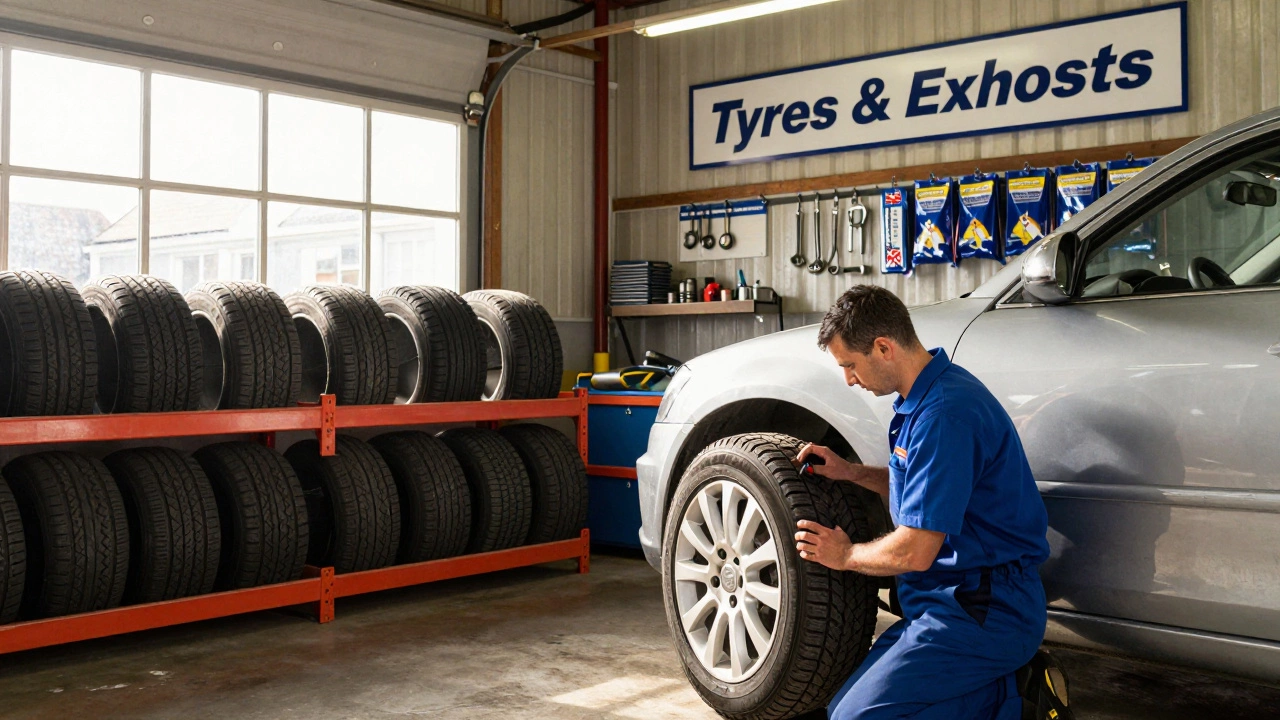
Tyre/Tire Spelling Checker
Which spelling should you use?
Select your country to see the correct regional spelling for car rubber.
Select your country and click "Check Spelling" to see the correct term.
Ever looked at your car’s tyres and wondered - is it tyres or tires? You’re not alone. This tiny difference trips up drivers, mechanics, and even native English speakers. The answer isn’t about right or wrong - it’s about where you are.
It’s About Location, Not Grammar
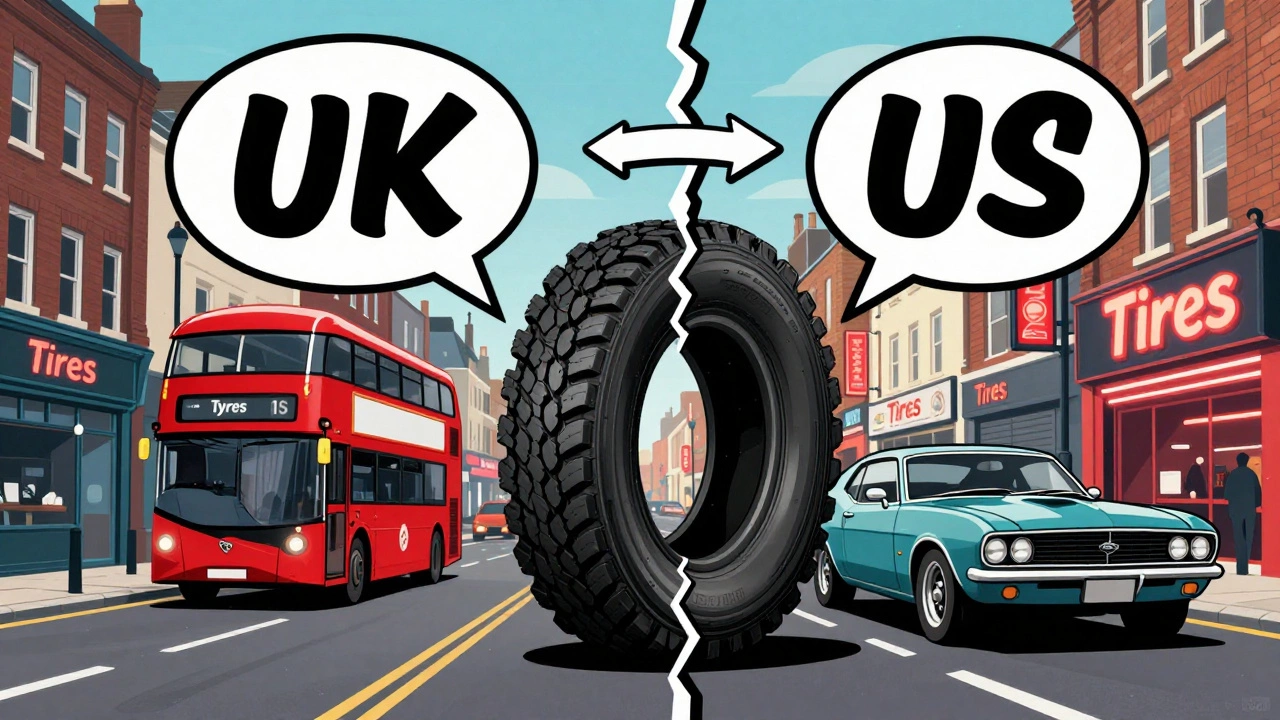
There’s no single correct spelling of the word for the rubber part that touches the road. Tyres is the standard spelling in the UK, Australia, India, and most Commonwealth countries. Tires is used in the US and Canada. Both are correct - just in different places.
If you’re in Bristol, like me, you’ll see ‘tyres’ on every garage sign, every MOT certificate, and every product label at Halfords. Walk into a shop in Chicago, and you’ll hear ‘tires’ everywhere - from the mechanic to the radio ad. Neither is a mistake. It’s just regional English.
Why the Difference Exists
The split goes back to how English evolved after the American Revolution. In the 18th and 19th centuries, British English kept older spellings - like ‘colour’, ‘centre’, and ‘tyre’. American English, pushed by lexicographers like Noah Webster, simplified spellings to make them more phonetic. ‘Tyre’ became ‘tire’ - easier to write, easier to print.
It’s not just tyres. You’ll see the same pattern with:
- Colour vs Color
- Labour vs Labor
- Organise vs Organize
- Centre vs Center
The change wasn’t random. It was a deliberate effort to create a distinct American identity in language. And it stuck.
What You’ll See in Real Life
Let’s say you’re shopping online for new rubber. Type ‘tyres’ into Google UK - you’ll get results from Michelin UK, Goodyear UK, Evans Cycles. Type ‘tires’? You’ll mostly see American sites. Flip to Google US - reverse the result.
Car manufacturers handle this smartly. A Ford Focus sold in London will say ‘tyres’ in the owner’s manual. The same model shipped to Texas says ‘tires’. The product is identical. Only the label changes.
Even in the UK, you’ll sometimes see ‘tires’ - especially on imported parts, YouTube videos from American mechanics, or forums like Reddit. But if you’re talking to a local garage, they’ll say ‘tyres’. If you say ‘tires’ here, they’ll understand you - but they might raise an eyebrow.
Does It Matter for Your Car?
Here’s the practical side: no. Whether you spell it ‘tyres’ or ‘tires’, your car doesn’t care. The rubber, the pressure, the tread depth - none of that changes based on spelling.
What does matter is this: if you’re ordering replacement parts online, use the right spelling for your region. If you’re in the UK and search for ‘tires’, you might miss local suppliers. If you’re in the US and type ‘tyres’, you could end up on a British site with shipping fees or incompatible standards.
And if you’re reading a manual or service guide? Match the spelling to the source. A BMW handbook from Germany might use ‘tyres’ - even if it’s sold in the US. That doesn’t mean it’s wrong. It’s just following the manufacturer’s regional guidelines.
What About Legal Documents?
In the UK, the MOT test, vehicle registration, and insurance papers all use ‘tyres’. If you’re filling out a form for your car, use ‘tyres’. Same goes for garage invoices, breakdown cover, and roadside assistance.
In the US, ‘tires’ is required on DMV forms, warranty claims, and repair receipts. Use the local spelling - it avoids confusion with paperwork.
Bottom line: don’t mix them. If you’re writing about your car in the UK, stick to ‘tyres’. If you’re in the US, use ‘tires’. It’s not about correctness - it’s about clarity.

Common Confusions and Myths
Some people think ‘tyre’ is British slang. It’s not. It’s the standard spelling. Others believe ‘tire’ is American slang. Again - no. It’s the official spelling in North America.
Another myth: ‘tyre’ is more technical. Wrong. Both spellings are used in professional contexts - just in different regions. A tyre technician in Manchester and a tire specialist in Detroit do the same job. One says ‘tyres’, the other says ‘tires’.
And yes - ‘tire’ can also mean ‘to become weary’ in English. That’s a different word entirely. Don’t confuse ‘I tire of driving’ with ‘I need new tires’. Context tells you which one you mean.
What Should You Use?
Here’s a simple rule:
- If you live in the UK, Ireland, Australia, New Zealand, South Africa, or most Commonwealth countries - use tyres.
- If you live in the US or Canada - use tires.
- If you’re writing for an international audience - pick one and stick with it. Don’t switch mid-sentence.
And if you’re unsure? Look at where you are. If your car was registered in the UK, use ‘tyres’. If you bought it in the US, use ‘tires’.
Final Takeaway
There’s no ‘right’ spelling of tyre or tire. There’s only the one that matches your location. Both are valid. Both are used by millions. The real question isn’t which is correct - it’s which one makes sense in your context.
So next time you check your tread depth or fill up your pressure, don’t stress about the spelling. Just make sure your tyres - or tires - are in good shape. That’s what really matters on the road.