
Exhaust Sound Selector
Find Your Perfect Exhaust Sound
Select your vehicle characteristics to get personalized recommendations based on engine type, desired sound, and usage.
Recommended Sound Profile:
There’s no denying it - the sound of a car’s exhaust can make or break the driving experience. You can have a car with zero horsepower, but if it sounds right, people will turn their heads. But here’s the real question: what exhaust gives the best sound? It’s not about volume. It’s not about cheap chrome tips. It’s about tone, character, and how it makes you feel behind the wheel.
There’s no single ‘best’ exhaust sound - it depends on your car
Ask ten drivers what the perfect exhaust note is, and you’ll get ten different answers. One person wants the deep, guttural rumble of a V8. Another craves the high-pitched scream of a turbocharged four-cylinder. A third just wants something that doesn’t sound like a lawnmower. The truth? The best exhaust sound is the one that matches your car’s personality.
Take a classic BMW M3 with its naturally aspirated V8. Swap in a loud, cheap cat-back system, and you’ll lose the crisp, mechanical bark that made it legendary. But put on a well-tuned system - something like the Akrapovič Evolution - and you get that smooth, metallic growl that builds with RPM. It’s not just loud. It’s musical.
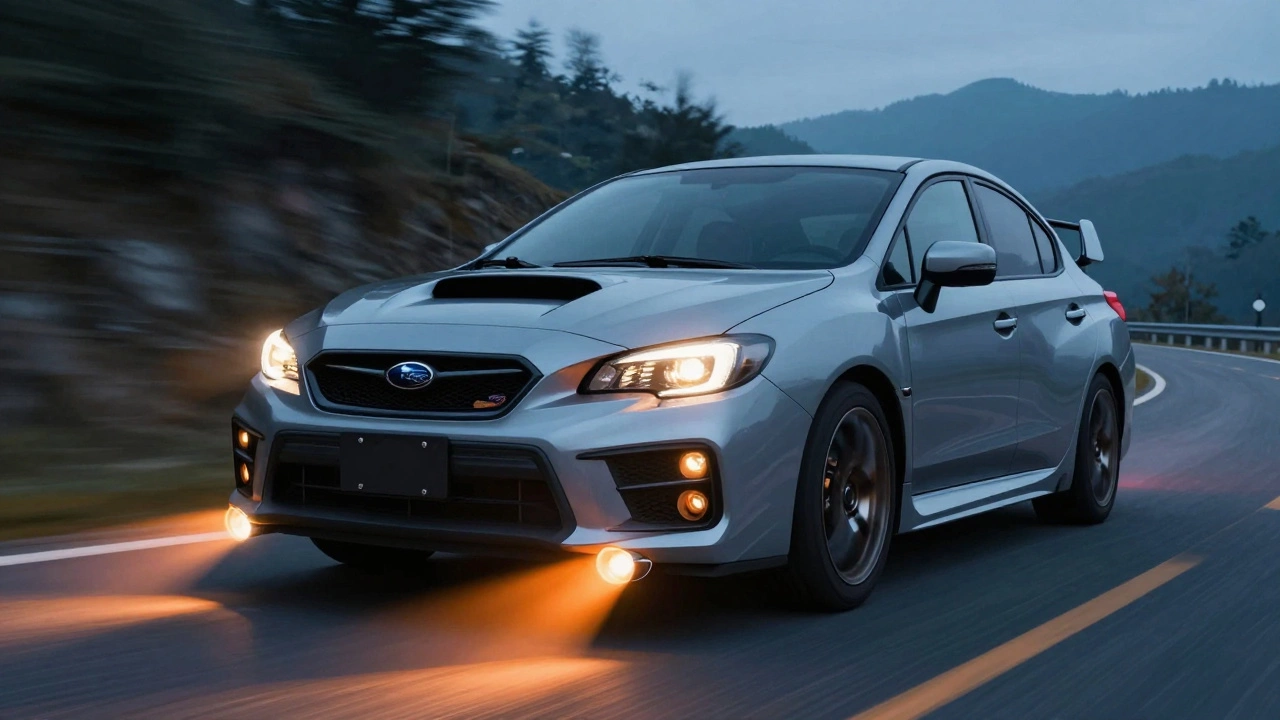
On the flip side, a modern Subaru WRX with its turbocharged flat-four doesn’t need a deep tone. It thrives on that sharp, high-revving whistle as the turbo spools. A muffler that dulls that sound turns it into just another fast sedan. The best exhaust for it lets the turbo sing.
What actually shapes exhaust sound? It’s not just the muffler
Most people think the muffler is the boss. It’s not. The whole system works together. Here’s what really controls the tone:
- Pipe diameter - Larger pipes reduce backpressure but can make the sound too boomy. Too small, and you get a raspy, strained note.
- Material - Stainless steel gives a brighter, more resonant tone. Titanium is lighter and slightly sharper. Aluminized steel? Duller, cheaper, and often muffled.
- Resonators - These aren’t just for noise reduction. A tuned resonator cancels out harsh frequencies. It’s what turns a grating sound into a rich one.
- Exhaust routing - Dual exhausts with true duals (not just dual tips) create a fuller, more balanced sound. Single pipes often sound thin or one-dimensional.
- Engine type - V6s, V8s, and flat-sixes have natural harmonics. Four-cylinders need more help from the system to sound good.
That’s why some aftermarket kits sound amazing on one car but terrible on another. A system designed for a Mustang won’t magically sound right on a Civic. It’s not plug-and-play magic.
The top three exhaust types that actually deliver great sound
After years of listening to cars in garages, on track days, and on Bristol’s back roads, these three setups consistently get it right:
- Cat-back systems with resonators - These replace everything from the catalytic converter back. They give you control over tone without triggering check-engine lights. Brands like Borla, MagnaFlow, and Corsa are known for tuning their resonators to remove drone while keeping performance. The Corsa Sport system, for example, uses its patented Reflective Sound Cancellation to eliminate cabin noise at cruising speeds - but still lets the engine roar under acceleration.
- True dual exhaust with X-pipe - Found on performance cars like the Camaro, Mustang, and Supra, an X-pipe balances pressure between the two sides. This smooths out the exhaust pulses, creating a deeper, more harmonious note. It’s not just about looks - the X-pipe changes the physics of how sound waves interact. The result? A sound that builds like a symphony instead of a drum solo.
- Header-back systems on naturally aspirated engines - If you’ve got a car with a high-revving engine (think Nissan S15 Silvia or Mazda RX-7), going header-back (replacing everything from the headers) is the only way to unlock real sound. These systems remove every restriction, letting the engine breathe freely. The exhaust note becomes a raw, mechanical scream - not just loud, but alive.
What sounds bad? The common exhaust mistakes
Not all loud exhausts are good. Here’s what to avoid:
- Super cheap no-name systems - These often use thin-wall tubing that rattles and vibrates. They sound tinny, not powerful. I’ve heard one that sounded like a broken vacuum cleaner. It didn’t even last a year.
- Systems with no resonators - These are the loudest, but also the most fatiguing. They drone at highway speeds. You’ll feel it in your spine after 20 minutes. It’s not thrilling - it’s torture.
- Overly aggressive mufflers - Some brands market their systems as “race-ready.” That usually means a straight-through design with no tuning. The result? A shrill, high-pitched whine that gets annoying fast.
- Aftermarket systems on stock engines - Putting a loud system on a stock 2.0L four-cylinder doesn’t make it sound like a V8. It just makes it sound like a strained, angry four-cylinder. Your car’s engine has a natural frequency. Don’t fight it.
Real-world examples: What sounds good on real cars
Let’s get specific. Here’s what actually works:
- Subaru WRX/STI - The Invidia N1 cat-back. It keeps the turbo’s whistle and adds just enough depth to make it feel substantial. Not too loud, not too quiet. Perfect for daily driving and track days.
- Toyota Supra (A90) - The Akrapovič titanium system. It’s expensive, yes, but it transforms the inline-six from a polite growl into a throaty, metallic roar. The sound climbs smoothly with RPM - no harshness.
- BMW M3 (E92) - The Remus Sport system. It brings back the V8’s natural bark without the drone. It’s the sound you remember from the 2000s - raw, mechanical, and emotional.
- Ford Mustang GT - The Borla ATAK. It’s loud, but it’s not obnoxious. It has a deep, rolling bass that shakes your chest without rattling your fillings.
Notice a pattern? These systems don’t just make noise. They enhance the engine’s natural voice.

How to choose your exhaust - a simple checklist
If you’re shopping, use this quick guide:
- Know your engine - V8s need depth. Four-cylinders need clarity. Turbo engines need whistle retention.
- Listen before you buy - YouTube videos are helpful, but real-world sound varies by climate, road surface, and even muffler temperature. Find a local owner with the same setup and ask to hear it.
- Check for drone - Drive 70 mph on the highway in neutral. If your ears feel tired, skip it.
- Don’t chase volume - A 90dB system that’s musical beats a 110dB system that’s just noisy.
- Respect your car’s legacy - A classic Porsche 911 doesn’t need to sound like a dragster. It needs to sound like itself.
What about legality? Can you even drive it on the street?
In the UK, the MOT test checks for excessive noise. If your exhaust is clearly louder than the original - and you’ve removed the catalytic converter - you’ll fail. Most reputable performance systems are designed to keep the catalytic converter intact. Stick with cat-back systems that retain OEM emissions hardware. They’re street-legal and still sound amazing.
Also, avoid systems that claim to be “for racing use only.” Those are meant for track use. If you’re driving on public roads, you want something certified for road use. Brands like Akrapovič, Borla, and Remus all list their systems as road-legal in the UK.
Final thought: The best exhaust sound is the one that makes you smile
At the end of the day, exhaust sound is emotional. It’s not about specs or decibels. It’s about how it makes you feel when you press the throttle. Is it thrilling? Does it feel connected? Does it sound like your car has a soul?
Don’t buy an exhaust because someone on TikTok said it’s the loudest. Buy it because it sounds like your car was meant to sound. That’s the real best sound.
What exhaust system gives the deepest sound?
The deepest exhaust sounds come from V8 engines paired with true dual exhaust systems that include an X-pipe and resonators. Systems like the Borla ATAK for Ford Mustang GT or the Akrapovič titanium system for the BMW M3 deliver a rich, low-frequency rumble without excessive drone. Material matters too - stainless steel and titanium enhance resonance, while thick-walled pipes reduce harshness. Avoid straight-through mufflers - they’re loud but lack depth.
Do performance exhausts make a car faster?
Performance exhausts can improve engine efficiency by reducing backpressure, which may add 5-15 horsepower depending on the car and engine. But the biggest gains are in throttle response and high-RPM breathing, not outright speed. For turbocharged engines, the turbo spools faster. For naturally aspirated engines, the engine revs more freely. The sound improvement, however, is usually more noticeable than the power gain.
Is a louder exhaust always better?
No. A louder exhaust often means more drone, fatigue, and annoyance - especially on long drives. The best exhausts are tuned to be loud under acceleration but quiet at cruising speeds. Systems with resonators (like Corsa or MagnaFlow) achieve this balance. Loudness without control is just noise. Character is what matters.
Can I install a performance exhaust myself?
Yes, if you have basic tools and experience with undercarriage work. Most cat-back systems bolt on with simple wrenches and don’t require cutting or welding. But if you’re replacing headers, downpipes, or catalytic converters, you’ll need lifts, torches, and sometimes engine support. If you’re unsure, have a professional install it - improper fit can cause leaks, rattles, or even damage to the chassis.
Do exhaust systems affect fuel economy?
In most cases, a well-designed performance exhaust improves fuel economy slightly by reducing engine strain. Less backpressure means the engine doesn’t have to work as hard to push exhaust gases out. On highway driving, you might see a 1-3% improvement. But if you drive more aggressively because the car sounds better, your fuel economy will drop. It’s not a magic upgrade - it’s a tool, not a cure.