Engine Oil Swap Risk Calculator
Enter Data to Check
--Input the temperature and vehicle type above to see if swapping 5W30 for 10W30 is safe for your situation.
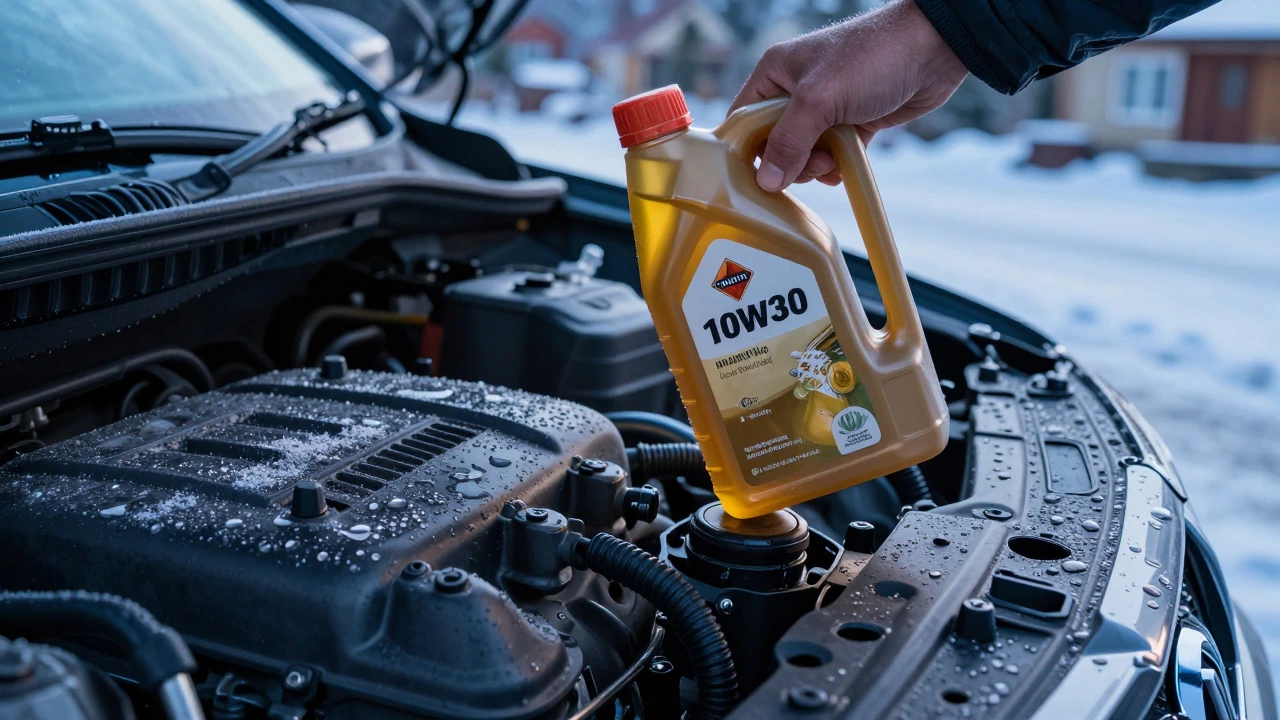
You just topped up your engine with 10W30 instead of the recommended 5W30. Panic sets in immediately. Is your engine toast? Will it seize on the next cold morning? Or will you not even notice a difference?
The short answer is: it depends entirely on where you live and how cold it gets. If you are parked in a garage in Bristol or anywhere with mild winters, you are likely fine for now. If you are starting your car at -20°C in Siberia, you have a problem. Let’s break down exactly what those numbers mean, why manufacturers specify them, and what actually happens inside your engine when you mix up the weights.
Decoding the Viscosity Numbers
To understand the risk, you need to understand the code. Engine oil ratings like 5W30 or 10W30 are defined by the SAE (Society of Automotive Engineers) standard. This isn't marketing fluff; it’s a precise measurement of how thick or thin the oil is at different temperatures.
The rating has two parts:
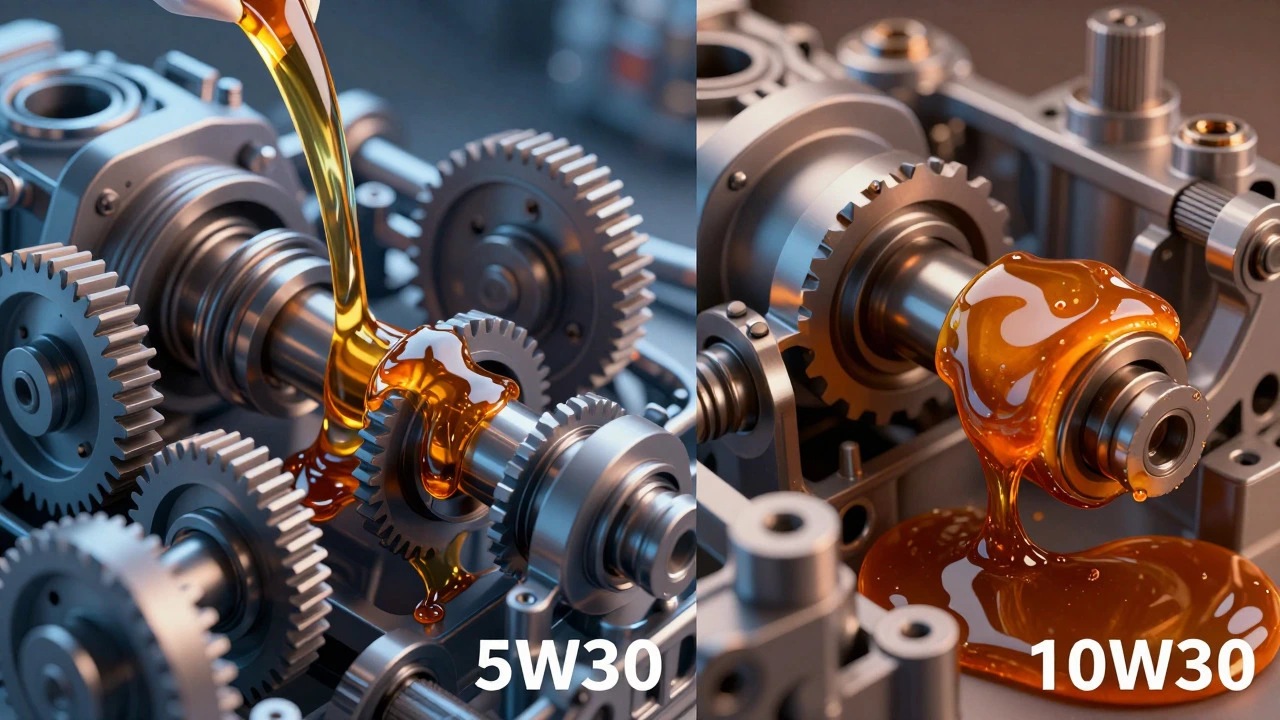
- The 'W' Number (Winter Rating): The number before the 'W' (5 or 10) tells you how the oil flows at low temperatures. A lower number means the oil stays thinner in the cold. 5W flows better than 10W when it's freezing.
- The Second Number (Operating Temperature): The number after the 'W' (30 in both cases) tells you how thick the oil is at normal operating temperature (around 100°C). Since both oils are '30', they perform identically once the engine is fully warmed up.
So, swapping 5W30 for 10W30 changes only one thing: the cold-start performance. Once that engine hits 90°C, both oils provide the same level of protection and lubrication thickness.
The Cold Start Problem
This is where the danger lies. Most engine wear doesn’t happen while you’re cruising on the highway. It happens in the first few seconds after you turn the key. During this time, the oil pump is struggling to push thick oil through tight clearances to coat the camshafts, pistons, and bearings.
If you use 10W30 in a climate where 5W30 was specified, here is the specific risk profile:
- Increased Cranking Resistance: Thicker oil resists flow more. Your starter motor has to work harder to spin the engine. In extreme cold, this can drain your battery faster or fail to crank the engine at all.
- Delayed Lubrication: Because 10W is thicker in the cold, it takes longer to reach critical components. Those extra milliseconds of dry metal-on-metal contact cause microscopic wear. One or two starts won’t kill your engine, but doing this every day in winter adds up over years.
- Oil Starvation Risk: In very cold conditions, if the oil is too viscous, it might not pass through the oil filter quickly enough, leading to a temporary drop in oil pressure until the engine warms up.
However, if your lowest nighttime temperature rarely drops below 0°C (32°F), the difference between 5W and 10W is negligible. The oil remains fluid enough to circulate properly. Many older vehicles from the 80s and 90s used 10W30 or even 20W50 as their primary grade because engines had larger tolerances and didn't rely on such precise, thin-film lubrication during startup.
Does It Matter for Modern Engines?
Modern engines, especially those built in the last decade, are engineered with tighter tolerances. They use variable valve timing (VVT) systems that rely on precise oil pressure to actuate cam phasers. These systems are sensitive to oil flow rates.
If your manufacturer specifies 5W30, they did extensive testing to ensure that specific viscosity allows the VVT system to engage correctly within the first second of startup. Using 10W30 might cause the VVT system to lag slightly in cold weather. You might not hear it, but it could result in slightly reduced fuel efficiency or minor roughness until the oil warms up.
Additionally, many modern cars have low-friction coatings on piston rings and cylinder walls. These coatings require a specific oil film strength. While 10W30 provides adequate film strength at operating temperature, its initial flow characteristics might not match the engineering specs for these delicate surfaces during the critical warm-up phase.
When Is Swapping Safe?
Not every deviation is a disaster. Here are scenarios where using 10W30 instead of 5W30 is generally acceptable:
- Mild Climates: If you live in a region where temperatures stay above freezing year-round (like Southern California, Spain, or Australia), 10W30 is often perfectly safe. The 'W' rating becomes less relevant when it never gets cold enough to thicken the oil significantly.
- High Mileage Engines: Older engines with worn bearings may have larger gaps between moving parts. Thicker oil (higher W number) can sometimes help maintain oil pressure in these worn engines, reducing noise and leaks. However, always check the owner's manual first.
- Temporary Emergency: If you are out of 5W30 and need to top up to avoid running low, adding a quart of 10W30 is far better than running with low oil levels. Just switch back to 5W30 at your next oil change.
Comparison: 5W30 vs 10W30 Attributes
| Attribute | 5W30 | 10W30 |
|---|---|---|
| Cold Flow Temp (Approx.) | -30°C (-22°F) | -25°C (-13°F) |
| Warm-Up Flow Speed | Faster | Slower |
| Operating Temp Viscosity | Identical (SAE 30) | Identical (SAE 30) |
| Ideal Climate | Cold to Moderate | Moderate to Warm |
| Starter Load | Lower | Slightly Higher |

What About Synthetic Blends?
Most 5W30 oils today are full synthetic. Synthetic oils have a higher viscosity index, meaning they resist thinning out when hot and thickening when cold better than conventional oils. 10W30 is often available as a conventional or synthetic blend.
If you swap a full synthetic 5W30 for a conventional 10W30, you lose two benefits: the superior cold-flow properties of the synthetic base stock and the thermal stability of the additives. Conventional oils break down faster under high heat, which could lead to sludge buildup if you drive aggressively or tow heavy loads. Always try to match the oil type (synthetic vs. conventional) as well as the viscosity.
Steps to Take If You Already Made the Mistake
Don’t panic. Follow these steps to mitigate any potential issues:
- Check the Weather Forecast: If temperatures are going to drop below -15°C (5°F) tonight, consider draining the oil and refilling with the correct grade if possible. If it’s going to be mild, you can wait.
- Monitor Oil Pressure: On your next cold start, watch your oil pressure warning light. It should go off within 1-2 seconds. If it stays on, shut off the engine immediately. This indicates the oil is too thick to circulate.
- Listen for Noise: Listen for excessive ticking or knocking from the valvetrain during the first minute of driving. This suggests the lifters aren’t getting oil fast enough.
- Plan an Early Change: Don’t wait for the full service interval. Drain the 10W30 and refill with 5W30 at your earliest convenience, especially before winter arrives.
Manufacturer Specifications Matter
Your car’s owner manual is the final authority. It doesn’t just list a viscosity; it lists approval standards like API SP, ACEA C3, or GM Dexos1. These standards dictate additive packages that protect against specific engine issues like Low-Speed Pre-Ignition (LSPI) in turbocharged engines.
Even if the viscosity is close, using an oil that doesn’t meet the manufacturer’s API or ACEA standard can void warranties and lead to long-term damage. Always prioritize the approval standard alongside the viscosity rating.
Can I mix 5W30 and 10W30 oil?
Yes, you can mix them temporarily. Since they share the same high-temperature viscosity (30), mixing them won’t cause immediate harm. The resulting mixture will have a viscosity somewhere between 5W and 10W in cold weather. However, you should drain and replace it with the correct single-grade oil at your next scheduled service to ensure optimal performance.
Is 10W30 better for older engines?
Often, yes. Older engines with higher mileage may have worn bearing clearances. Thicker oil like 10W30 can help maintain oil pressure and reduce oil consumption (burning oil) in these engines. However, always consult your owner's manual or a mechanic, as some older engines still require specific additive packages found in 5W30.
Will using 10W30 void my warranty?
It depends. If you experience engine failure and the manufacturer can prove that the wrong viscosity contributed to the damage, they may deny the claim. Most warranties require adherence to the recommended oil specifications. To be safe, stick to the recommended grade, especially for new vehicles.
How does temperature affect oil viscosity?
Oil thickens as it gets colder and thins as it gets hotter. The 'W' rating measures how much it thickens in the cold. A 5W oil remains thinner than 10W oil at freezing temperatures, allowing it to flow more easily to lubricate engine parts during startup.
Should I switch to 10W30 in summer?
No, unless your manual explicitly says so. Since both 5W30 and 10W30 have the same high-temperature rating (30), switching to 10W30 in summer offers no benefit. It only makes cold starts worse. Stick with the manufacturer’s recommendation year-round for consistent protection.