Suspension Noise Diagnostic Tool
Select the primary sound your vehicle is making to identify the likely cause and urgency.
Clunk / Thud
Deep, hollow metallic soundSqueak / Creak
Sharp, grating frictionRattle / Buzz
Constant vibrationGrind / Crunch
Metal-on-metal growlDiagnosis Result
That unsettling clunk you hear when you hit a pothole isn't just an annoyance-it's your car crying for help. Most drivers ignore it until the ride becomes unbearable or, worse, they lose control on a wet Bristol road. But what exactly is that noise telling you? Is it a simple bushing wearing out, or has a shock absorber completely failed?
Understanding suspension noises saves you money and keeps you safe. By learning to distinguish between a rattle, a squeak, and a grind, you can pinpoint the broken part before it causes secondary damage to your wheels, brakes, or steering system. This guide breaks down every common suspension sound, where it comes from, and how urgent the fix really is.
The Loud Clunk: Shocks, Struts, and Bushings
If your car makes a heavy, metallic clunking noise is a deep, hollow sound heard when driving over bumps or dips, pay attention. This is the most common complaint regarding worn suspension components. It usually happens because metal parts are hitting each other directly, without the cushion of rubber or fluid to absorb the impact.
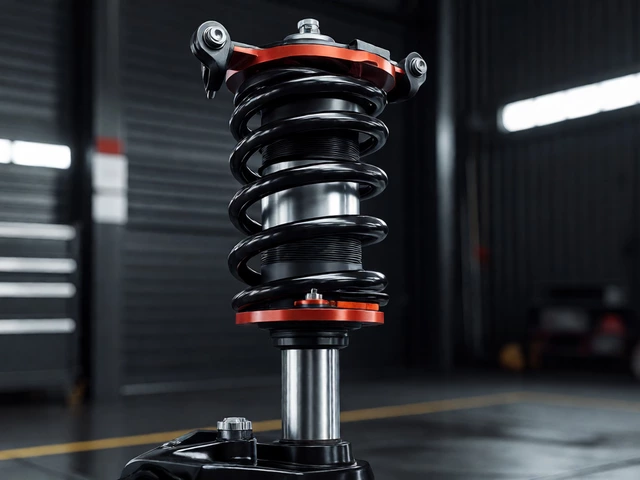
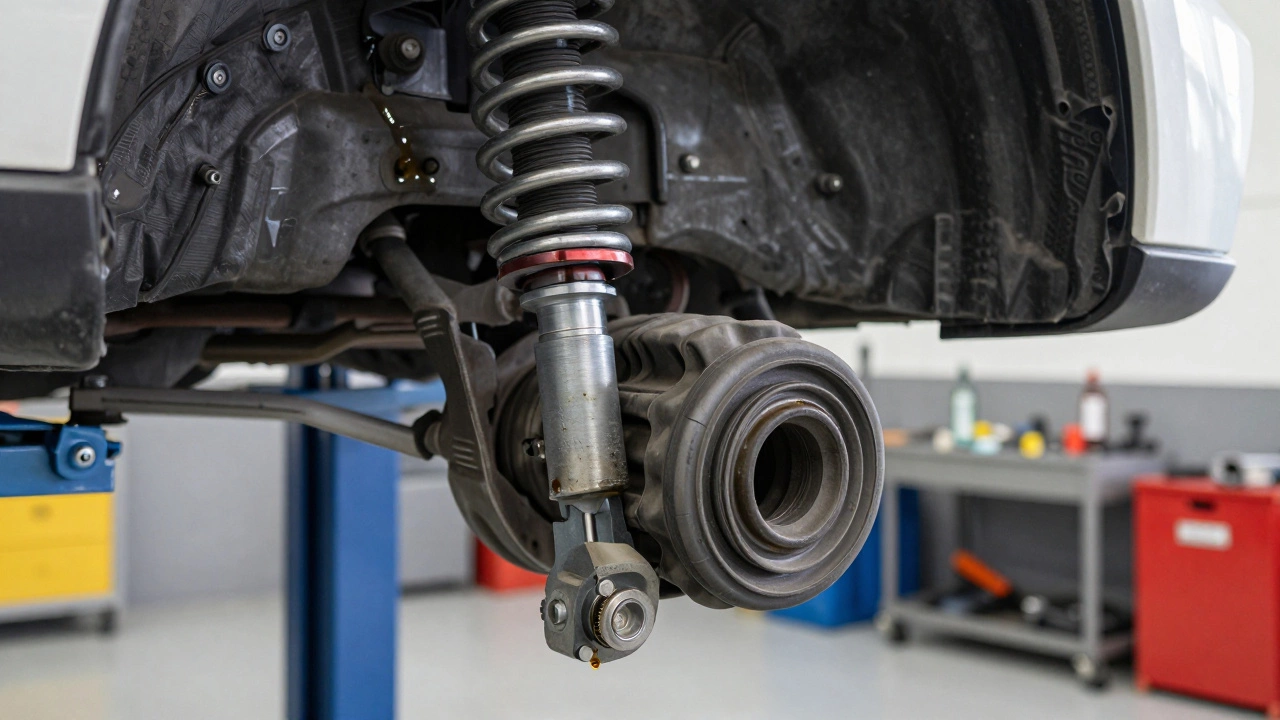
Shock Absorbers are hydraulic devices that dampen spring oscillations to keep tires in contact with the road often fail internally first. When the internal valves wear out, the piston moves freely inside the cylinder. You’ll hear this as a rhythmic thumping or clunking, especially on rough surfaces like cobblestones or speed bumps. If the shock mount (the top nut) loosens, the entire strut assembly can bounce within its housing, creating a loud bang every time you brake or accelerate hard.
Another major culprit is the Sway Bar Link is a small connecting rod that links the anti-roll bar to the suspension control arms. These links have ball joints at both ends. When the grease dries out and the joint wears, there’s play in the connection. Test this by bouncing the corner of your car up and down; if you hear a distinct click-clack from the side, the sway bar link is likely shot. It’s a cheap fix, but ignoring it leads to excessive body roll and uneven tire wear.
The High-Pitched Squeak: Rubber Deterioration
A high-pitched squeaking noise is a sharp, grating sound caused by friction between dry rubber components is less alarming than a clunk but equally annoying. This sound almost always points to dried-out rubber parts. Over time, exposure to UV light, heat, and road salts causes rubber bushings to crack and harden.
Control Arm Bushings are rubber mounts that connect the control arm to the vehicle chassis, allowing smooth movement while isolating vibration are prime suspects. When these bushings tear, the metal control arm rubs against the metal subframe. You’ll hear this squeak specifically when turning slowly or going over small imperfections in the road. Similarly, the Strut Mount Bearings are ball bearings located at the top of the shock tower that allow the steering wheel to turn the wheels smoothly can squeak if they lack lubrication. This noise is typically heard only when turning the steering wheel fully left or right at low speeds.
Don’t confuse this with brake squeal. Brake noise happens when you press the pedal. Suspension squeaks happen when the suspension is moving-compressing or rebounding-regardless of whether you’re braking.
The Rattle and Buzz: Loose Fasteners and Ball Joints
A constant rattling or buzzing sensation through the seat or floorboard indicates something is loose. Unlike the intermittent clunk, this noise is persistent and often gets louder as you drive faster. This is dangerous because it suggests a component is vibrating excessively, which can lead to sudden failure.
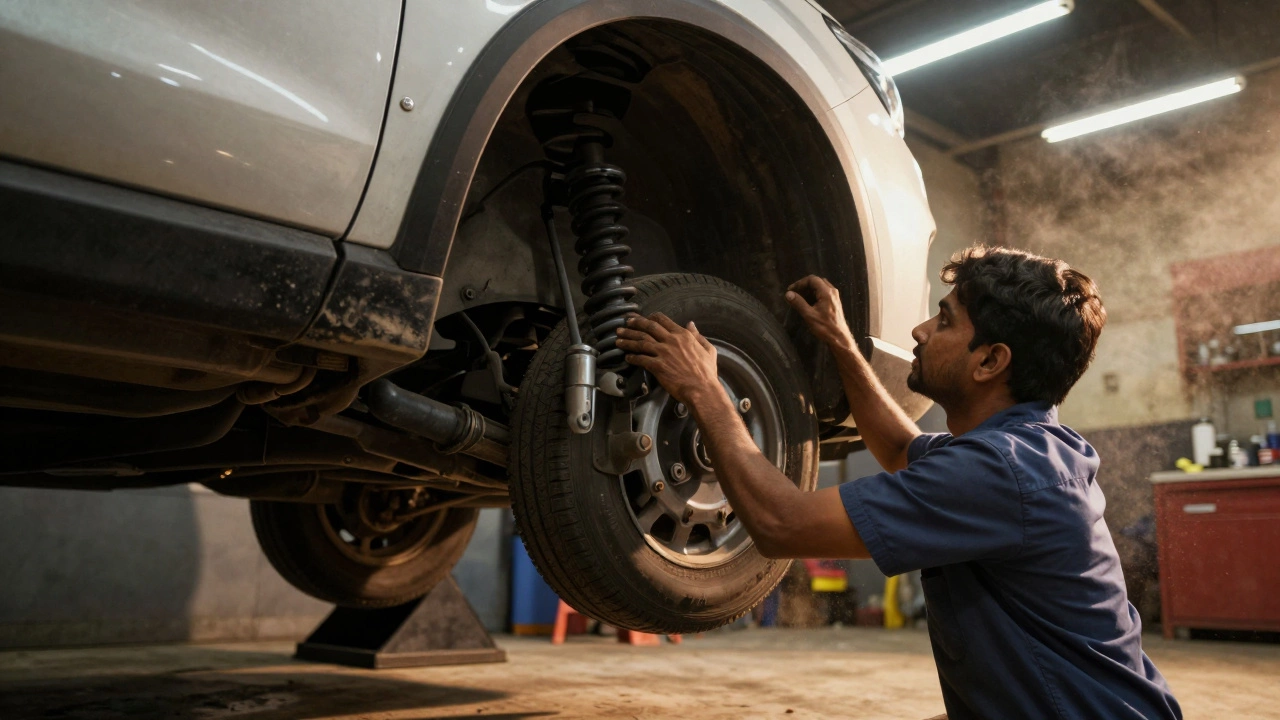
Ball Joints are critical pivot points that connect the steering knuckle to the control arm, supporting the vehicle's weight while allowing steering movement are under immense stress. If the bearing surface wears out, the joint develops slack. You might hear a popping or cracking sound when turning, accompanied by a vague rattling feel. In severe cases, the wheel can actually shift position while driving, causing violent shaking.
Loose wheel nuts are another possibility, though less related to the suspension itself. Always check torque specifications after any wheel work. However, if the rattle seems to come from underneath the engine bay, look at the exhaust hangers. Sometimes, a sagging exhaust pipe rests on the suspension crossmember, mimicking a suspension rattle. Lift the car safely and wiggle the exhaust; if it moves independently of the suspension, the issue is likely elsewhere.
The Grinding and Crunching: Severe Wear
If you hear a grinding, crunching, or growling noise, the situation is critical. Metal-on-metal contact means protective materials have completely disintegrated. This is not a "wait and see" scenario.
This often occurs when a CV Joint Boot is a flexible rubber cover that protects the Constant Velocity joint from dirt and moisture while retaining grease tears. While technically part of the drivetrain, the CV joint connects to the suspension hub. If grease leaks out and dirt gets in, the joint grinds apart. You’ll hear a rhythmic clicking or grinding that accelerates with speed, particularly during turns.
In the suspension proper, a seized wheel bearing can produce a roaring or grinding noise that changes pitch with speed. While not a suspension component per se, it sits within the hub assembly. If ignored, the bearing can lock up, causing the wheel to seize-a catastrophic failure at highway speeds.
| Noise Type | Likely Cause | When It Happens | Urgency Level |
|---|---|---|---|
| Clunk / Thud | Worn Shock Absorber, Broken Strut Mount, Bad Sway Bar Link | Over bumps, potholes, or speed breaks | High (Safety Risk) |
| Squeak / Creak | Dried Control Arm Bushings, Worn Strut Bearings | Turning slowly, going over small cracks | Medium (Comfort Issue) |
| Rattle / Buzz | Loose Ball Joint, Loose Fasteners, Exhaust Interference | Constantly, worsens with speed | High (Failure Imminent) |
| Grind / Crunch | Seized Wheel Bearing, Torn CV Boot, Metal-on-Metal Contact | During acceleration or turning | Critical (Stop Driving) |
How to Diagnose the Source Yourself
You don’t need a degree in engineering to narrow down the problem. Start with a visual inspection. Look for oil leaks around the bottom of your shock absorbers. A slight sheen is normal, but dripping fluid means the seal is gone. Check all rubber bushings for visible cracks, splits, or separation from the metal sleeve.
Next, perform the "bounce test." Push down firmly on one corner of the car and release. The car should settle back into place immediately. If it bounces more than once, the shock absorber is dead. This test doesn’t identify the noise source directly, but it confirms if the damping system is compromised.
For a more precise diagnosis, have a friend gently rock the car side-to-side while you watch the suspension components. Any movement that looks excessive or jerky points to a loose joint or worn bushing. Listen closely: does the noise come from the front or rear? Left or right? Isolating the quadrant drastically reduces diagnostic time and cost.
Why Ignoring Suspension Noises Costs More
Many drivers think, "It’s just a noise, I’ll fix it later." This mindset is expensive. Suspension components work as a system. When one part fails, it puts abnormal stress on adjacent parts. For example, a worn ball joint causes uneven tire wear. You might save £50 on a ball joint today, only to spend £200 on new tires next month because the alignment was off.
Furthermore, damaged suspension affects handling. In emergency maneuvers, such as swerving to avoid a pedestrian or animal, a car with weak shocks will dive excessively, potentially losing traction. On rainy UK roads, maintaining tire contact is vital for braking distance. A compromised suspension increases stopping distances significantly.
Finally, consider the resale value. A car with known suspension issues sells for less. Buyers perceive it as neglected. Addressing these noises promptly maintains the vehicle’s integrity and market value.
Is it safe to drive with a clunking suspension?
No, it is not safe. A clunking noise indicates significant play in critical safety components like ball joints or shock mounts. Continued driving can lead to sudden component failure, loss of steering control, or wheel collapse. Seek immediate repair.
Can a bad suspension cause steering wheel vibration?
Yes. Worn tie rods, ball joints, or unbalanced wheels due to suspension geometry issues can transmit vibrations to the steering wheel. This is often felt at specific speeds, such as 40-60 mph. It requires immediate inspection to prevent further damage.
How much does it cost to fix suspension noises?
Costs vary widely. Replacing a sway bar link might cost £50-£100 including labor. Replacing a full strut assembly could range from £200-£400 per corner. Always get a detailed quote. Cheaper parts may last shorter, so consider quality brands for long-term savings.
Does weather affect suspension noise?
Yes. Cold temperatures make rubber bushings stiffer and more prone to squeaking. Wet conditions can mask some noises due to road spray, but also increase the risk of rust accelerating wear. Regular checks are essential year-round.
Can I fix suspension noises myself?
Some tasks, like replacing sway bar links or checking for loose bolts, are DIY-friendly. However, replacing struts, control arms, or ball joints requires specialized tools (like spring compressors) and expertise. Incorrect installation can be deadly. Consult a professional for complex repairs.