Exhaust System Recommendation Tool
Step 1: What is your primary goal?
Step 2: Select your engine type
Your Recommended Setup:
Quick Takeaways for Your Build
- Daily Drivers: Stick to Cat-back systems for a balance of sound and efficiency.
- Power Seekers: Prioritize long-tube headers and high-flow catalytic converters.
- Budget Builds: Start with a muffler delete or a resonator swap.
- Material Choice: T304 Stainless Steel is the gold standard for rust prevention.
Understanding the Layout: What are You Actually Replacing?
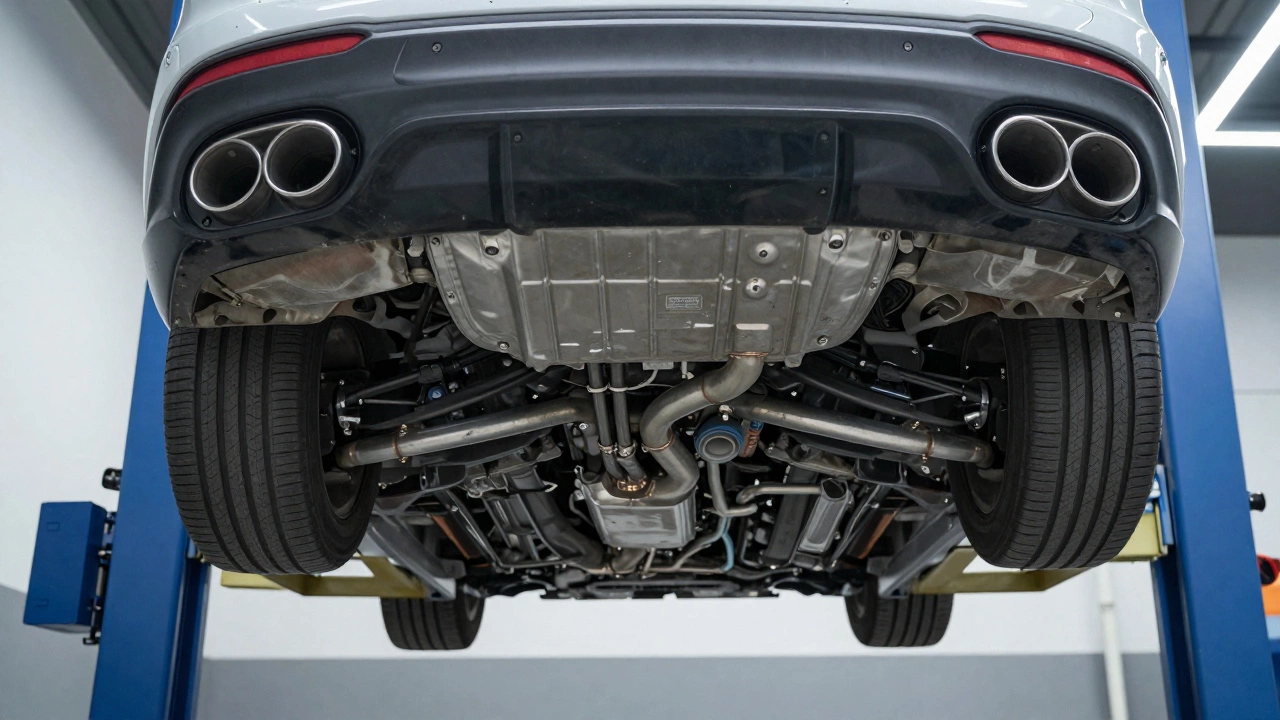
Before you spend a dime, you need to know where the exhaust starts and ends. A full system is broken into stages. If you replace everything, you're looking at a full system. If you only change the back half, it's a Cat-back exhaust, which is a system that starts after the catalytic converter and replaces the piping, resonators, and mufflers. This is the most common upgrade because it's easier to install and doesn't usually mess with your emissions inspections.
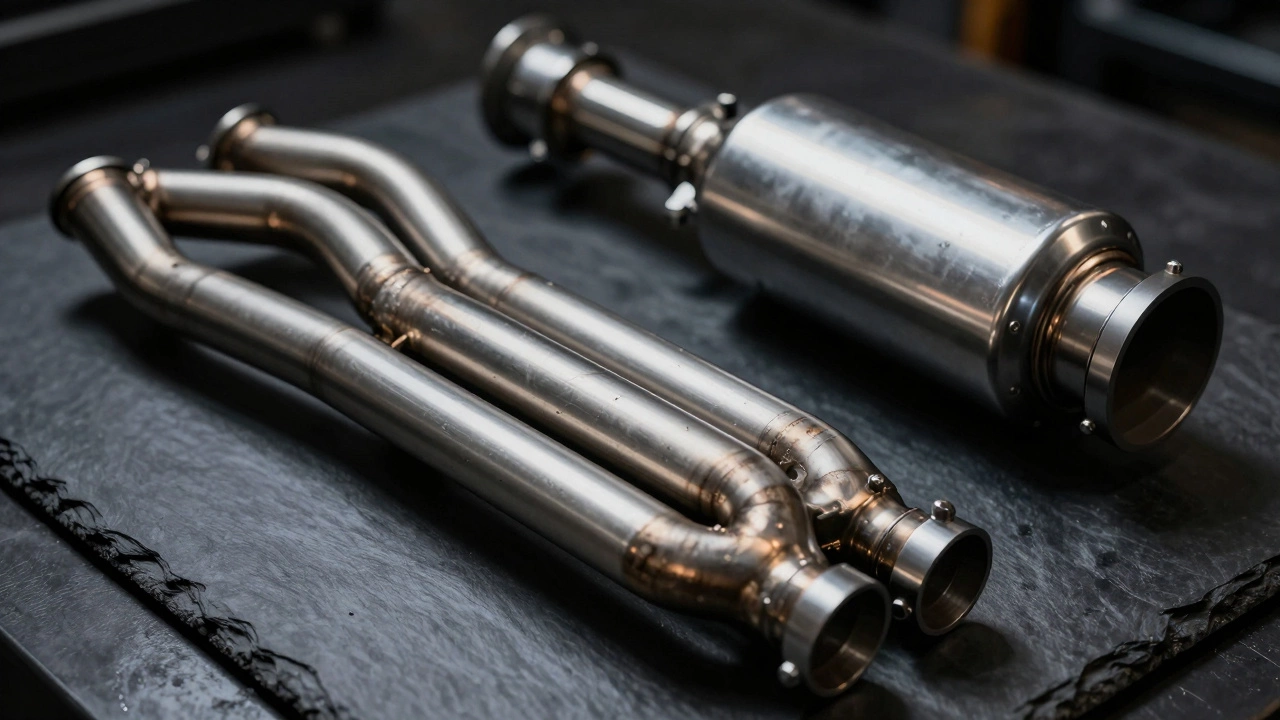
Then you have the Exhaust Manifold. This is the part bolted directly to the engine. Stock manifolds are often cast iron and restrictive. Upgrading these to headers-specifically long-tube headers-allows gases to escape more freely, which is where the real horsepower gains happen. If you're chasing a 20-30 hp increase, you can't ignore the headers.
| System Type | Primary Goal | Typical Gain | Sound Level |
|---|---|---|---|
| Axle-Back | Sound Change | Negligible | Moderate to High |
| Cat-Back | Flow & Tone | Low to Moderate | Customizable |
| Full System (Headers + Cat-Back) | Max Horsepower | High | Very High |
| Stock Replacement | Reliability | None | Quiet |
Materials Matter: Stainless vs. Aluminized Steel
You'll see a lot of talk about materials. Most factory pipes are made of aluminized steel. It's cheap, but it rusts. If you live in a place where they salt the roads in winter, an aluminized pipe will be a pile of flakes in three years. This is why we push T304 Stainless Steel. It's a chromium-nickel alloy that provides superior corrosion resistance. It's more expensive and harder to weld, but it lasts a lifetime.
For those with deep pockets or dedicated track cars, titanium is an option. It's incredibly light-about 45% lighter than steel-and handles heat better. However, for a street car, titanium is usually overkill and can produce a high-pitched 'raspy' sound that isn't always pleasant for long drives.
The Role of the Catalytic Converter
You can't talk about the best exhaust without mentioning the Catalytic Converter. Its job is to turn toxic gases into less harmful emissions using a honeycomb structure coated with precious metals like platinum and palladium. Standard converters are restrictive. If you want more power, a high-flow catalytic converter is the move. It has a less dense substrate, allowing more air through while still keeping you legal for emissions tests.
Some people go 'straight pipe,' which means removing the converter entirely. While this maximizes flow, it's illegal in most states and makes the car sound like a tractor. Plus, modern ECUs (Engine Control Units) will throw a Check Engine Light (CEL) immediately, which can put your car into a 'limp mode' or prevent you from passing inspection.
Matching Pipe Diameter to Your Engine
Bigger isn't always better. This is a common mistake. If you put a 3-inch pipe on a small 4-cylinder engine, you'll actually lose low-end torque. Why? Because you're slowing down the exhaust gas velocity. Imagine water flowing through a straw versus a wide PVC pipe; the straw has more speed. You want that velocity to create a scavenging effect, which helps pull the next intake stroke of air into the cylinder.
As a rule of thumb, 2.25 to 2.5 inches is plenty for most street-driven 4-cylinder cars. V6 engines usually thrive with 2.5 to 3 inches, and big V8s can easily handle 3 to 3.5 inches per side. If you're building a naturally aspirated engine, stick to the conservative side. If you've added a turbocharger or supercharger, you'll need the larger diameter to handle the massive increase in air volume.
Dealing with the Drone
Nothing ruins a great exhaust like 'drone.' That's the booming, vibrating sound that happens at a specific RPM (usually around 2,000) and makes your head shake. This happens when the sound waves reflect back from the rear of the car and synchronize. To fix this, you need a Resonator. Unlike a muffler, which reduces overall volume, a resonator is a chamber designed to cancel out specific sound frequencies using destructive interference.
If you're designing a custom system, don't skip the resonator. Adding a 12-inch resonator in the middle of the pipe can turn a harsh, metallic scream into a deep, refined growl. It's the difference between sounding like a professional build and sounding like a lawnmower.
The Installation Process and Common Pitfalls
Installing a kit is straightforward if you have the right tools, but there are a few traps. First, always use new gaskets. Reusing an old, crushed gasket at the flange is a recipe for an exhaust leak, which will lead to a ticking sound and can even let oxygen leak into the system, tricking your O2 sensors into thinking the engine is running lean.
- Lift the car safely: Use jack stands; never trust a hydraulic jack alone.
- Spray everything with PB Blaster: Exhaust bolts are rusted. Soak them for an hour before you even touch a wrench.
- Check clearances: Before tightening everything, make sure the piping isn't touching the fuel lines or the heat shields.
- Hanger alignment: Use the rubber hangers to center the tips in the bumper cutouts before final torquing.
Will a performance exhaust increase my fuel economy?
In some cases, yes. By reducing backpressure, the engine doesn't have to work as hard to push air out, which can slightly improve efficiency. However, most people end up driving more aggressively because the car sounds better, which usually cancels out any fuel savings.
What is the difference between a muffler and a resonator?
A muffler is designed to reduce the overall volume of the exhaust by redirecting the flow or using packing material. A resonator is designed to target and eliminate specific frequencies, primarily to stop the 'drone' sound during highway cruising.
Does a louder exhaust always mean more power?
No. Volume is about acoustics, not flow. You can have a very quiet exhaust that flows incredibly well and a very loud one that is actually restrictive. Focus on pipe diameter and header design rather than the loudness of the muffler.
Can I just put a louder muffler on my stock pipes?
Yes, this is called a 'muffler swap.' It's a great budget move. You'll get a change in tone and some added volume without spending hundreds on a full system. Just make sure the new muffler's inlet diameter matches your stock piping.
What happens if I remove my catalytic converters?
You'll likely see a small increase in power and a much louder sound. However, your car will fail emissions tests, you'll likely get a Check Engine Light, and in many jurisdictions, it's a legal offense that can lead to heavy fines.
Final Steps for Your Upgrade
If you're still unsure where to start, identify your priority. If you want a 'sleeper' car that performs well but stays quiet, go for a high-flow cat-back with a polished T304 finish. If you're building a weekend warrior for the track, start with long-tube headers and a high-flow catalyst. Just remember to check your local noise ordinances-getting a ticket for a loud exhaust is the quickest way to make you hate your new setup.