Flowmaster Sound Matcher
Select your vehicle specifications below to find the recommended Flowmaster series for the deepest, most appropriate tone.
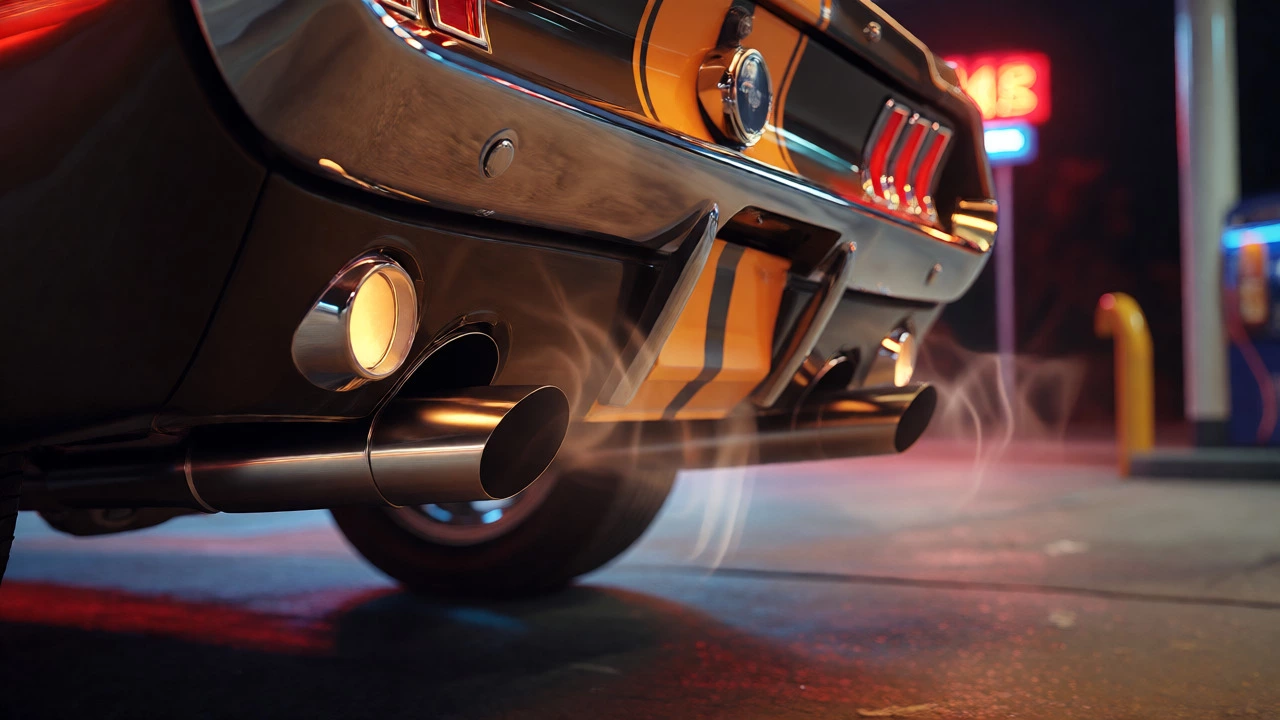
You want that rumble. That low-frequency growl that turns heads at a stoplight and makes your neighbors question their life choices. But when you walk into an auto parts store or browse online, the Flowmaster lineup looks like a menu of alphabet soup. Super 40? Outlaw? Delta Flow? It’s confusing, and picking the wrong one means either a tinny buzz or a drone so bad you can’t hear your own radio.
Here is the blunt truth: there is no single "deepest" Flowmaster for every car. The depth depends on your engine size, your pipe diameter, and what you consider "deep." A V8 sounds different than a four-cylinder, even with the same muffler. However, certain series are engineered specifically to maximize bass response while minimizing rasp. Let’s break down which models actually deliver that earth-shaking tone without turning your cabin into a wind tunnel.
The Science of Deep vs. Loud
Before we pick a winner, you need to understand why some exhausts sound "deep" and others just sound "loud." This isn't magic; it's physics. Depth comes from low-frequency sound waves. These waves have long wavelengths. To amplify them, you generally need larger internal volumes and less restriction. High-pitched noises, often called "rasp," come from high-frequency waves bouncing around in small chambers.
Flowmaster uses chambered technology, meaning they use metal plates inside the muffler to reflect sound waves rather than absorbing them with fiberglass packing (like glasspacks do). This design preserves volume but controls frequency. If you want depth, you need a design that cancels out the high frequencies while letting the lows pass through. That’s where specific series names matter.
Flowmaster Super 40 Series: The Classic Aggressive Tone
If you ask old-school muscle car guys what sounds deep, many will point to the Super 40. Released in the late 1970s, this was the original aggressive chambered muffler. It features two large chambers separated by a perforated tube. The result is a raw, unfiltered sound. It’s not refined. It’s not quiet. It’s loud and aggressive.
Why does it sound deep? Because it has minimal internal baffling compared to newer models. The sound waves travel freely, creating a boomy resonance. For a classic V8 like a Ford Mustang GT or a Chevy Camaro, the Super 40 delivers that iconic American muscle rumble. However, on smaller engines or modern cars with tight packaging, the Super 40 can sound hollow or droney. It lacks the sophistication to filter out the mid-range frequencies that cause ear fatigue on the highway.
Flowmaster Outlaw Series: Maximum Volume, Raw Bass
Want to annoy everyone within a half-mile radius? Get the Outlaw. This is essentially a straight-through chambered muffler with very little internal structure. It removes almost all restrictions, allowing exhaust gases to exit rapidly. The trade-off? Extreme volume.
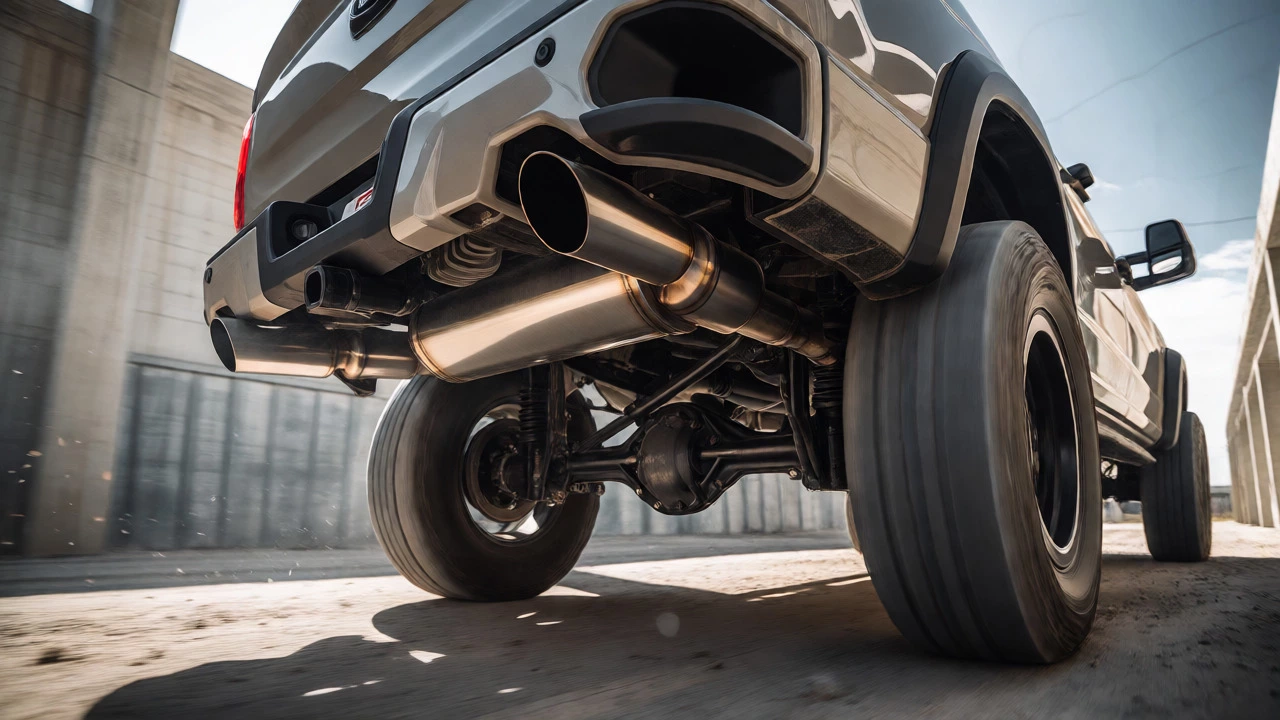
The Outlaw produces the loudest decibel readings among standard Flowmaster products. Is it "deep"? Yes, but it’s also harsh. On a big-block V8, it sounds incredible-thunderous and commanding. On a four-cylinder EcoBoost or a small displacement turbo, it can sound like a lawnmower with anger issues. The depth here comes from sheer air velocity and lack of damping. If you drive a truck or a heavy-duty muscle car, the Outlaw provides the most visceral, chest-thumping experience. Just be prepared for a drone that might make long commutes painful.
Flowmaster Delta Flow Technology: Refined Depth
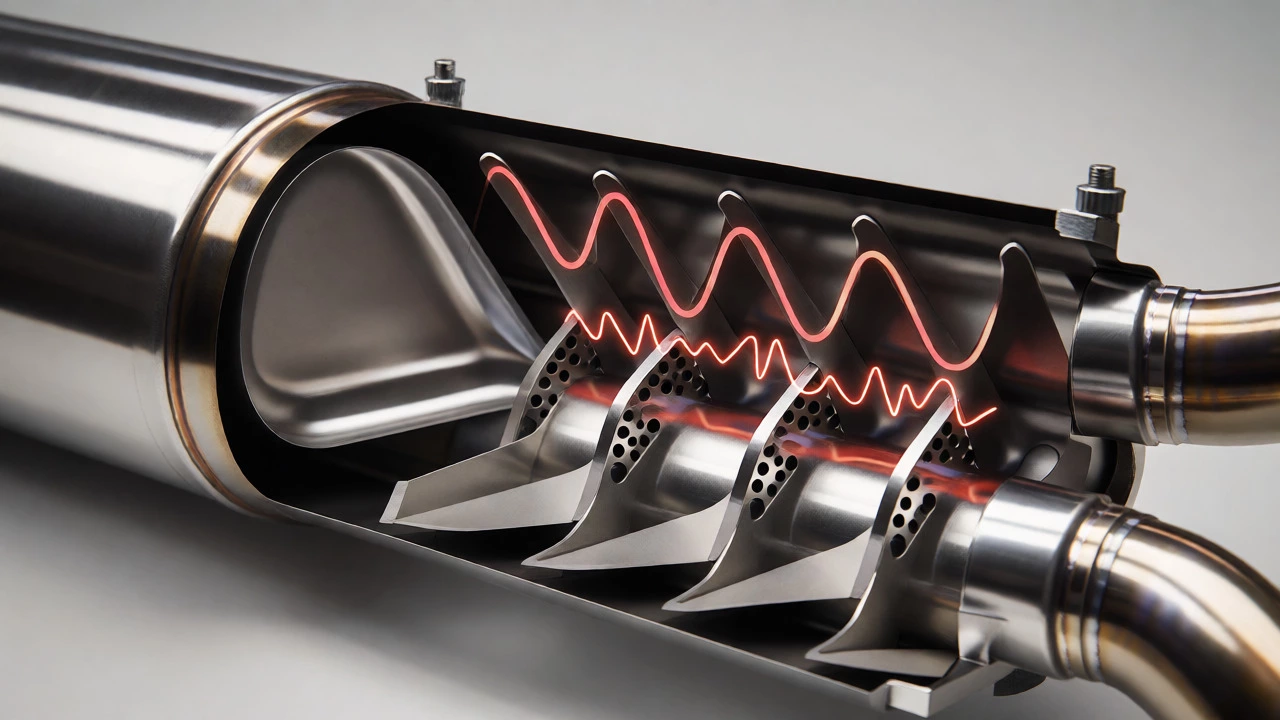
This is where things get interesting for daily drivers. Delta Flow is not a muffler model itself; it’s a technology used in several series, including the Super 50 and American Thunder. Delta Flow adds angled deflectors inside the chambers. These deflectors break up high-frequency sound waves more effectively than the older square-chamber designs.
The result is a smoother, more controlled tone. You lose some of the raw aggression of the Super 40, but you gain a cleaner, deeper note with less rasp. The Super 50 is arguably the best balance of depth and drivability. It’s quieter than the Super 40 but retains a substantial bass note. For modern trucks and SUVs, the Super 50 with Delta Flow is often the sweet spot. It eliminates the annoying whistle or hum that plagues cheaper mufflers.
Comparison: Which Flowmaster Sounds Deepest?
To help you decide, let’s look at how these popular series stack up against each other. Note that "depth" is subjective, but we can measure it by bass emphasis and high-frequency reduction.
| Series | Sound Character | Volume Level | Best For | Drone Risk |
|---|---|---|---|---|
| Super 40 | Aggressive, Boomy, Classic | High | Vintage Muscle Cars, Big Block V8s | Moderate |
| Outlaw | Raw, Unmuted, Thunderous | Very High | Daily Drivers who want attention, Trucks | High |
| Super 50 | Smooth, Deep, Controlled | Moderate-High | Modern Muscle, Trucks, Daily Drivers | Low-Moderate |
| American Thunder | Deep, Rich, Mellow | Moderate | Classic Restoration, Subtle Upgrades | Low |
| Original Series | Balanced, Traditional | Moderate | General Performance, First-time Mods | Low |
Engine Size Matters More Than the Muffler
You can buy the loudest Flowmaster in existence, but if you put it on a 1.6-liter Honda Civic, it won’t sound deep. It’ll sound buzzy. Why? Low-frequency sound requires mass and energy. A V8 displacing 5.0 liters pushes a lot of air, creating strong pressure waves that resonate at lower pitches. A four-cylinder pushes less air, so the natural frequency is higher.
If you have a small engine, don’t chase the "deepest" sound via the muffler alone. Consider adding a resonator. A resonator is a small device placed before the muffler that cancels out specific high-pitch frequencies. By removing the rasp, the remaining sound seems deeper by contrast. Pairing a Super 50 with a quality resonator is often the best way to fake depth on a smaller engine.
Pipe Diameter and Exhaust Flow
The muffler doesn’t work in isolation. Your pipe diameter dictates how much noise escapes. Larger pipes (3 inches or more) allow more sound to escape, enhancing the perception of depth and volume. Smaller pipes (2.25 inches) restrict flow, which can dampen the bass and increase pitch.
For maximum depth, match your muffler inlet/outlet size to your exhaust system. If you have a 3-inch cat-back system, use a 3-inch Flowmaster. Using a 2.5-inch muffler on a 3-inch pipe creates a bottleneck, killing the low-end roar. Conversely, using a massive 4-inch muffler on a 2.5-inch pipe might not yield significant gains because the engine can’t fill the space enough to create that deep resonance.
Installation Tips for Maximum Bass
Even the right muffler can sound wrong if installed poorly. Here are three quick tips to ensure you get that deep tone:
- Check Hangers: Ensure your exhaust hangers are tight. Loose hangers allow the pipe to vibrate against the chassis, creating rattles that ruin the smooth deep tone.
- Cut Correctly: When installing a universal fit muffler, cut the pipe cleanly and squarely. A jagged cut disrupts airflow, causing turbulence and unwanted whistling.
- Break-in Period: New chambered mufflers sometimes sound sharper initially. After a few hundred miles of driving, the internal surfaces oxidize slightly, and the sound mellows out. Give it time before judging the final tone.
Frequently Asked Questions
Which Flowmaster is the loudest overall?
The Flowmaster Outlaw series is generally the loudest due to its near-straight-through design with minimal internal baffling. It offers the least restriction and highest volume output.
Does Flowmaster Super 40 sound better than Super 50?
It depends on preference. Super 40 is louder and more aggressive with a classic rumble. Super 50 is smoother, quieter, and has less interior drone, making it better for daily driving while still maintaining a deep tone.
Will a Flowmaster make my car sound deeper?
Yes, but primarily by removing high-frequency rasp. Chambered mufflers like Flowmasters emphasize lower frequencies by reflecting them back and forth. However, the actual depth is heavily influenced by your engine size and exhaust pipe diameter.
Is Flowmaster better than Magnaflow for deep sound?
Magnaflow uses fiberglass packing, which absorbs sound, resulting in a milder, smoother tone. Flowmaster uses chambers, which reflect sound, resulting in a more aggressive, muscular, and traditionally "deeper" rumble. Enthusiasts usually prefer Flowmaster for a distinct muscle car sound.
How do I reduce drone with Flowmaster?
Add a resonator between the catalytic converter and the muffler. Also, consider switching from a Super 40 to a Super 50 or Delta Flow model, as these technologies are designed to cancel out specific drone-causing frequencies.