Clutch Replacement Cost Estimator (UK 2026)
Configuration
Cost Breakdown
That grinding noise when you shift gears or the feeling of your foot slipping to the floor without any resistance? It’s not just annoying; it’s a bill waiting to happen. If your clutch is dying, you are likely staring down the barrel of one of the most expensive routine repairs in automotive maintenance. But how much does it actually cost to replace a clutch in 2026? The short answer is anywhere from £400 for a basic economy car to over £1,500 for luxury vehicles or complex transmissions.
The wide range exists because "clutch replacement" isn't a single part swap. It involves lifting the entire gearbox off the engine, separating two massive metal components, and replacing multiple friction surfaces. You aren't just buying a disc; you're paying for significant labor time and specialized tools. Understanding exactly what drives this price up helps you avoid being overcharged and decide whether to tackle the job yourself or trust a professional mechanic.
Breaking Down the Total Cost
To understand the final quote on your desk, you need to split the bill into two distinct buckets: parts and labor. In many cases, the parts are surprisingly affordable, but the labor is where the money goes. This dynamic changes depending on whether you visit an independent garage or a main dealer.
| Vehicle Category | Parts Only (£) | Labor Only (£) | Total Estimate (£) |
|---|---|---|---|
| Economy/Supermini (e.g., Ford Fiesta, VW Polo) |
£150 - £300 | £300 - £500 | £450 - £800 |
| Mainstream Family Car (e.g., Toyota Corolla, Honda Civic) |
£200 - £400 | £400 - £700 | £600 - £1,100 |
| Luxury/Performance (e.g., BMW 3 Series, Audi A4) |
£400 - £800 | £600 - £1,000+ | £1,000 - £1,800+ |
| Large SUV/4x4 (e.g., Land Rover Discovery) |
£500 - £900 | £800 - £1,200+ | £1,300 - £2,100+ |
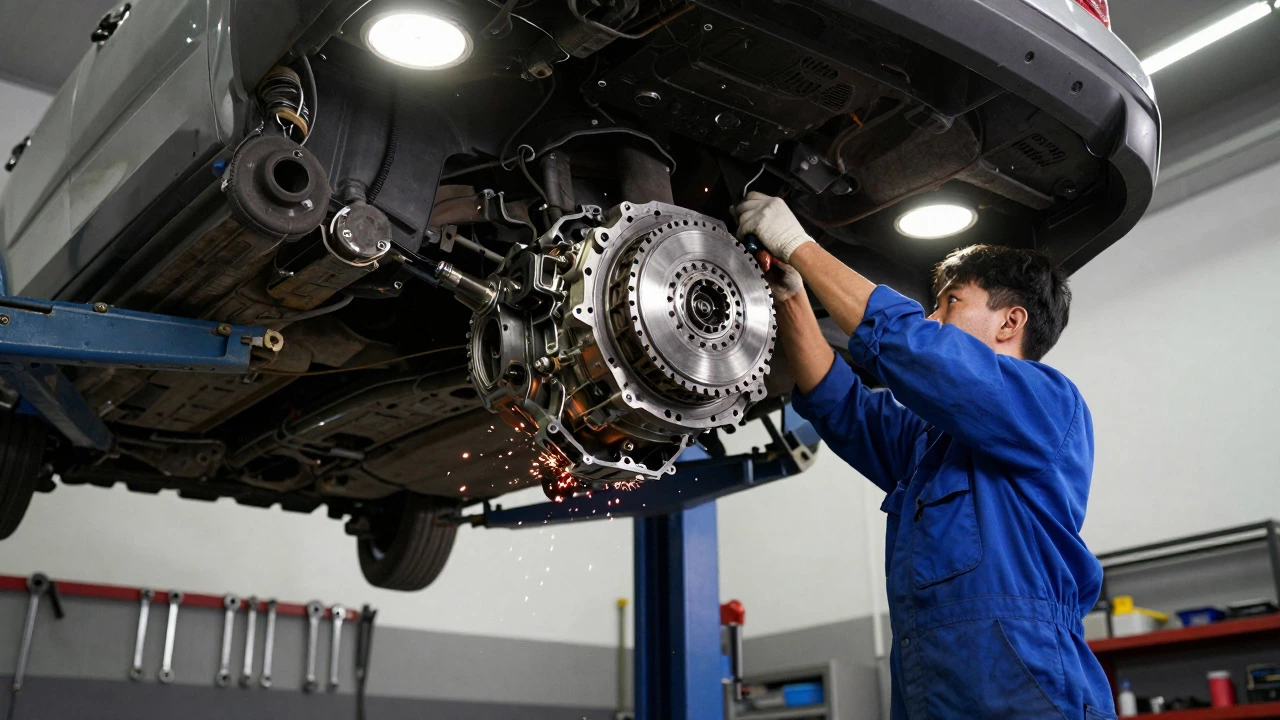
Notice that labor often equals or exceeds the cost of the parts. This is because removing a transmission requires specific equipment like a transmission jack and engine support bars. It also takes time-usually between 4 to 8 hours for a skilled technician. Independent garages typically charge between £80 and £120 per hour, while main dealers can push past £150 per hour. Always ask for a fixed-price quote rather than an hourly estimate to avoid surprises if the bolts seize.
What’s Inside a Clutch Kit?
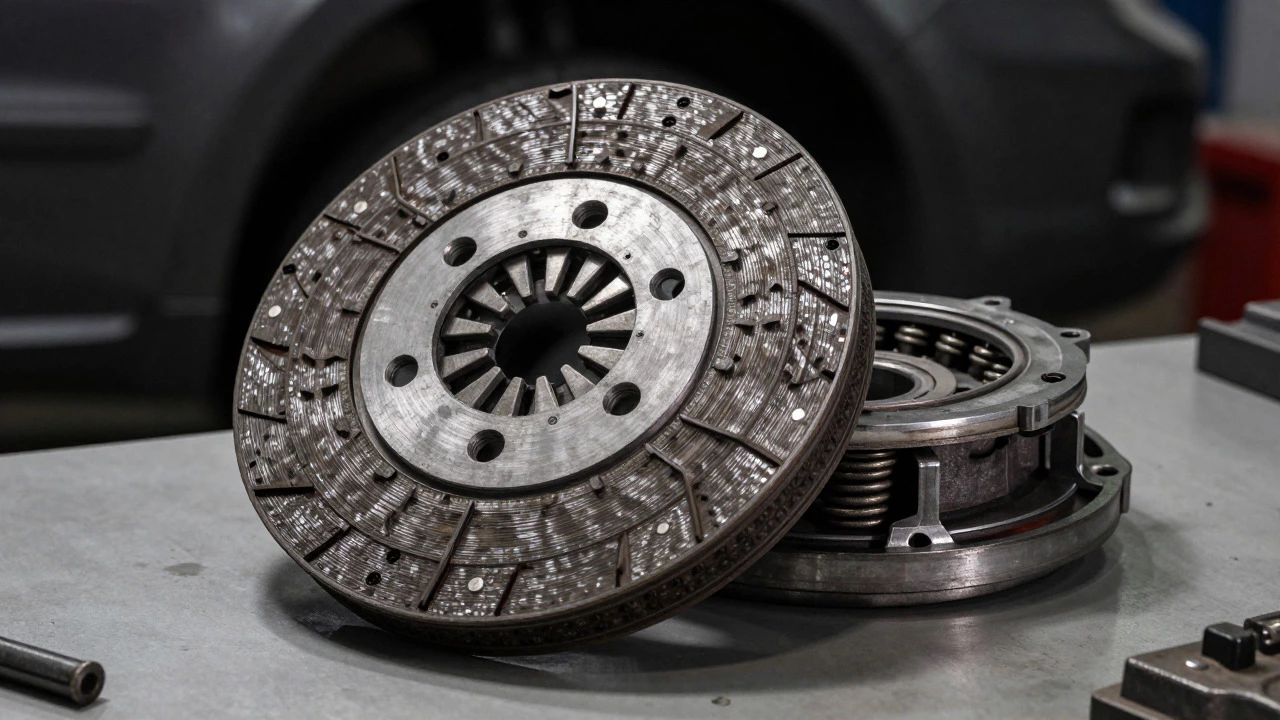
When you search for prices online, you’ll see terms like "clutch kit," "full kit," and "half kit." Knowing the difference prevents you from buying the wrong thing or getting ripped off. A standard Clutch Kit is a set of replacement components designed to restore the engagement mechanism of a manual transmission.
- Clutch Disc: The friction plate that sits between the flywheel and pressure plate. It grabs and releases power to the wheels.
- Pressure Plate: The heavy steel component that clamps the disc against the flywheel. It contains diaphragm springs that apply thousands of pounds of pressure.
- Release Bearing (Throw-out Bearing): The small bearing that pushes against the pressure plate when you press the pedal. It wears out quickly under heat and friction.
A "full kit" includes all three items above plus a new pilot bushing or sleeve for the input shaft. A "half kit" usually only includes the disc and pressure plate. Mechanics almost always recommend the full kit because if the release bearing fails six months later, you have to pay for all that expensive labor again to get back in there. Don't skimp here.
The Flywheel Factor: Single vs. Dual Mass
Here is where the budget can double unexpectedly. Modern cars, especially those with diesel engines or high-torque petrol motors, use a Dual Mass Flywheel (DMF) is a complex assembly consisting of two separate flywheels connected by springs and dampers to absorb engine vibrations. Unlike older single-mass flywheels, which are solid steel discs, DMFs are intricate mechanical devices designed to smooth out the jerkiness of modern engines.
The problem? They wear out at roughly the same rate as the clutch itself. Most manufacturers and mechanics agree: if you replace the clutch, you must replace the dual mass flywheel. If you don’t, the worn springs in the old flywheel will destroy your brand-new clutch within a few thousand miles. A dual mass flywheel can cost anywhere from £200 to £600 extra, depending on the vehicle. Always check if your car has a DMF before getting a quote.
DIY vs. Professional Installation
If you have a driveway, a transmission jack, and some mechanical experience, replacing a clutch is one of the most satisfying DIY projects you can undertake. The parts for a Ford Focus might cost you £180, compared to a £600 shop bill. However, this isn't a job for beginners. You need to be comfortable supporting an engine, unbolting heavy gearboxes, and torquing bolts to precise specifications.
Common pitfalls for DIYers include:
- Misalignment: If the clutch disc isn't perfectly centered on the input shaft, the gearbox won't slide back in, or it will grind immediately.
- Seized Bolts: Transmission mount bolts and engine cradle bolts often rust solid. Breaking them can damage the engine block or subframe.
- Hydraulic Issues: While changing the clutch, it's wise to bleed the hydraulic system or replace the slave cylinder. Air in the lines means no clutch engagement.
If you lack the tools or confidence, hiring a specialist is worth the cost. Look for independent garages that specialize in manual transmissions rather than general quick-fit shops. They often have better diagnostic equipment and deeper knowledge of torque specs.
Hidden Costs and Additional Repairs
When the gearbox comes out, the mechanic sees things you couldn't possibly know were broken. This is known as "scope creep" in repair terms. Be prepared for these potential add-ons:
- Slave Cylinder Failure: The hydraulic slave cylinder pushes the release bearing. If it leaks fluid, it contaminates the clutch disc, causing immediate failure. Replace it proactively.
- Input Shaft Seal Leaks: Oil leaking from the crankshaft seal onto the clutch disc causes slippage. This seal is cheap but critical to replace during disassembly.
- Transmission Mounts: These rubber isolators degrade over time. New mounts prevent excessive vibration after reinstallation.
- Gearbox Oil Change: Fresh gear oil ensures smooth shifting and protects synchronizers. It’s a small cost (£20-£40) that pays dividends in longevity.
A good mechanic will inspect these components before starting work and give you a revised quote if they find issues. A bad mechanic will surprise you with a bill halfway through the job. Ask upfront: "Does this quote include inspection of the flywheel and slave cylinder?"
Signs Your Clutch Needs Replacing Now
Ignoring clutch symptoms doesn't make them go away; it makes the repair more expensive. A slipping clutch can score the flywheel, turning a £500 repair into a £1,200 one. Watch for these red flags:
- RPM Rise Without Speed Increase: You’re accelerating hard, the revs climb, but the car doesn’t speed up proportionally. Power is being lost to friction.
- Difficulty Shifting Gears: Grinding noises when moving into first or reverse indicate the clutch isn't fully disengaging.
- Spongy or Low Pedal: The pedal feels soft or rests lower than usual. This suggests air in the hydraulic system or a failing master/slave cylinder.
- Burning Smell: A distinct odor of burning friction material after driving indicates severe slippage and overheating.
If you notice any of these, book an inspection immediately. Driving on a failed clutch can damage the gearbox internals, leading to catastrophic failure that requires a complete transmission rebuild.
Extending Clutch Life: Practical Tips
You can’t stop wear entirely, but you can slow it down significantly. How you drive matters more than the quality of the parts. Avoid "riding the clutch"-keeping your foot resting on the pedal while stopped. Even slight pressure engages the release bearing and generates heat.
In traffic, use the handbrake instead of balancing on the clutch bite point. When starting on a hill, use hill assist if your car has it, rather than feathering the clutch for extended periods. And remember: aggressive launches from a standstill generate the most heat and wear. Smooth, deliberate engagement lasts longer than jerky, rapid shifts.
Is it cheaper to replace the clutch or buy a new car?
For most cars valued over £2,000, replacing the clutch is far cheaper. A new entry-level car costs upwards of £15,000, while even a luxury clutch replacement rarely exceeds £2,000. Unless the car has other major mechanical failures, fixing the clutch extends its life by another 50,000+ miles.
How long does a new clutch last?
There is no fixed mileage, but average lifespan ranges from 60,000 to 100,000 miles. City drivers with heavy traffic usage may see failure at 40,000 miles due to constant stop-start cycling. Highway drivers who shift less frequently can exceed 150,000 miles. Driving style is the biggest factor.
Can I replace just the clutch disc?
Technically yes, but it’s highly inadvisable. The pressure plate and release bearing wear at similar rates. Installing a new disc on old components leads to premature failure because the old pressure plate cannot clamp evenly, and the worn bearing creates drag. Always replace the full kit.
Why is my clutch replacement quote so high?
High quotes usually stem from three factors: luxury brand parts, dual mass flywheel replacement, or high labor rates. Main dealers charge premium labor and use OEM parts that cost twice as much as aftermarket equivalents like Valeo or Sachs. Get quotes from independent specialists to compare.
Do automatic cars have clutches?
Traditional automatics do not have driver-operated clutches. However, Dual Clutch Transmissions (DCT), found in many modern performance and efficiency-focused cars, use two automated clutches. These require specialized service and are generally covered under warranty longer than manual clutches.