Spark Plug Health Diagnostic Tool
Select the symptoms you are experiencing with your vehicle below. This tool will estimate the likelihood that your spark plugs need replacing.
Current Symptoms
Vehicle Mileage
Diagnosis Status
Risk Level: 0%
Recommendation
You’re driving along the M4 outside Bristol, and suddenly the car feels a bit sluggish. It’s not dead, but it’s definitely not happy. You wonder: is it the fuel pump? The battery? Or maybe those little metal cylinders deep inside your engine-the spark plugs-are finally giving up on you.
Here’s the thing about spark plugs: they don’t usually fail with a dramatic bang. They fade out. One day your car runs fine; the next, it feels rough, thirsty, or hesitant. Because they are small, cheap parts, many drivers ignore them until a minor issue becomes a major repair bill. But how do you know for sure if they need changing right now, or if they’ve got another 10,000 miles in them?
| Symptom | Likely Cause | Severity |
|---|---|---|
| Hard starting (cranking long) | Weak spark / Worn electrodes | Medium |
| Rough idle (shaking at lights) | Misfire on one cylinder | High |
| Poor acceleration / Hesitation | Inconsistent ignition timing | Medium |
| Check Engine Light (P0300-P030x) | Detected misfire | High |
| Reduced Fuel Economy | Incomplete combustion | Low/Medium |
The Physical Signs of Wear
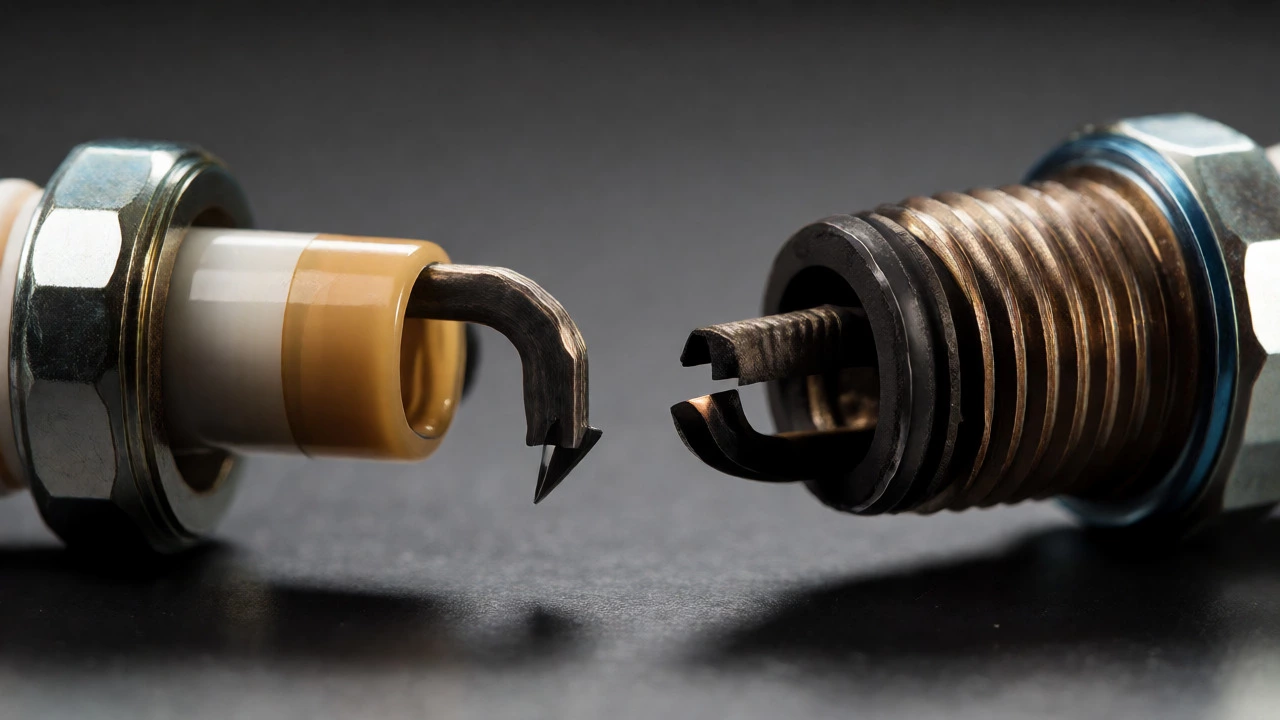
If you can get under the bonnet, pull out a spark plug. Don’t worry, you don’t need to be a mechanic. Just look at the tip. A healthy plug has a clean, light tan or grey insulator. If it looks black and sooty, you’ve got a rich fuel mixture or an oil leak burning off. If it’s white and blistered, you might have overheating issues. But the most common sign of age? Erosion.
The gap between the center electrode and the ground electrode widens as the spark jumps across it thousands of times per minute. When that gap gets too wide, the ignition coil has to work harder to push the current across. Eventually, it fails. This is why old cars struggle to start in cold weather more than newer ones. The spark simply isn’t strong enough to ignite the cold, dense fuel-air mixture reliably.
Performance Issues You Can Feel
Your car talks to you through vibration and response. If your engine is shaking while you’re stopped at a red light, that’s often a misfire. A misfire means one cylinder isn’t firing correctly because its spark plug failed. The engine loses power, and the remaining cylinders compensate, causing that uneven shake.
Then there’s the hesitation. You press the accelerator to overtake on the dual carriageway, and the car stumbles before surging forward. That stumble is the ignition system struggling to keep up with the demand for fuel. If this happens only when the engine is cold, it points directly to worn plugs or coils. If it happens all the time, check the plugs first-they’re cheaper to replace than the coils.

Fuel Efficiency Drops
Do you visit the petrol station more often than usual? If your mileage has dropped by 5-10% without any change in your driving habits, inefficient combustion could be the culprit. Spark plugs ensure that every drop of fuel burns completely. When they wear out, some fuel passes through the exhaust unburnt. You literally pay for fuel that exits the tailpipe instead of turning your wheels.
This is especially noticeable in older vehicles with high mileage. Modern cars with direct injection systems are sensitive to plug condition because the spray pattern and ignition timing must be precise. A weak spark disrupts this balance, leading to wasted money at the pump.
When to Replace vs. Clean
Can you just clean them? Sometimes. If the plugs are merely carbon-fouled due to short city trips, cleaning them with a wire brush might restore performance temporarily. However, if the electrodes are eroded or the ceramic insulator is cracked, cleaning won’t help. Replacement is the only fix.
Most manufacturers recommend replacing spark plugs every 30,000 to 100,000 miles, depending on the material. Copper plugs last shorter (around 30k), while iridium or platinum plugs last much longer (up to 100k). Check your owner’s manual. If you’re near the upper limit of that interval and experiencing any symptoms above, don’t gamble. Replace them.
DIY Replacement Tips
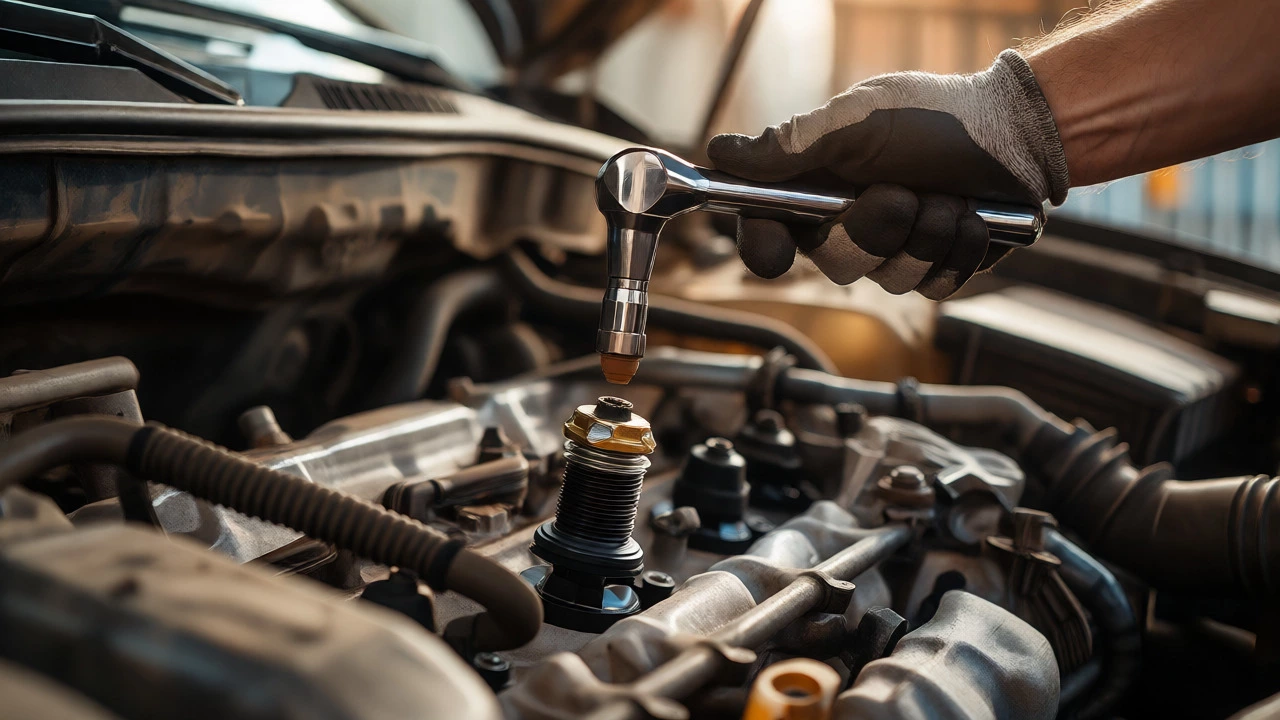
Replacing spark plugs is one of the easiest DIY jobs. You’ll need a socket wrench, a spark plug socket (usually 5/8" or 13/16"), and torque wrench if possible. Here’s the golden rule: do not overtighten. Cracking the ceramic thread is easy if you force it. Hand-tighten first, then give it a quarter-turn with the wrench. And always replace them in sets. If one is bad, the others are likely close behind. Mixing old and new plugs can cause uneven engine performance.
Also, consider the gap. Some plugs come pre-gapped, but it’s wise to check with a feeler gauge. Refer to your car’s specifications for the exact distance. Too tight, and the spark is weak; too loose, and the coil struggles.
How long do spark plugs last?
It depends on the type. Standard copper plugs typically last 30,000 miles. Platinum and iridium plugs can last between 60,000 to 100,000 miles. Always check your vehicle’s owner manual for the specific recommendation for your engine model.
What does a bad spark plug smell like?
You might notice a raw gasoline smell from the exhaust. This happens because unburnt fuel is exiting the engine due to incomplete combustion caused by a weak or missing spark.
Can I drive with a bad spark plug?
Yes, but you shouldn’t. Driving with a misfiring plug can damage the catalytic converter, which is expensive to replace. Unburnt fuel enters the hot converter and can melt its internal structure. Keep drives short if you must drive, and replace the plug ASAP.
Do spark plugs affect acceleration?
Absolutely. Worn plugs cause hesitation and sluggishness because the engine cannot generate maximum power efficiently. Replacing them often restores lost punch and responsiveness.
Is it hard to change spark plugs myself?
For most cars, no. It requires basic tools and about 30-60 minutes. The main challenge is accessing the plugs if they are buried deep under plastic covers or other components. Always consult a tutorial for your specific car model before starting.