Oil Top-Up Calculator
How to Use This Tool
1. Check your dipstick when engine is cold (off for 5+ minutes)
2. Select how far below minimum the oil level is
3. The calculator shows the precise amount to add
Recommended Oil Amount
Steps to follow:
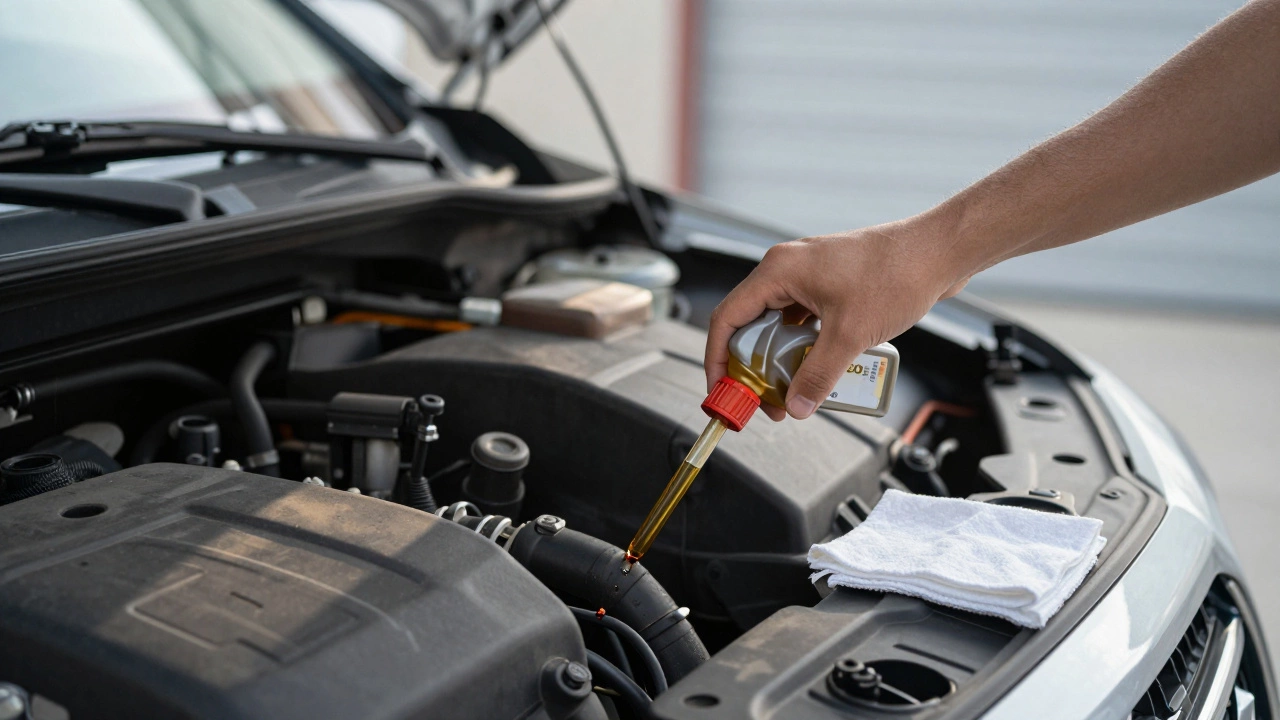
- Slowly pour oil through filler cap
- Wait 1 minute for oil to settle
- Recheck dipstick
- Repeat only if needed
When your car’s oil light comes on or you notice the dipstick reading near the minimum mark, it’s natural to panic. But adding oil isn’t as simple as just pouring in whatever’s left in the bottle. Too little won’t help. Too much can damage your engine. The question isn’t just how much oil to add-it’s how to add it right.
First, confirm it’s actually low
Don’t just guess. Check the oil properly. Park on level ground, turn off the engine, and wait at least five minutes. This lets the oil drain back into the sump. Pull out the dipstick, wipe it clean with a rag, reinsert it fully, then pull it out again. Look at the markings. Most dipsticks have two notches: minimum and maximum. If the oil is below the minimum, you need to add some. If it’s between the two, you’re fine. If it’s above the maximum, you’ve overfilled-and that’s a problem too.Many people skip the waiting step and check oil while the engine is still warm. That gives a false reading. You might think you’re low when you’re not, or worse, you might add oil you don’t need. I’ve seen people add half a litre because they checked right after driving. Their engine ended up overfilled, causing foaming and oil leaks.
How much oil should you add?
The amount depends on how far below the minimum mark the oil sits. Most dipsticks show oil levels in increments of about 200ml. If the oil is just below the minimum mark, you’ll likely need 200ml to 300ml. If it’s halfway between minimum and maximum, you might need 500ml. But never guess by volume. Always check after adding a little.Start with 200ml. Pour it in slowly through the oil filler cap. Wait a minute for it to settle, then recheck the dipstick. If it’s still low, add another 100ml. Repeat until the level hits the middle of the minimum and maximum marks. You’re aiming for the center, not the max. Running at the very top increases pressure in the crankcase and can lead to oil leaks, blown gaskets, or even turbocharger failure.
Most cars hold between 4 and 6 litres total. You don’t need to refill the whole tank. You’re just topping up. Think of it like filling a glass of water-you don’t pour the whole jug if you’re just thirsty.
Use the right oil
Not all engine oils are the same. Mixing the wrong type can cause sludge, reduce efficiency, or even damage internal parts. Check your owner’s manual for the correct viscosity grade-like 5W-30 or 10W-40-and the API or ACEA specification. If you don’t have the manual, look up your car’s make, model, and year online. Sites like the oil manufacturer’s own selector tools are reliable.Don’t mix synthetic and conventional oil unless absolutely necessary. While they’re technically compatible, doing so reduces performance and lifespan. If you’re topping up and don’t have the exact oil, use the closest match. But plan to do a full oil change soon after. A partial mix is better than running dry, but it’s not a long-term fix.
Why does oil get low?
Oil doesn’t just disappear. It burns, leaks, or gets consumed. A small amount of oil consumption is normal-especially in older engines. Most manufacturers say up to 1 litre per 1,000 miles is acceptable. But if you’re topping up every 500 miles, something’s wrong.Common causes:
- Worn piston rings or valve seals (oil burns in the combustion chamber)
- Leaking oil filter, gasket, or seal (you’ll see dark stains under the car)
- Cracked oil pan or damaged oil cooler lines
- Using the wrong oil grade (too thin for your engine)
If you’re regularly topping up, get it checked. A £50 diagnostic at a garage can save you a £2,000 engine rebuild. I’ve seen too many people ignore low oil for months, then wake up to a seized engine.
What happens if you add too much?
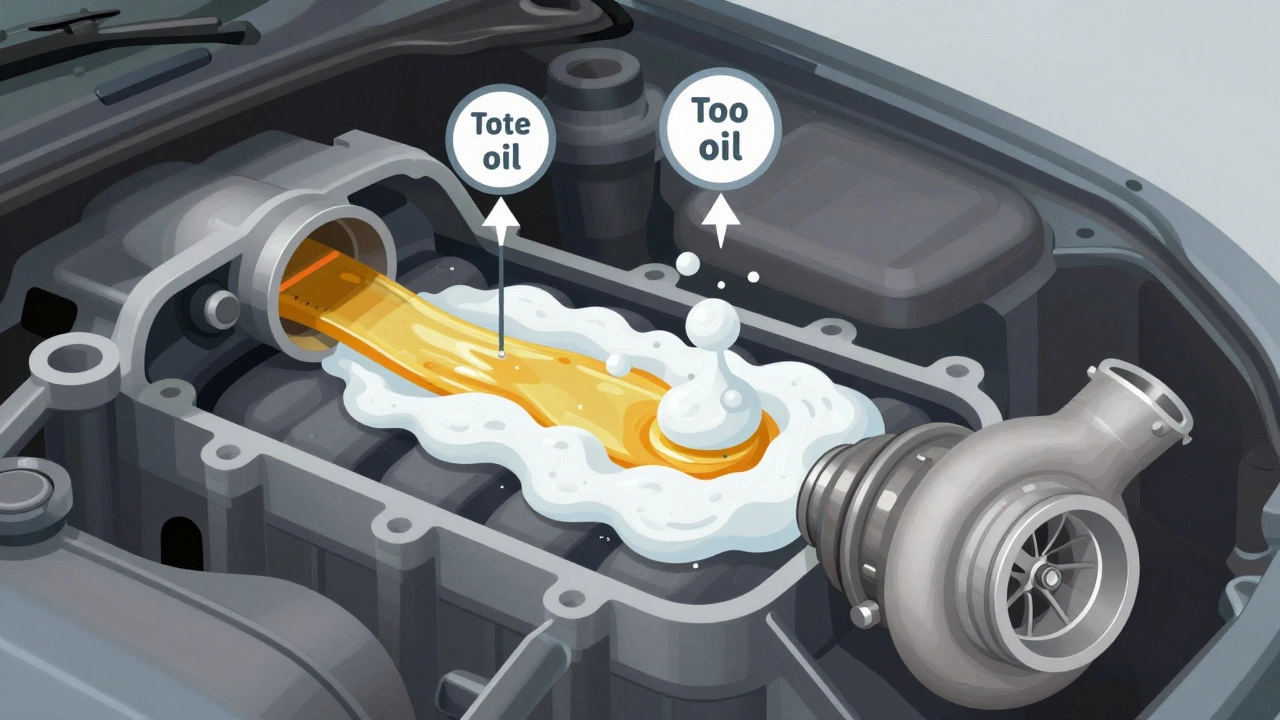
Overfilling is just as dangerous as running low. Too much oil creates excess pressure inside the crankcase. The spinning crankshaft starts churning the oil like a blender, creating foam. Foam doesn’t lubricate. It causes overheating, bearing failure, and oil leaks through seals.Excess oil can also get sucked into the intake system, clogging the PCV valve and fouling spark plugs. In turbocharged engines, it can flood the turbocharger and cause catastrophic failure. I’ve seen a VW Golf with 300ml overfilled lose its turbo in under 100 miles.
If you’ve added too much, don’t drive. Use a suction pump or drain plug to remove the excess. Even 100ml over can cause problems in smaller engines.
How often should you check oil?
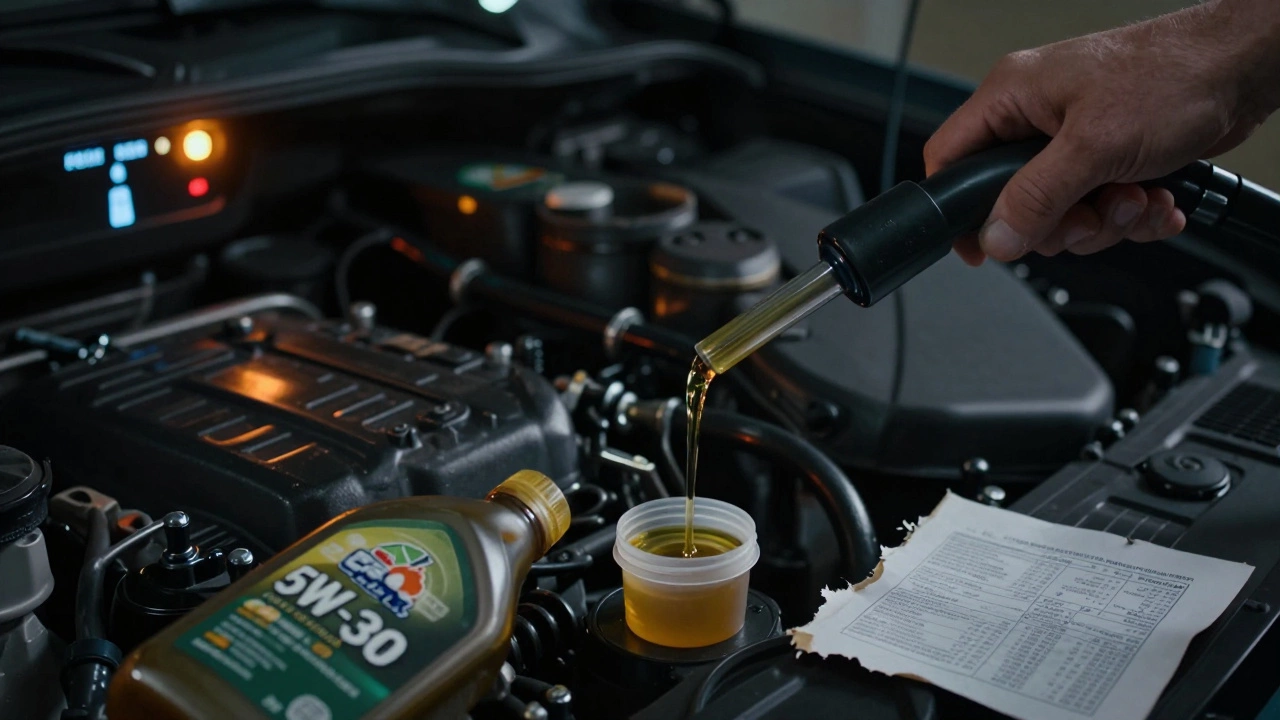
Check it every time you fill up with fuel. That’s about every 300-400 miles. It takes two minutes. If your car is newer and has an electronic oil level sensor, still check manually every few weeks. Sensors can fail. I’ve had three cars where the sensor said “OK” but the dipstick showed half-empty.Older cars, high-mileage vehicles, or those with known oil consumption issues should be checked weekly. If you drive in stop-start traffic, tow trailers, or live in extreme temperatures, check more often. Heat breaks down oil faster. Cold weather thickens it, making leaks harder to spot.
What if you’re out of oil and can’t get to a garage?
If you’re stranded and the oil is dangerously low, use any clean, correct-grade oil you can find-even if it’s not the exact brand. A 1-litre bottle from a petrol station is better than nothing. Add it slowly, check often. Drive only to the nearest garage. Don’t take long trips. Run the engine for no more than 10 minutes at a time. Let it cool between checks.Never use motor oil from a lawnmower or motorcycle. They’re not made for car engines. Even transmission fluid or power steering fluid can cause irreversible damage.
Bottom line
You don’t need to be a mechanic to handle low oil. You just need to be careful. Always check properly. Add slowly. Use the right oil. Never guess. A few extra minutes now can save you hundreds-or thousands-later.How much oil should I add if the level is just below the minimum mark?
Start with 200ml. Pour it in slowly, wait a minute, then recheck the dipstick. Most engines need between 200ml and 500ml to get back to the safe zone. Never add more than 500ml at once without rechecking.
Can I use any type of engine oil to top up?
No. Always use the viscosity and specification listed in your owner’s manual (e.g., 5W-30 API SN). If you don’t have the exact oil, use the closest match-preferably synthetic if your engine uses it. Avoid mixing different brands unless absolutely necessary, and never use non-car oils like motorcycle or lawnmower oil.
Is it normal for my car to use oil between oil changes?
Yes, slightly. Most manufacturers consider up to 1 litre per 1,000 miles as normal, especially in older or high-performance engines. But if you’re topping up more than that every 500 miles, it’s a sign of wear or a leak. Get it checked before it becomes a bigger problem.
What happens if I overfill the engine oil?
Overfilling causes the crankshaft to whip the oil into foam, which doesn’t lubricate properly. This leads to overheating, oil leaks, turbocharger damage, and even engine failure. Even 100-200ml too much can cause issues in smaller engines. Always check the dipstick after adding oil.
Should I check oil when the engine is hot or cold?
Always check when the engine is cold and has been off for at least five minutes. Hot oil expands and gives a false high reading. Checking while warm can make you think you’re fine when you’re actually low. Level ground is just as important-checking on a slope skews the result.