Air Filter Fitment Checker
Enter Your Measurements (inches)
Measure the longest side (Length), shorter side (Width), and thickness (Depth) of your current filter.
Enter your measurements to see which vehicle types this filter fits.
Buying the wrong air filter is frustrating. You drive to the store, pick a box that looks right, get home, and realize it doesn't fit. Or worse, you force it in, and it rattles around inside the housing, letting unfiltered dust straight into your engine. It happens more often than you’d think because car manufacturers use dozens of different sizes, even within the same model year.
Knowing exactly what size air filter to buy saves you time, money, and potential engine damage. You don’t need to be a mechanic to figure this out. In fact, most of the information you need is already sitting under your hood or in your glovebox. Let’s walk through the surefire ways to identify the correct part so you can replace it yourself with confidence.
Check Your Current Filter First
The easiest way to know what size you need is to look at the one currently in your car. Unless your filter is completely disintegrated or missing, it will have the manufacturer's part number printed directly on the cardboard frame. This number is the golden ticket. It tells you everything: the brand, the exact dimensions, and the filtration rating.
Here is how to find it:
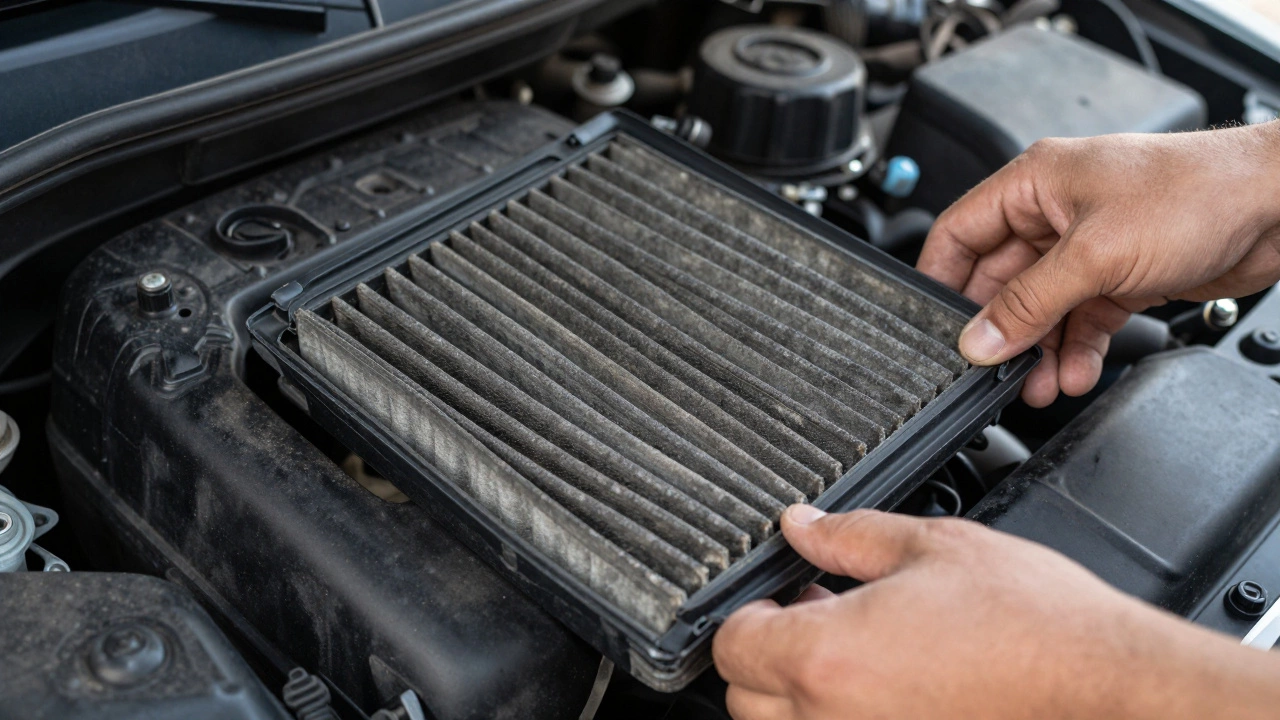
- Open the hood: Locate the air filter box. It’s usually a black plastic rectangular box connected to large rubber hoses leading to the throttle body.
- Remove the cover: Most boxes are held together by metal clips or screws. Release them and lift the lid off.
- Lift out the filter: Take the old filter out carefully. Don’t shake it too hard; you want to see the label, not create a dust storm.
- Read the label: Look for a code like FRAM CA10768 or Bosch W11094. Write this down. This specific part number guarantees a perfect fit, regardless of generic size charts.
If the label is faded or torn, don’t panic. The next step involves measuring, which brings us to the physical dimensions.
Measuring the Air Filter Dimensions
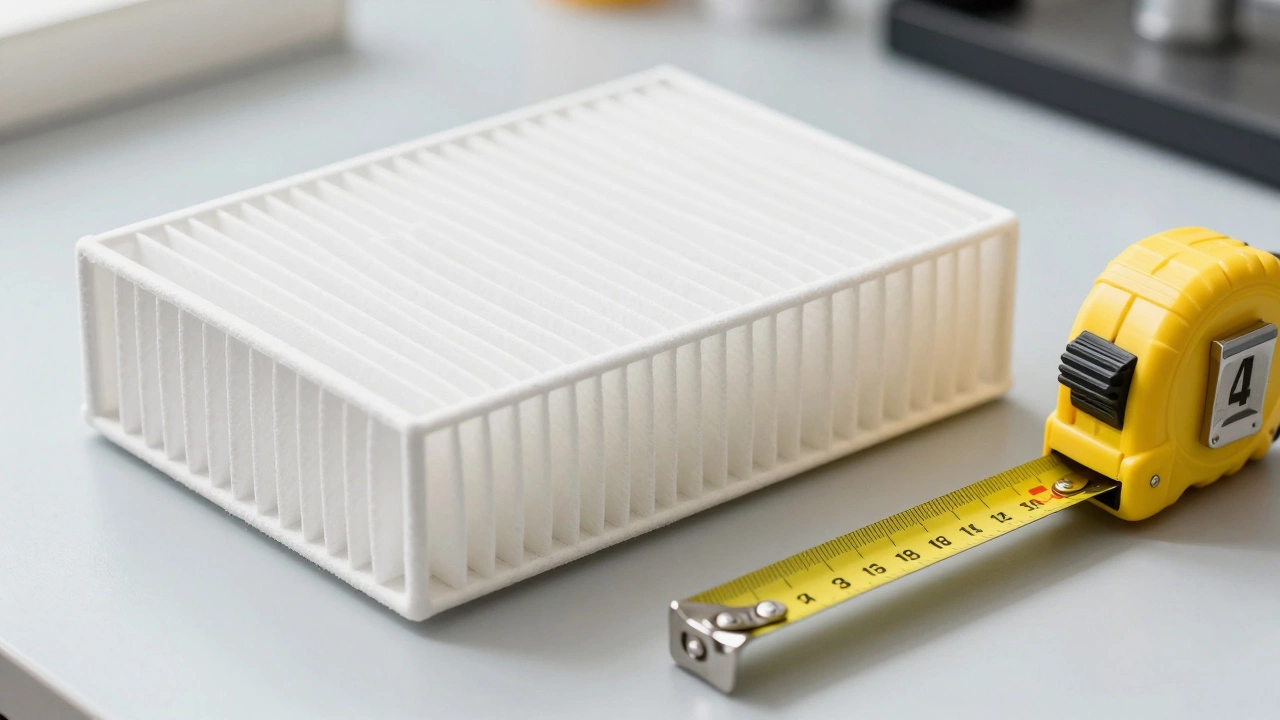
If you can’t read the part number, you need to measure the filter itself. Air filters are measured in inches (length x width x depth/thickness). Even a difference of 1/8th of an inch can make a filter loose or impossible to install. Use a tape measure or a ruler for accuracy.
Measure these three attributes:
- Length: Measure the longest side of the flat face of the filter.
- Width: Measure the shorter side of the flat face.
- Depth (Thickness): Measure the height of the filter from top to bottom. This is critical. A filter that is too thin will rattle and bypass dirty air. One that is too thick won’t close the box properly.
For example, a common size for many compact cars might be 13.5 inches long, 10.5 inches wide, and 1.5 inches deep. When shopping online, enter these numbers into the search bar. If the product listing matches your measurements within 1/8th of an inch, it’s likely the right one.
| Vehicle Type | Typical Length (in) | Typical Width (in) | Typical Depth (in) |
|---|---|---|---|
| Compact Sedan | 12 - 14 | 9 - 11 | 1.0 - 1.5 |
| SUV / Crossover | 14 - 16 | 11 - 13 | 1.5 - 2.0 |
| Pickup Truck (V6/V8) | 15 - 18 | 12 - 14 | 2.0 - 3.0 |
| European Luxury | Varies Widely | Varies Widely | 1.0 - 2.5 |
Note that European vehicles often use non-standard shapes or metric measurements, so relying solely on generic "SUV" sizes can lead to errors. Always verify with the part number if possible.
Using Your Vehicle Identification Number (VIN)
If your current filter is gone, destroyed, or you’re buying before you remove the old one, your VIN is the most reliable backup. The Vehicle Identification Number is a unique 17-character code assigned to every car. It acts as the car’s fingerprint, containing data about the engine type, manufacturing plant, and model year.
You can find the VIN on your dashboard (visible through the windshield on the driver’s side), on your registration document, or on the insurance card. Once you have it, go to any major auto parts website-like AutoZone, O’Reilly, or a manufacturer’s site-and enter the VIN into their "Fitment Checker" tool. This system cross-references your specific engine configuration with their database to list only compatible parts.
This method eliminates guesswork. For instance, a 2020 Ford F-150 with a 3.5L EcoBoost engine needs a different filter than the same truck with a 5.0L V8. The VIN ensures you get the exact match for your engine variant.
Consulting the Owner’s Manual
Your owner’s manual is often overlooked, but it contains a maintenance schedule section that lists recommended part numbers. Flip to the index and look for "Air Filter," "Engine Air Cleaner," or "Maintenance Schedule." Many manuals provide the OEM (Original Equipment Manufacturer) part number.
While the OEM number might look complex (e.g., GM 19278783), you can use it to find equivalent aftermarket brands. Most online retailers allow you to search by OEM number, and they will show you matching products from brands like K&N, Bosch, or Fram. This is particularly useful if you prefer high-performance filters over standard paper ones.
Understanding Air Filter Types and Ratings
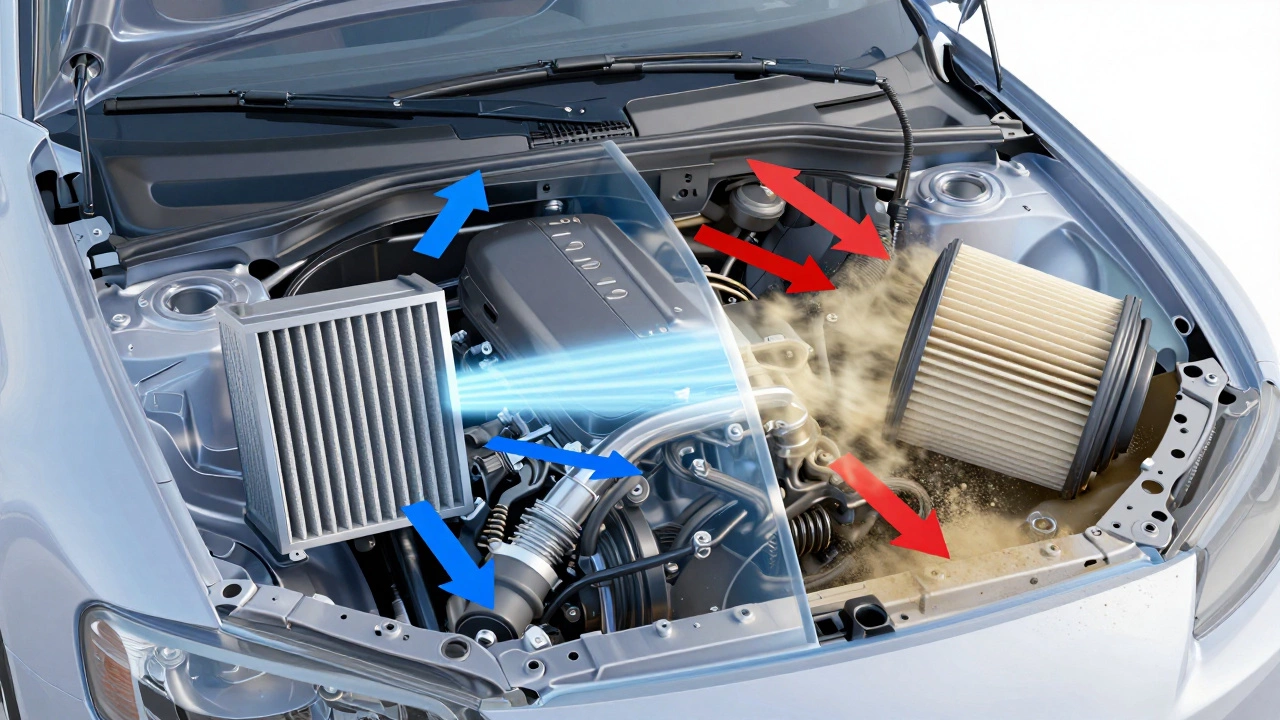
Once you have the size, you still need to choose the right type. Not all filters are created equal. The two main types are panel filters and cone filters, though panel filters are standard for most modern cars.
Panel filters are rectangular and sit inside a plastic housing. They are inexpensive and easy to replace. Cone filters are typically found on modified vehicles with cold air intake systems. They require specific sizing based on the diameter of the intake tube.
Another critical factor is the filtration efficiency. Look for ratings like MERV (Minimum Efficiency Reporting Value) for HVAC filters, but for engine air filters, look for micron ratings. A good engine filter should capture particles as small as 5 microns. High-performance oiled cotton filters (like those from K&N) claim better airflow but require regular cleaning. Standard pleated paper filters offer excellent filtration and are disposable. Choose based on your driving habits. If you drive on dusty roads, a high-quality paper filter is safer for your engine than a reusable mesh filter that might let fine silica dust through.
Common Mistakes to Avoid
Even with the right size, installation errors can cause problems. Here are pitfalls to watch out for:
- Ignoring the Seal: Ensure the rubber gasket around the edge of the filter is intact. A cracked seal lets unfiltered air bypass the media.
- Forcing the Fit: If the filter doesn’t slide in easily, stop. Check the orientation. Some filters have an arrow indicating airflow direction. Forcing it can deform the frame, creating gaps.
- Mixing Up Cabin and Engine Filters: These are two different components. The engine air filter goes under the hood. The cabin air filter cleans the air coming into your interior vents. They are rarely interchangeable and have different sizes. Make sure you’re buying the engine filter if that’s what you intend to replace.
- Skipping the Housing Cleanout: Before installing the new filter, wipe out the air box. Debris left behind can puncture the new filter or block airflow.
When to Replace Your Air Filter
You don’t need to wait for the filter to fall apart. Most manufacturers recommend replacing the engine air filter every 12,000 to 15,000 miles. However, if you live in an area with high pollen, dust, or construction activity, you may need to change it every 6,000 miles. A clogged filter restricts airflow, causing your engine to work harder, which reduces fuel economy and acceleration. Visually inspect the filter during oil changes. If it looks dark gray or black with visible debris, it’s time for a swap.
Can I use a universal air filter?
Universal air filters exist, but they are risky. They often come with adjustable frames that may not seal perfectly against the air box. A poor seal allows unfiltered air to enter the engine, causing premature wear. It is always safer to use a filter specifically designed for your vehicle’s make and model.
What happens if I put in the wrong size air filter?
If the filter is too small, it will rattle around and fail to seal, letting dirt into the engine. If it is too large, it may not fit in the box at all, or it could deform when forced in, breaking the seal. Both scenarios can lead to engine damage from abrasive particles.
How do I know if my air filter is bad?
Signs include reduced fuel efficiency, lack of power during acceleration, unusual engine noises, or a visible accumulation of dirt and debris on the filter surface. If the filter looks black instead of white or light gray, it needs replacement.
Is the cabin air filter the same as the engine air filter?
No, they are completely different. The engine air filter protects the engine from external dirt. The cabin air filter cleans the air entering the passenger compartment through the HVAC system. They have different sizes, shapes, and locations.
Can I wash and reuse my air filter?
Only if it is a reusable, oiled cotton filter designed for washing. Standard paper or synthetic panel filters cannot be washed. Washing a paper filter will destroy its structure and filtration ability, rendering it useless.