Suspension Stiffness Diagnostic Tool
Select Symptoms You Experience
Click on each symptom that applies to your vehicle. Select all that are true.
Your Score
No Symptoms Selected
Select symptoms above and click Analyze
Key Takeaways
- If your car feels like it’s bouncing on every crack in the road or you feel numbness in your hands after short drives, your suspension is likely too stiff.
- Stiff suspensions cause uneven tire wear because the tires lose contact with the pavement over bumps instead of absorbing them.
- Replacing worn shock absorbers or swapping out heavy-duty springs for standard ones can restore comfort without sacrificing safety.
- Don’t ignore the signs; a harsh ride isn’t just annoying-it reduces grip and increases stopping distances.
The Harsh Ride Test: What Does "Too Stiff" Actually Feel Like?
You know that feeling when you drive over a speed bump and it feels less like a gentle roll and more like hitting a brick wall? That’s not just an old road; that’s your suspension screaming for help. When we talk about a suspension being "too stiff," we aren't talking about high-performance track cars designed to hug corners at 100 mph. We’re talking about everyday vehicles that have lost their ability to absorb energy from the road surface.
A healthy suspension system acts as a buffer between your chassis and the ground. It uses springs to support the vehicle's weight and dampers (shock absorbers) to control the movement of those springs. When this balance tips toward stiffness, usually due to incorrect parts or severe wear, the car stops filtering out vibrations. Instead, every pothole, expansion joint, and pebble transmits directly into the cabin. You’ll feel it in your seat, but more importantly, you’ll feel it through the steering wheel. If your hands start tingling after a ten-minute commute, your front end is working against you, not with you.
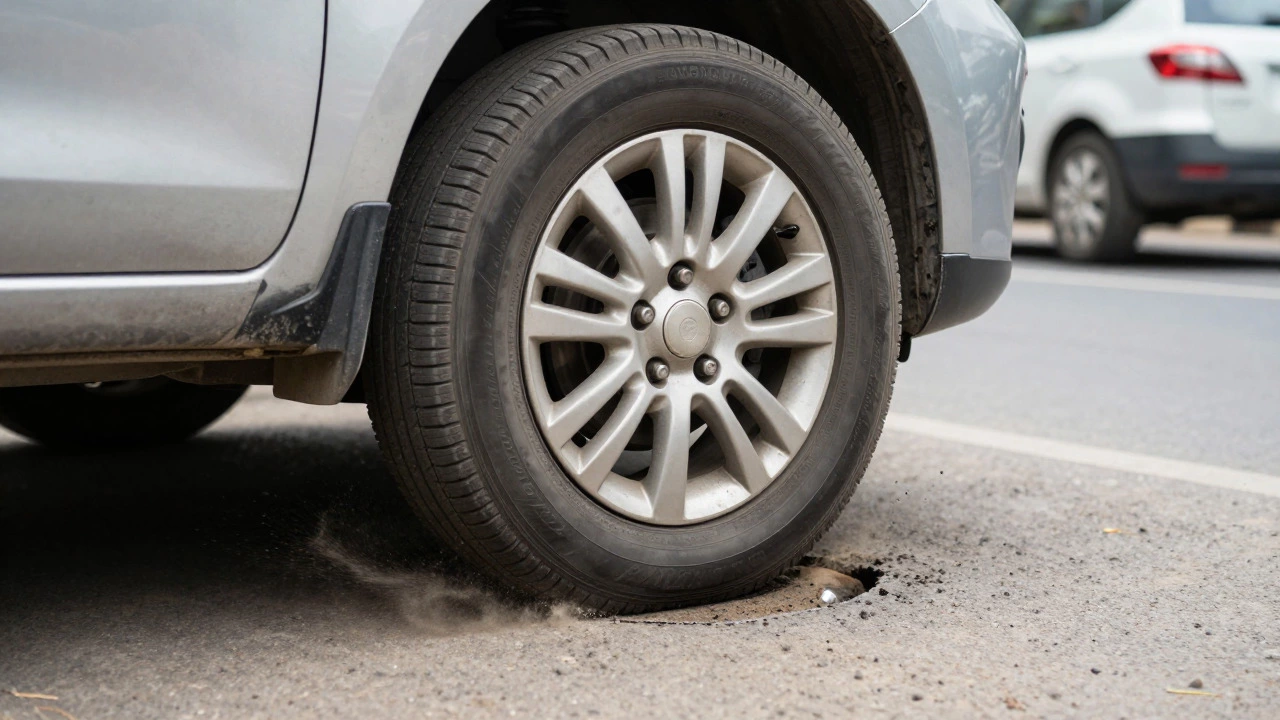
Think about driving on a wet highway. A properly tuned suspension keeps all four tires planted firmly on the asphalt. A suspension that is too stiff will bounce slightly after hitting a small irregularity. This tiny loss of contact might seem negligible, but at 60 mph, it means you’ve momentarily lost traction. It’s the difference between stopping safely and sliding into the next lane.
Physical Signs: Checking Your Tires and Chassis
Your eyes can tell you just as much as your ears-or your spine-can. The first place to look is at your tires. When a suspension is excessively stiff, the tires act like rigid blocks rather than flexible cushions. They don't conform to the road surface. Over time, this leads to specific patterns of wear that are hard to miss if you know what to look for.
Look closely at the tread. Do you see cupping? That’s a series of dips or scallops across the tire face. This happens when the tire bounces up and down rapidly because the shock absorber isn't damping the spring motion effectively. In a stiff setup, the tire slams back down onto the road with excessive force, wearing away chunks of rubber in concentrated spots. Another sign is flat spotting, where a section of the tire wears evenly flat while the rest remains deep. This occurs when the tire doesn't rotate smoothly due to the harsh impact forces keeping it momentarily stationary relative to the axle.
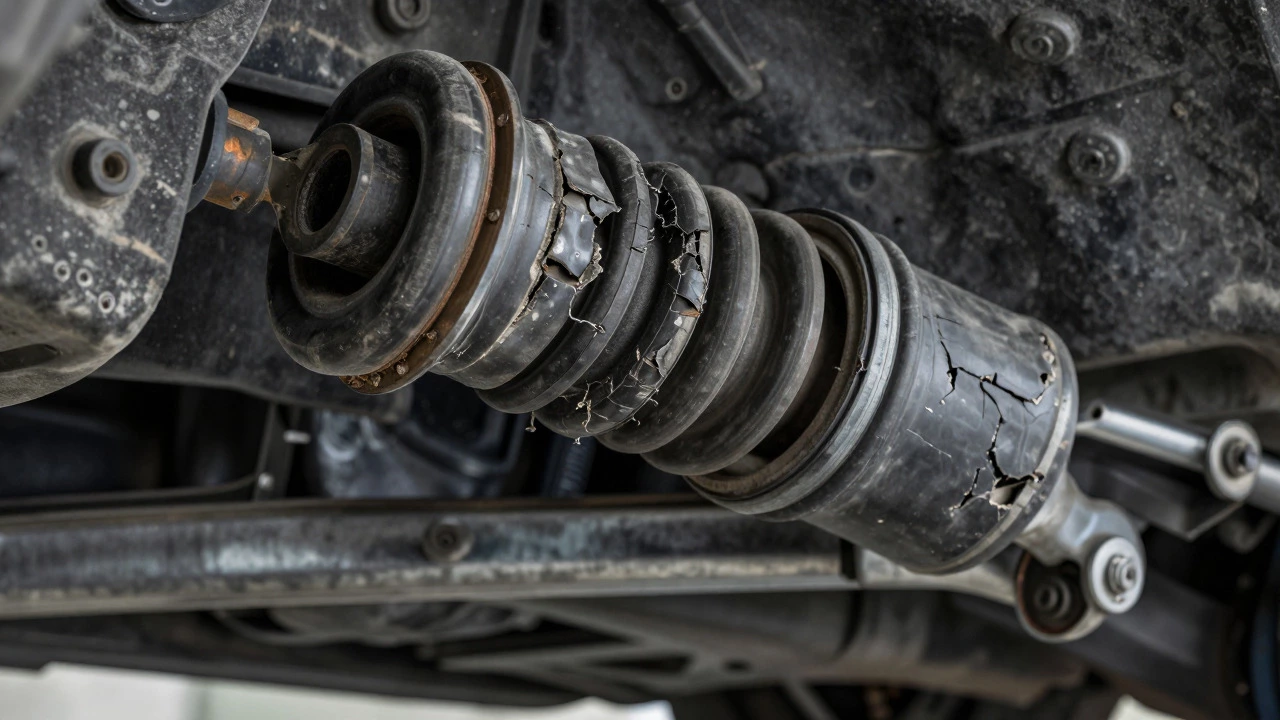
Next, check the body alignment. Park your car on level ground and step back. Does one corner sit lower than the others? While sagging often indicates weak springs, a car that sits unnaturally high or rigidly square despite heavy loads might be suffering from overly aggressive spring rates. Inspect the bushings-the rubber components that connect the control arms to the frame. On a stiff suspension, these take immense punishment. Look for cracks, tears, or separation. If the rubber is hardened and brittle, it no longer absorbs vibration; it transfers it straight to the metal chassis, amplifying the harshness you feel inside.
| Symptom Area | Normal Suspension Behavior | Too Stiff Suspension Behavior |
|---|---|---|
| Ride Comfort | Gentle isolation from road imperfections | Jarring impacts, noticeable vibration in seat/steering |
| Tire Wear | Even tread depth across the width | Cupping, scalloping, or patchy wear patterns |
| Handling | Stable tracking, minimal body roll | Nervous steering, tendency to skip over bumps |
| Noise | Quiet cabin, only wind/road noise | Clunking over bumps, rattling interior panels |
The Sound Check: Listening for Clunks and Rattles
Sound is a critical diagnostic tool. A well-functioning suspension is relatively quiet, producing only the hum of the tires on the road. When things get too stiff or worn, the silence breaks. Pay attention to what happens when you cross railroad tracks, large potholes, or even just raised manhole covers.
If you hear a distinct "clunk" or "bang," something is moving too far. In a stiff suspension, the travel distance is limited. When the wheel hits a bump, there’s nowhere for the energy to go but into the mounting points. This causes the control arms, sway bars, and strut mounts to slam against their limits. You might also hear creaking sounds from the rear leaf springs or torsion bars. These noises indicate that the rubber isolators have failed or were never adequate for the spring rate installed.
Inside the cabin, listen for rattling. Loose trim pieces, dashboard screws, or center console components may start vibrating and making noise. This isn't just an annoyance; it’s a symptom of high-frequency vibration passing through the floorpan. If your coffee starts sloshing violently in your cup holder on smooth roads, your suspension is transmitting too much kinetic energy into the passenger compartment.
Driving Dynamics: Handling and Stability Issues
Comfort is subjective, but handling is objective. A suspension that is too stiff often feels twitchy or nervous, especially at higher speeds. Because the tires aren't maintaining consistent contact with the road, the steering input becomes unpredictable. You might find yourself constantly making minor corrections to stay in your lane, a phenomenon known as "tramlining."
Test your car on a winding road. Does the front end dive excessively when braking? Or does the rear squat dramatically during acceleration? While some body movement is normal, extreme pitching suggests the damping is mismatched to the spring stiffness. If the springs are very stiff but the shocks are weak or worn, the car will oscillate-bouncing up and down several times after a single bump. This instability increases stopping distances because the weight transfer isn't controlled efficiently.
Consider cornering. Many people believe stiffer equals better handling. That’s true for race cars on smooth surfaces. For street cars, however, too much stiffness reduces mechanical grip. As the wheel hops over a crest or dip, lateral grip vanishes. You’ll feel the car slide outward in a turn, not because the tires are slippery, but because they literally left the ground for a fraction of a second. This lack of feedback makes the car feel unsafe, forcing you to slow down unnecessarily.

Why Did It Get Stiff? Common Causes and Modifications
Understanding why your suspension became stiff helps you fix it permanently. The most common culprit is simply age. Rubber bushings dry rot and harden over time, losing their elasticity. Shock absorbers leak fluid, reducing their ability to dampen spring rebound. When the damping fails, the raw stiffness of the steel springs takes over, creating a harsh, uncontrolled ride.
Another frequent cause is aftermarket modification. Enthusiasts often install lowering springs or heavy-duty off-road shocks without considering daily drivability. Lowering springs typically have a higher spring rate (measured in pounds per inch or N/mm) to prevent bottoming out on curbs. Off-road shocks prioritize durability and articulation over comfort. Mixing these parts creates a compromise that satisfies neither purpose: it’s too soft for serious off-roading and too harsh for commuting.
Load bearing is another factor. If you regularly haul heavy cargo or tow trailers, your suspension works harder. Over time, this constant compression can fatigue the springs and overload the dampers. Even if the parts aren't broken, they may be operating outside their optimal range, resulting in a perceived increase in stiffness. Additionally, tire pressure plays a role. Over-inflated tires compound the effects of a stiff suspension, turning a manageable bump into a jarring impact.
Fixing the Problem: Restoring Balance and Comfort
So, how do you fix a suspension that’s too stiff? Start with the easiest and cheapest solution: check your tire pressure. Drop it to the manufacturer’s recommended cold pressure listed on the driver’s door jamb. Often, slightly over-inflated tires mimic a stiff suspension. If that doesn’t solve it, move to inspection.
Replace worn shock absorbers and struts. Modern monotube shocks offer better heat dissipation and consistency than older twin-tube designs. Look for brands that offer adjustable damping, allowing you to soften the ride for daily use and firm it up for spirited driving. If you have aftermarket lowering springs, consider switching back to OEM (Original Equipment Manufacturer) height springs or installing coilovers with adjustable preload and damping.
Don’t forget the bushings. Replacing cracked or hardened rubber bushings with polyurethane or high-quality rubber alternatives can dramatically improve compliance. Polyurethane is stiffer than rubber but more durable; however, for comfort-focused repairs, stick to premium rubber compounds. Finally, ensure your wheels are balanced and aligned. A stiff suspension magnifies any imbalance, causing vibrations that feel like harshness. Getting a professional alignment ensures the geometry supports the new or repaired suspension components correctly.
Frequently Asked Questions
How long does it take to replace shock absorbers?
Replacing a pair of front shock absorbers or struts typically takes 2 to 4 hours for a professional mechanic. Rear shocks are usually quicker, often under 2 hours. DIY enthusiasts with basic tools might take longer, depending on rust and accessibility.
Can I adjust my current suspension to make it softer?
Only if you have adjustable coilovers or air suspension systems. Standard factory shocks and springs are fixed-rate. If your car has non-adjustable parts, you must replace them with units that have a lower spring rate or softer damping valving.
Does a stiff suspension affect fuel economy?
Indirectly, yes. If the tires aren't maintaining consistent contact with the road due to bouncing, rolling resistance increases. Additionally, a nervous steering requires more driver input, which can lead to inefficient throttle application. Properly damped suspensions promote smoother, more efficient driving.
What is the difference between spring rate and damping?
Spring rate refers to how much force is needed to compress the spring by one inch (stiffness). Damping refers to the shock absorber's ability to control the speed of that compression and rebound. High spring rate with low damping causes a bouncy, unstable ride. Low spring rate with high damping feels floaty and vague.
Should I replace all four shocks at once?
Yes, it is highly recommended. Suspension components wear evenly over time. Replacing only two can create an imbalance in handling, causing the car to pull to one side or behave unpredictably during emergency maneuvers. Consistency is key for safety.