Low-Mileage Oil Change Estimator
Most manufacturers recommend changing oil every 12 months OR every X miles, whichever comes first. This tool helps you determine if your current schedule is safe for your specific usage patterns.
Enter details to calculate risk
Adjust the settings on the left to see how time and usage affect your oil's lifespan.
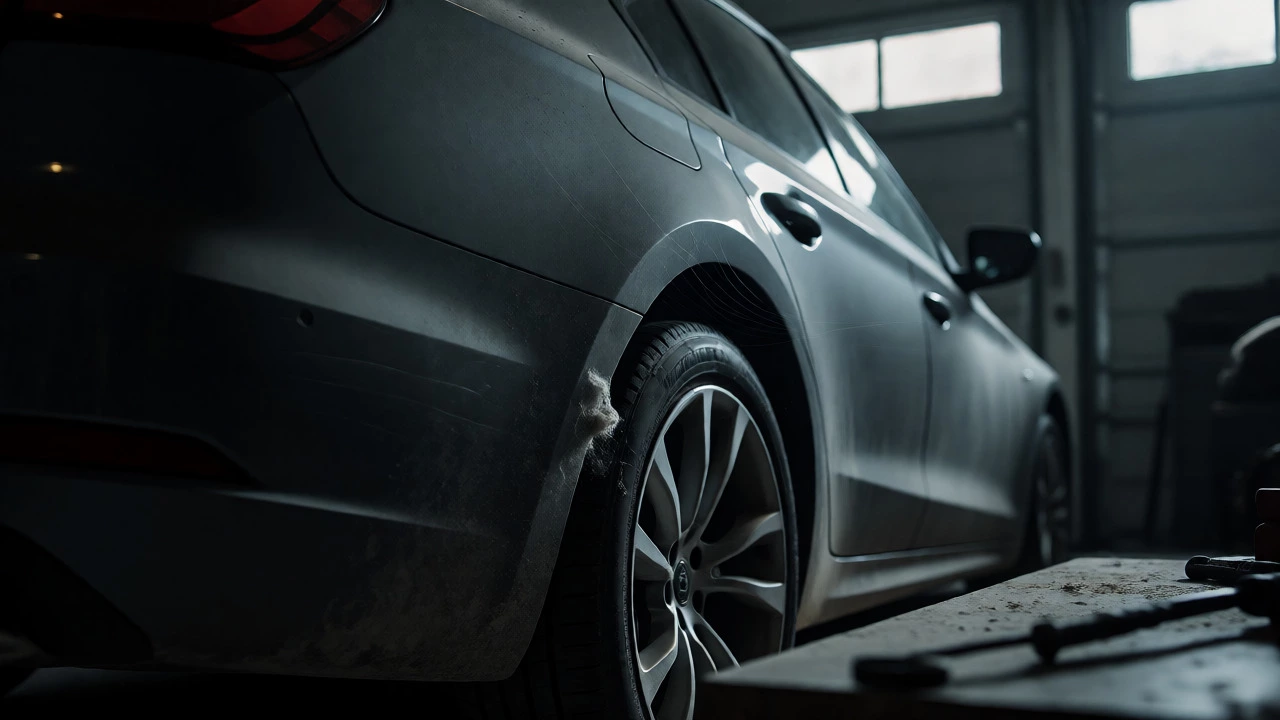
You parked your car in the garage six months ago. It’s barely moved since then. The dashboard reminder hasn’t pinged yet because you haven’t hit that 10,000-mile mark. So, do you really need to spend money on an engine oil change right now? Or can you just wait until next year?
This is one of the most common questions I hear from drivers who use their cars sparingly. Maybe you work from home, or maybe you have a second vehicle for weekend trips. Whatever the reason, the logic seems sound: if the engine isn't working hard, why should the oil wear out? The short answer is yes, you absolutely still need to change it. But the "why" is more interesting than you might think, and getting this wrong can cost you far more than the price of a filter and five litres of synthetic blend.
The Myth of "Low Usage Means Low Wear"
We tend to treat car parts like human muscles. If we don't use them, they stay fresh, right? Not exactly. Engine oil doesn't just lubricate moving metal parts; it also acts as a coolant, a cleaner, and a preservative. Even when your engine sits idle, chemical reactions are happening inside that sump.
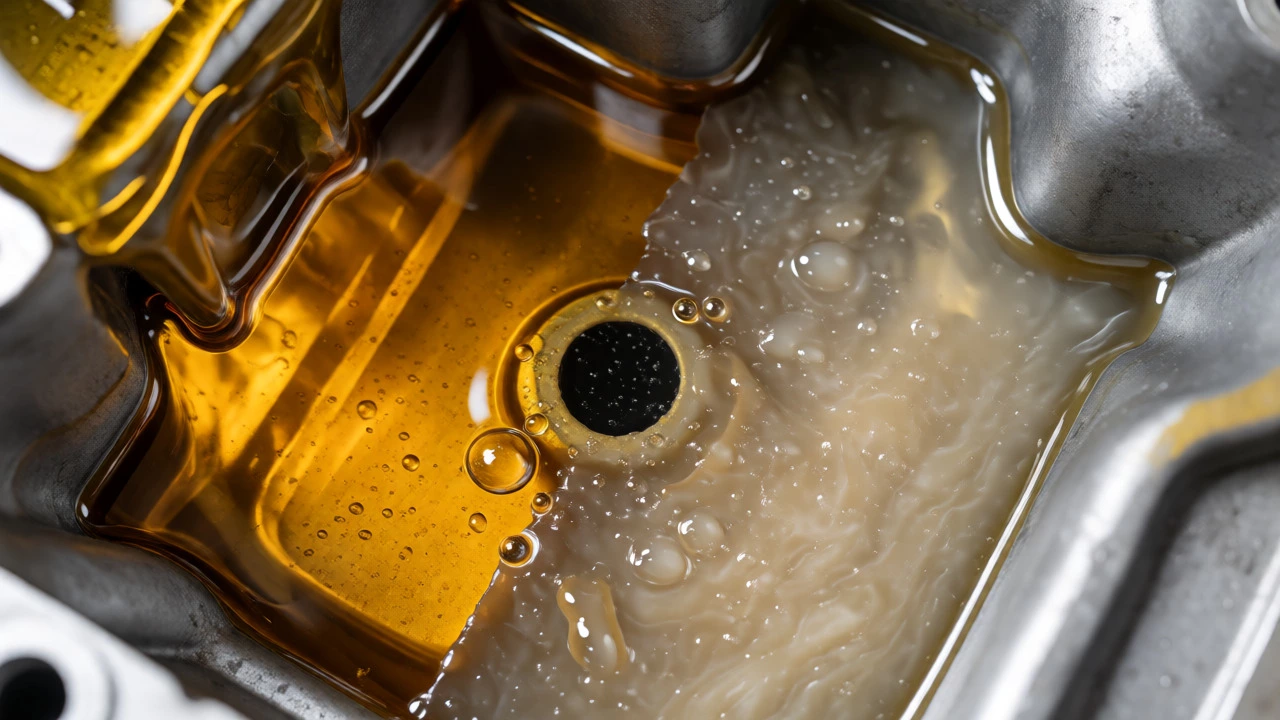
Think about condensation. When your engine cools down after a drive, moisture from the air gets sucked into the crankcase through the breather system. If you drive long distances regularly, the engine gets hot enough to boil off this water vapour. But if you only take short trips-or let the car sit for weeks-that moisture stays trapped. Over time, this water mixes with the oil, turning it into a milky sludge that loses its ability to protect your bearings and camshafts.
Furthermore, fuel dilution is a real issue for low-mileage vehicles. During cold starts, unburnt petrol washes past the piston rings and ends up in the oil pan. In high-mileage scenarios, the heat eventually evaporates this fuel. In low-use scenarios, it accumulates. This thins the oil, reducing its viscosity rating. An oil rated 5W-30 might effectively act like a 0W-20, leaving critical gaps unprotected during those rare moments you actually start the engine.
Why Time Beats Mileage Every Time
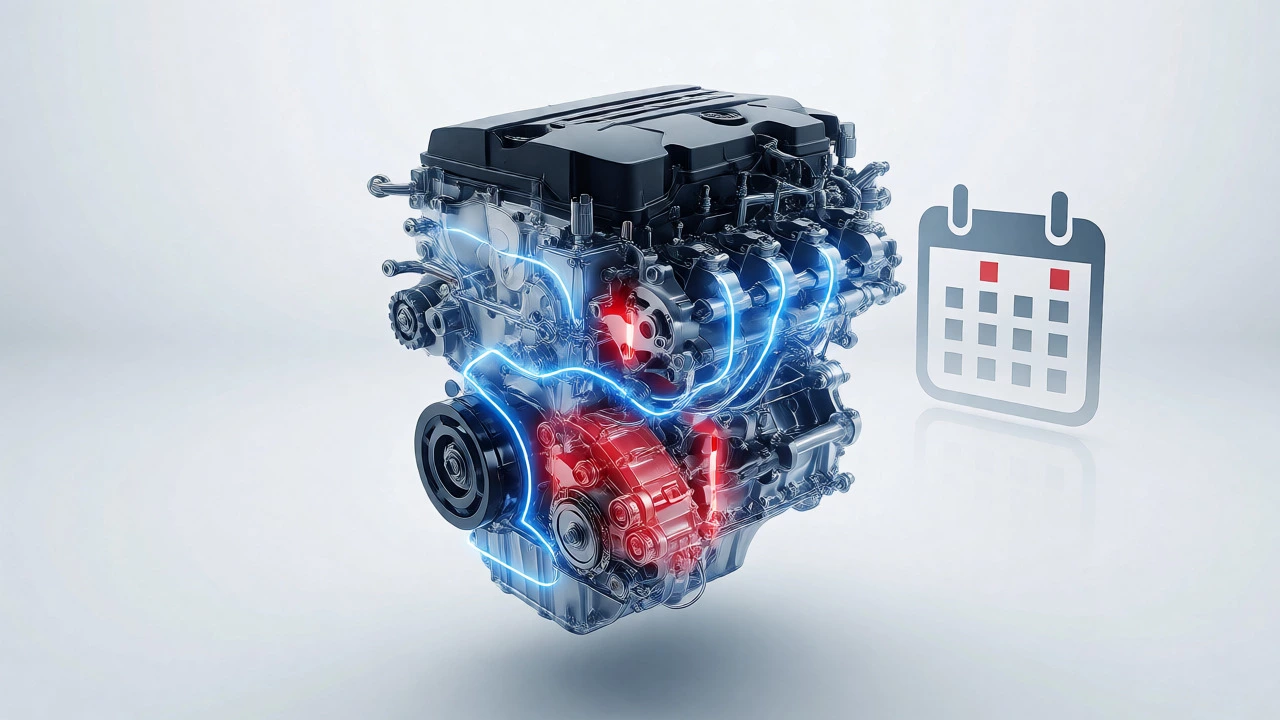
Manufacturers design maintenance schedules based on two triggers: distance travelled or time elapsed, whichever comes first. Most modern cars recommend an oil change every 10,000 miles or every 12 months. That "or" is doing heavy lifting here.
| Factor | High Mileage Impact | Low Mileage Impact |
|---|---|---|
| Oxidation | Accelerated by heat and shear stress | Slow but constant reaction with oxygen over time |
| Moisture Buildup | Evaporated by sustained operating temperatures | Accumulates due to lack of heat cycles |
| Fuel Dilution | Burned off during long drives | Concentrates in sump without evaporation |
| Additive Depletion | Used up fighting friction and contaminants | Degrades chemically even without load |
Here’s the science bit: additives in motor oil-detergents, dispersants, anti-wear agents-are not infinite. They break down simply by existing in a harsh environment. Detergents neutralise acids formed by combustion by-products. Even if you drive zero miles, residual acids from previous drives continue to attack the oil's chemistry. Once those additives are spent, the oil stops protecting against corrosion. You aren't just changing dirty oil; you're replenishing a chemical shield that has expired.
Synthetic vs. Conventional: Does It Change the Rules?
You might argue that full synthetic oils last longer. And you’re right-they do. A conventional mineral oil might degrade significantly in six months of sitting, whereas a premium full synthetic could hold up for twelve. But "hold up" doesn't mean "stay perfect."
Full Synthetic Oil is a type of motor oil engineered from chemical compounds rather than refined crude oil, offering superior stability at extreme temperatures and resistance to oxidation. Unlike Mineral Oil, which contains natural impurities that accelerate breakdown, synthetics are uniform molecules designed to resist thermal cracking.However, even the best synthetic oil has a shelf life once it’s in your engine. The manufacturer’s warranty usually caps the interval at 12 months regardless of mileage. Why? Because they know that static storage creates unique failure modes. If you ignore the time limit, you risk voiding your powertrain warranty. For many owners, the peace of mind alone is worth the £60-£80 service cost.
The Hidden Cost of Skipping Your Annual Service
Let’s look at the worst-case scenario. You skip your annual change because you’ve only done 2,000 miles. Two years later, you decide to sell the car or finally push it harder on a road trip. What happens?
- Sludge Formation: The thick, tar-like substance clogs oil galleries. Your turbocharger (if equipped) starves of lubrication and fails. Replacement costs often exceed £1,500.
- Corrosion: Moisture causes rust on internal components like camshafts and lifters. This leads to ticking noises and premature wear.
- Cold Start Damage: Thickened, degraded oil flows poorly when cold. Since low-mileage cars start less frequently, each cold start puts disproportionate stress on the engine.
I’ve seen engines seize up not because they were driven too much, but because they weren’t driven enough. The oil turned into varnish, gluing piston rings to the cylinder walls. It’s a silent killer.
How to Manage Low-Mileage Maintenance Smartly
If you’re stuck in this low-mileage loop, you don’t necessarily need to visit the dealer every single January. Here’s how to optimise your approach:
- Check the Manual: Some manufacturers allow extended intervals for "severe service" conditions, but rarely for "low usage." Read the fine print. If it says "every 12 months," stick to it.
- Use Quality Filters: Don’t cheap out on the oil filter. A high-quality filter traps contaminants better, keeping the oil cleaner for longer within that 12-month window.
- Take Long Drives Occasionally: Try to take the car on a 30-minute highway run once a month. This helps burn off accumulated moisture and fuel vapours, extending the effective life of the oil slightly.
- Monitor the Dipstick: Check your oil level monthly. If it’s dropping unexpectedly, you might have a leak or burning issue that needs attention before the next scheduled service.
Remember, oil changes are cheap insurance. An engine replacement costs thousands. The math is simple.
When Can You Actually Extend the Interval?
Are there exceptions? Yes, but they are rare. If your car is stored indoors in a climate-controlled environment, uses premium full-synthetic oil, and you perform regular battery maintenance (to ensure easy starts), you might stretch it to 14 or 15 months. But going beyond 18 months? That’s gambling with your engine’s lifespan.
Also, consider the type of driving. If your "low mileage" consists entirely of 5-minute school runs in stop-and-go traffic, your oil is suffering more than a car that does 10,000 miles of steady motorway cruising. Short trips are technically "severe service" because the engine never reaches optimal temperature. In this case, you might even need to change oil more frequently than annually, despite the low odometer reading.
Does driving less cause my engine to rust?
Yes, indirectly. Lack of use allows moisture to accumulate in the crankcase. This water mixes with oil and causes internal corrosion on metal surfaces like bearings and camshafts, especially during cold starts when protective oil films are thin.
Can I just top up the oil instead of changing it?
No. Topping up adds volume but doesn't remove contaminants or restore depleted additives. Old oil retains acidic by-products and sludge. Mixing new oil with old degraded oil results in a mixture that offers suboptimal protection compared to a fresh fill.
What happens if I miss my annual oil change by two months?
Missing it by a few weeks is usually not fatal for a healthy engine. However, consistently ignoring the time-based interval leads to additive depletion and sludge buildup. It’s best to get it done as soon as possible rather than waiting another full year.
Is synthetic oil worth it for low-mileage cars?
Absolutely. Synthetic oils have higher resistance to oxidation and maintain viscosity better over time. For cars that sit for long periods, the extra cost of synthetic oil pays for itself by providing better protection against the specific degradation mechanisms caused by inactivity.
Do electric vehicles need oil changes?
Most EVs do not have traditional internal combustion engines, so they don't require engine oil changes. However, some hybrids and certain EV models with reduction gears may require gear oil changes, though these intervals are typically much longer (e.g., every 60,000+ miles).