Suspension System Identifier & Health Checker
Not sure what kind of suspension your car has? Or worried it might be failing? Use this tool to identify the most likely system for your vehicle and run a quick health check.
Likely Configuration:
Front:
Rear:
Check any symptoms you are currently experiencing:
Condition Assessment:
| Suspension Type | Complexity | Cost | Best Use Case |
|---|---|---|---|
| MacPherson Strut | Low | $ | Front axles of FWD sedans/hatchbacks |
| Double Wishbone | High | $$$ | Luxury cars, sports cars, RWD vehicles |
| Multi-Link | Very High | $$$$ | Rear axles of premium vehicles |
| Torsion Beam | Low | $ | Rear axles of economy cars |
You’re driving down a rough stretch of road, maybe one of those pothole-riddled lanes in Bristol that seem to appear overnight. Your car absorbs the bump, keeps you upright, and lets you continue without spilling your coffee. You rarely think about it, but that smooth ride is doing heavy lifting thanks to your suspension system. While there are dozens of ways engineers design this critical component, one specific configuration dominates the modern automotive landscape more than any other.
If you’ve ever wondered what keeps your tires glued to the tarmac while isolating you from the chaos of the road, you’re asking the right question. The answer isn’t just technical trivia; understanding it helps you diagnose noises, choose better tires, and avoid expensive repair bills. So, what is the most common suspension found on cars today?
The Dominant Design: MacPherson Strut
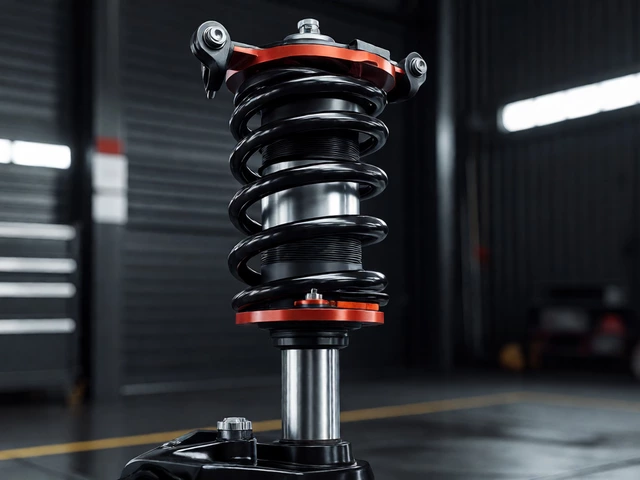
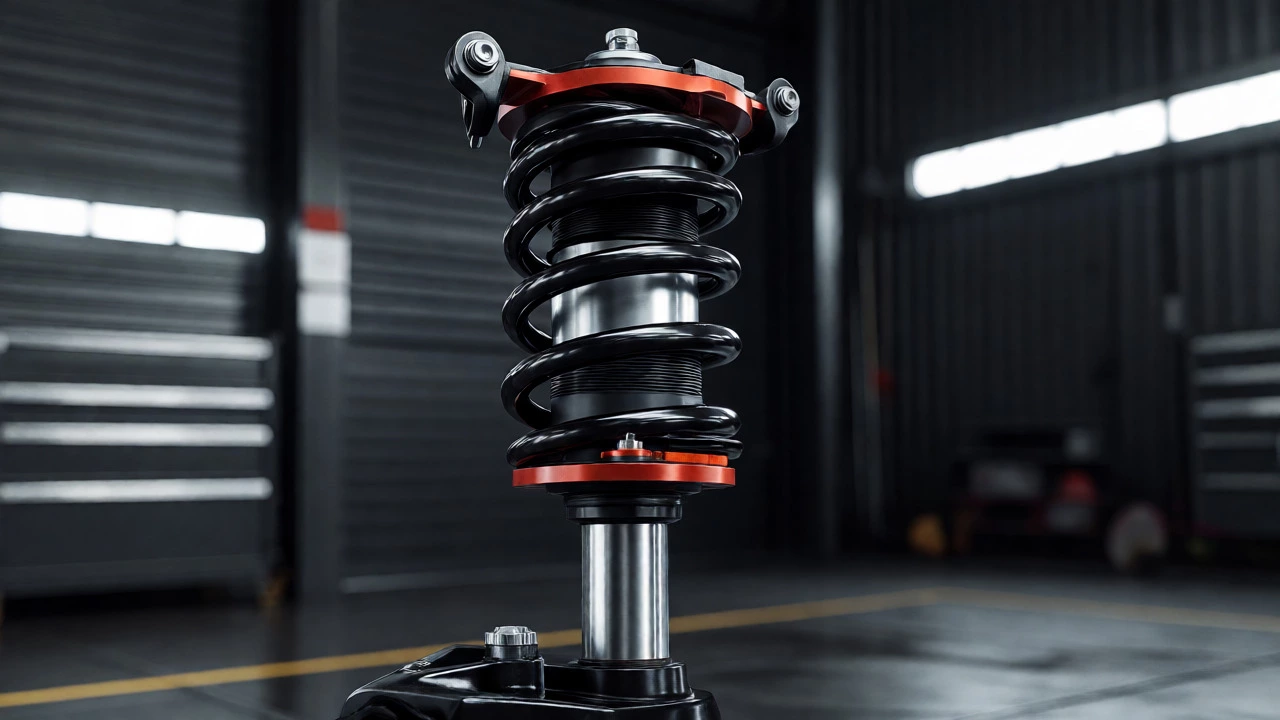
Walk into almost any auto shop or look under the hood of a modern sedan, hatchback, or crossover, and you’ll likely find the MacPherson strut. Developed by Earl MacPherson at Ford in the late 1940s, this design replaced the older, bulkier leaf spring setups that dominated earlier eras. It combines two major functions into a single unit: the shock absorber (damping) and the upper mounting point for the wheel.
Why did it take over the world? Simplicity and cost. By integrating the damper and spring into one compact column that mounts directly to the chassis, manufacturers save space in the engine bay. This allows for smaller engines or more room for passengers. For front-wheel-drive cars, which make up the vast majority of vehicles sold globally, the MacPherson strut is practically standard issue.
| Suspension Type | Complexity | Cost | Best Use Case |
|---|---|---|---|
| MacPherson Strut | Low | $ | Front axles of FWD sedans/hatchbacks |
| Double Wishbone | High | $$$ | Luxury cars, sports cars, RWD vehicles |
| Multi-Link | Very High | $$$$ | Rear axles of premium vehicles |
| Torsion Beam | Low | $ | Rear axles of economy cars |
How It Actually Works
Don’t let the name “strut” confuse you. In a traditional setup, the shock absorber and the coil spring are separate components with different mounting points. In a MacPherson strut, they are married together. The top of the strut bolts directly to the vehicle’s body or subframe. The bottom connects to the steering knuckle, which holds the wheel hub.
When you hit a bump, the entire strut compresses vertically. Because the strut acts as a structural member, it bears side loads during cornering. This means if your strut mount wears out, your car won’t just bounce-it will feel loose and vague when you turn the steering wheel. Mechanics often hear a clunking noise from the front wheels when these mounts fail, a classic symptom every driver should know.
Why Not Everything Uses Struts?
If struts are so cheap and effective, why don’t high-end sports cars use them exclusively? The answer lies in geometry. A MacPherson strut has limited control over camber-the angle of the tire relative to the road-during hard cornering. As the suspension compresses, the tire can tilt too much, reducing grip.
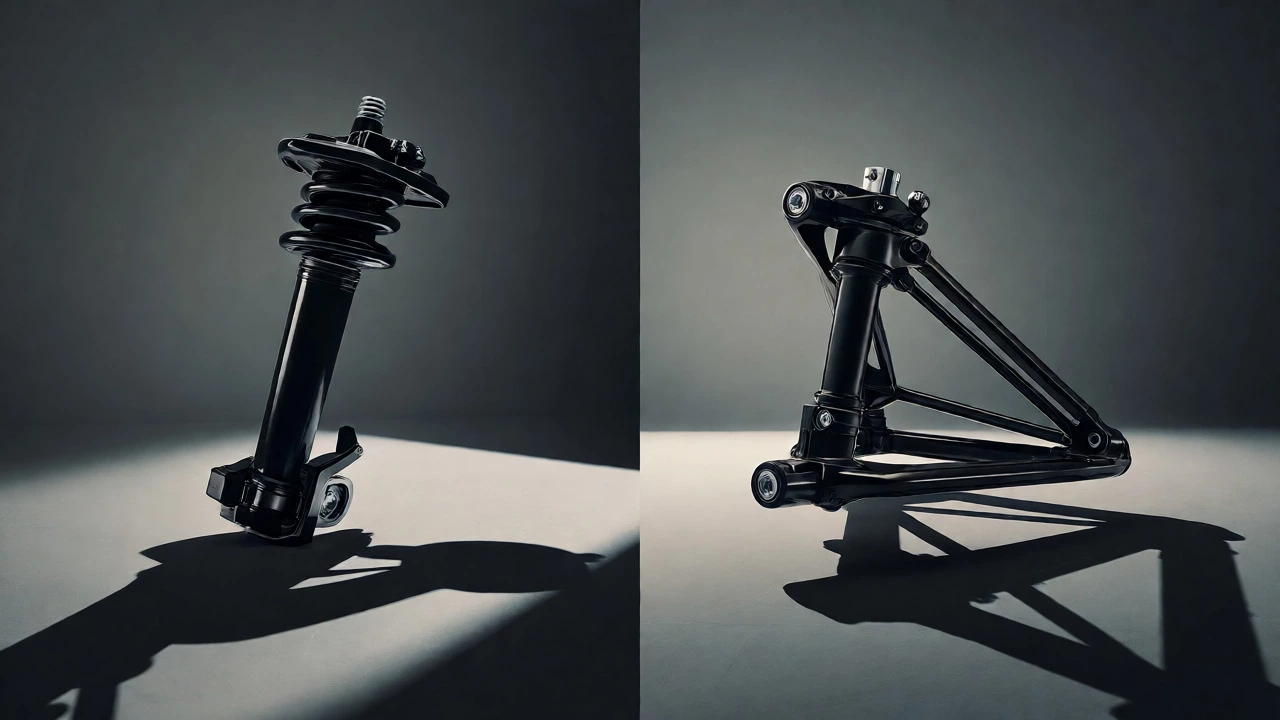
This is where the double wishbone comes in. Found in luxury brands like BMW, Mercedes-Benz, and performance-focused marques, this system uses two triangular arms (upper and lower) to hold the wheel. It offers superior handling precision because it maintains better tire contact patches through turns. But it’s heavier, takes up more width in the engine bay, and costs significantly more to manufacture.
So, while the strut wins on volume, the double wishbone wins on performance. If you drive a Porsche or a high-spec Audi, you’re likely dealing with double wishbones at the front.
The Rear End: Torsion Beams vs. Multi-Links
Most modern cars use MacPherson struts at the front, but what’s happening at the back? Here, the choice splits based on budget and purpose.
Economy cars, like the Ford Fiesta or Volkswagen Polo, often use a torsion beam rear suspension. It’s essentially a solid axle that twists slightly to allow each wheel some independent movement. It’s incredibly cheap, simple, and durable. However, it compromises ride comfort and stability when one wheel hits a bump while the other doesn’t.
Premium vehicles upgrade to multi-link systems. These use three or more lateral links to guide the wheel. They offer the best balance of comfort and handling but require complex assembly and precise alignment. If you own a BMW 3 Series or a Toyota Camry XSE, your rear end is likely multi-link.
Signs Your Suspension Is Failing
Since we know what’s under there, how do you know when it’s time to replace it? Suspension parts wear out gradually, so drivers often adapt to the degradation without noticing until it’s severe.
- Excessive Bouncing: Push down on a corner of your car. If it bounces more than once before settling, your dampers (shocks/struts) are shot.
- Dipping Nose: Does your car pitch forward heavily when you brake? That’s worn front struts failing to control weight transfer.
- Uneven Tire Wear: Look at your tires. If the inner edges are bald while the outer edges look new, your alignment or suspension bushings are compromised.
- Clunks and Knocks: Listen for metallic noises over speed bumps. This usually indicates worn ball joints, tie rods, or strut mounts.
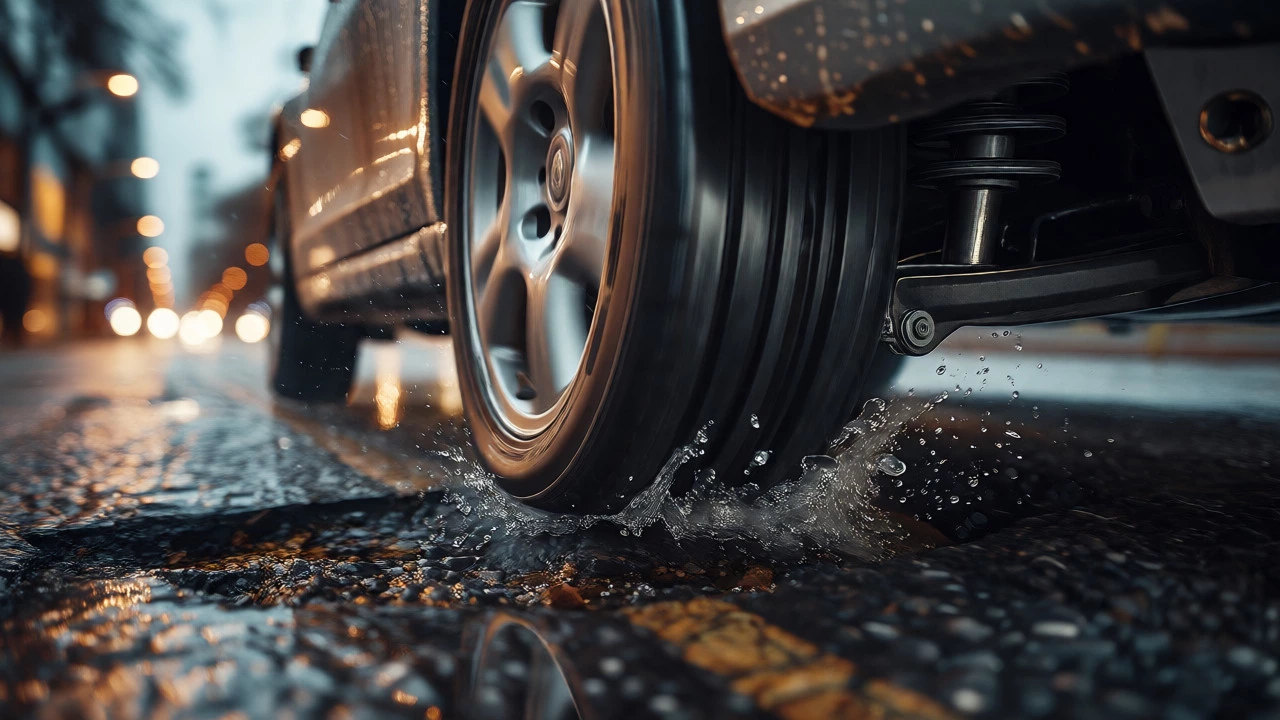
Ignoring these signs doesn’t just hurt your ride quality. Worn suspension increases stopping distances. Tests have shown that old shocks can add several meters to braking distance compared to new ones. In wet conditions, poor tire contact due to bouncing leads to hydroplaning risks.
Maintenance Tips for Longevity
You can’t really “service” a MacPherson strut like you change oil. When they go, you replace the whole unit. However, you can extend their life and ensure they perform correctly.
First, keep your tire pressure correct. Under-inflated tires put extra stress on suspension components. Second, rotate your tires regularly. Uneven wear patterns can mask underlying suspension issues, making diagnosis harder. Third, check your alignment annually. Misalignment forces your suspension to work against itself, accelerating wear on bushings and ball joints.
Also, be mindful of your driving habits. Hitting potholes at speed kills struts faster than anything else. If you live in an area with rough roads, consider upgrading to reinforced struts designed for tougher conditions, though this is more common in commercial vehicles than daily drivers.
Frequently Asked Questions
Is MacPherson strut bad for handling?
Not necessarily. While it offers less geometric precision than double wishbone systems, modern tuning and electronic stability controls make MacPherson struts perfectly adequate for daily driving and even spirited weekend drives. It is only considered "bad" in extreme motorsport applications where maximum camber control is required.
How long do suspension struts last?
Typically between 50,000 and 100,000 miles, depending on road conditions and driving style. Harsh winter roads with salt and potholes will shorten this lifespan significantly. Visual inspection for leaking fluid around the shaft is a good indicator of failure.
Can I replace just one strut?
You should always replace struts in pairs (both fronts or both rears). Replacing only one creates uneven damping characteristics, causing the car to pull to one side during braking and cornering, which is unsafe.
What is the difference between a shock absorber and a strut?
A shock absorber is just a damper; it does not support the vehicle's weight or locate the wheel. A strut is a complete assembly that includes the damper, spring, and structural mounting points. The strut is part of the steering and suspension structure, whereas a shock is just a component within it.
Do SUVs use the same suspension as cars?
Many modern crossovers and SUVs use MacPherson struts at the front, similar to sedans. However, larger trucks and off-road SUVs often use independent double wishbones or solid axles with leaf springs or coil-over shocks to handle higher loads and articulation needs.
Final Thoughts
The MacPherson strut remains the undisputed king of everyday transportation. It strikes the perfect balance between cost, complexity, and acceptable performance for the millions of commuters navigating city streets and highways. While enthusiasts may dream of double wishbones and multi-links, the reality for most drivers is the humble strut doing its job quietly under the fender.
Next time you feel a slight thud over a manhole cover, remember that a complex dance of springs, dampers, and rubber bushings is protecting your safety. Keep an ear open for changes in sound and feel, and address issues early. Your wallet-and your spine-will thank you.