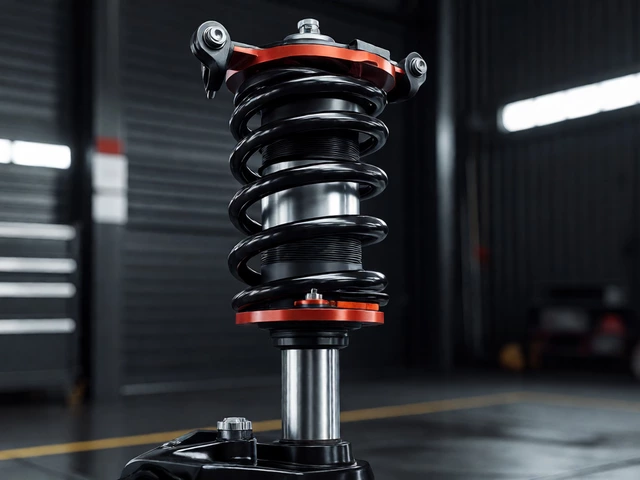
If your car feels bouncy, shaky, or noisy over bumps, it’s not just the road. It could be your suspension joints wearing out. These small parts - ball joints, control arm bushings, tie rod ends - hold your wheels in place and let them move smoothly. When they go bad, your ride gets rough, your tires wear unevenly, and worst case, you could lose control. You don’t need a garage to spot the signs. Here’s how to tell if your suspension joints are bad, using simple checks you can do yourself.
Listen for clunking or knocking noises
One of the clearest signs is noise. If you hear a loud clunk or knock when you go over bumps, speed bumps, or potholes, it’s not your exhaust rattling. It’s likely a worn ball joint or control arm bushing. These parts have rubber or plastic liners that dry out and crack over time. Once they’re gone, metal hits metal. The sound is usually worse when turning or braking. In Bristol’s wet winters, salt and grime speed up this wear. A joint that clicks every time you hit a curb isn’t just annoying - it’s unsafe.Check for uneven tire wear
Look at your tires. If one side is more worn than the other - especially the inner or outer edge - your suspension joints are probably out of alignment. Worn ball joints or tie rod ends let the wheel tilt inward or outward. This causes the tire to scrub sideways as you drive. You’ll notice it faster if you’ve had the same tires on for over 20,000 miles. A tire that’s bald on the inside? That’s not a rotation issue. That’s a suspension problem. Replace the tires if needed, but fix the joints first. Otherwise, your new tires will wear out just as fast.Feel for looseness or wobble
Park on level ground. Jack up the front of your car so the tire clears the ground. Grab the tire at 9 and 3 o’clock and try to wiggle it side to side. If there’s any play - more than a fraction of an inch - the tie rod end or ball joint is loose. Now grab the tire at 12 and 6 o’clock and push and pull. Excessive movement here points to worn control arm bushings or wheel bearings. You shouldn’t feel any movement at all. Even a little play means the joint is failing. This isn’t something you can ignore. A loose joint can snap while you’re driving.Watch for pulling or drifting
If your car pulls to one side when you let go of the steering wheel, it’s not just alignment. It’s often caused by worn suspension joints. A bad tie rod end can make the front end misalign without warning. You might think it’s a tire pressure issue, but if adjusting the pressure doesn’t fix it, the problem’s deeper. You’ll also notice the steering feels loose or vague. It doesn’t respond like it used to. That’s not "just old car feel." It’s a sign your joints are stretched or cracked. In heavy rain, this becomes dangerous. Your car won’t track straight when you need it to.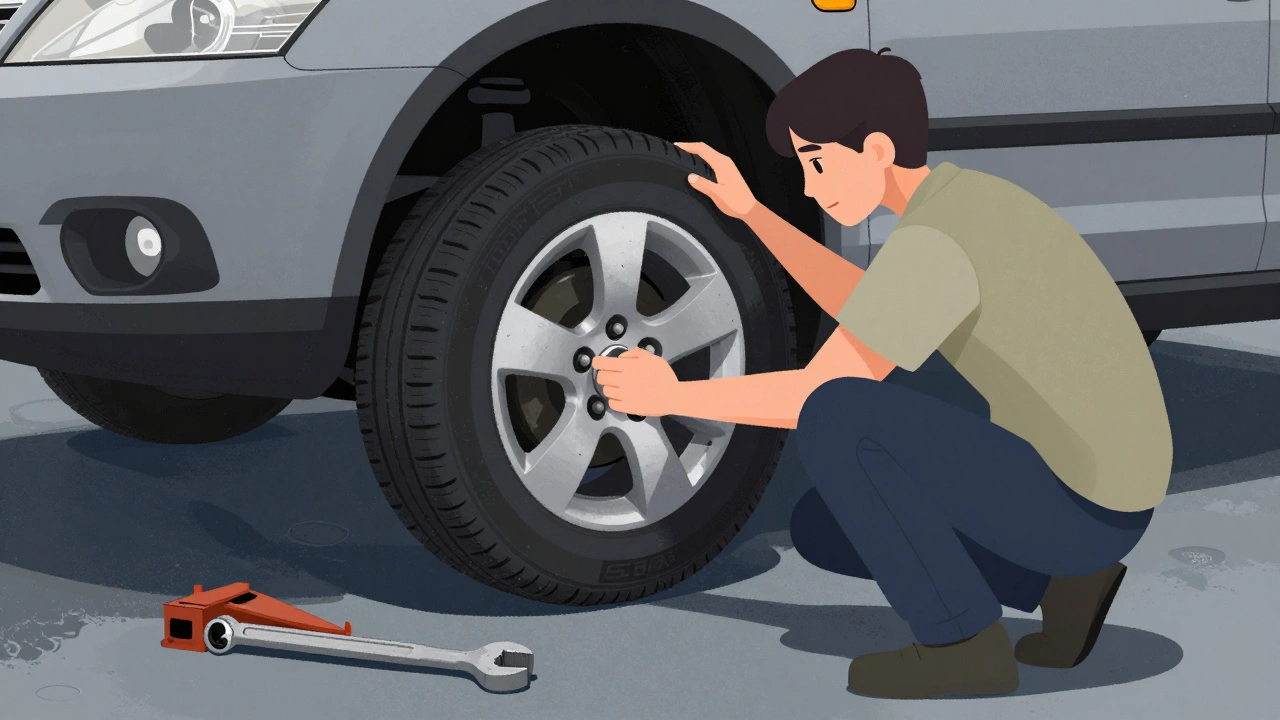
Look for visible damage
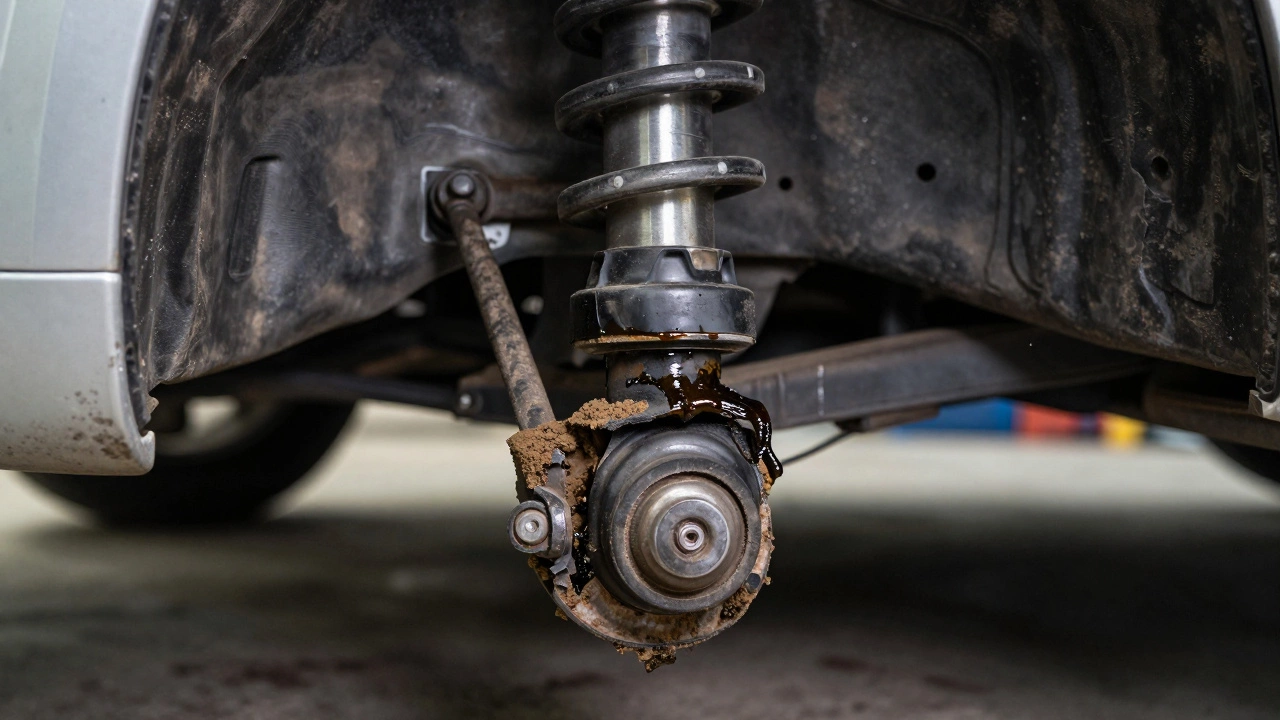
Pop the hood and get under the car. Look at the suspension components near the wheels. Ball joints have a rubber boot covering the pivot. If that boot is split, cracked, or missing grease, dirt has gotten in. That’s the death sentence for the joint. Control arm bushings look like rubber donuts. If they’re cracked, flattened, or oozing grease, they’re done. You don’t need to be a mechanic. Just look. If you see grease on the inside of your wheel rim, or dust around a joint that should be sealed, it’s leaking. That’s a red flag.Test the ride quality
Drive on a bumpy road - like a gravel driveway or an old city street. Pay attention to how the car reacts. A healthy suspension absorbs bumps quietly. A bad one makes the whole car shake. If you feel every bump through the steering wheel or seat, your joints aren’t damping movement anymore. You might also hear a squeaking sound when you go over bumps slowly. That’s dry rubber or metal-on-metal contact. It’s not the struts. It’s the joints. If your car feels like it’s floating or bouncing more than it should, the suspension isn’t doing its job.How long do suspension joints last?
There’s no fixed mileage. In the UK, with our rough roads and wet weather, most joints last between 70,000 and 120,000 miles. But if you drive on unsealed roads, frequently hit curbs, or carry heavy loads, they wear faster. Some last 150,000 miles. Others fail at 40,000. It depends on driving habits, road conditions, and whether the joints were sealed properly from the factory. After 8 years, even if the mileage is low, rubber parts dry out. Age matters as much as miles.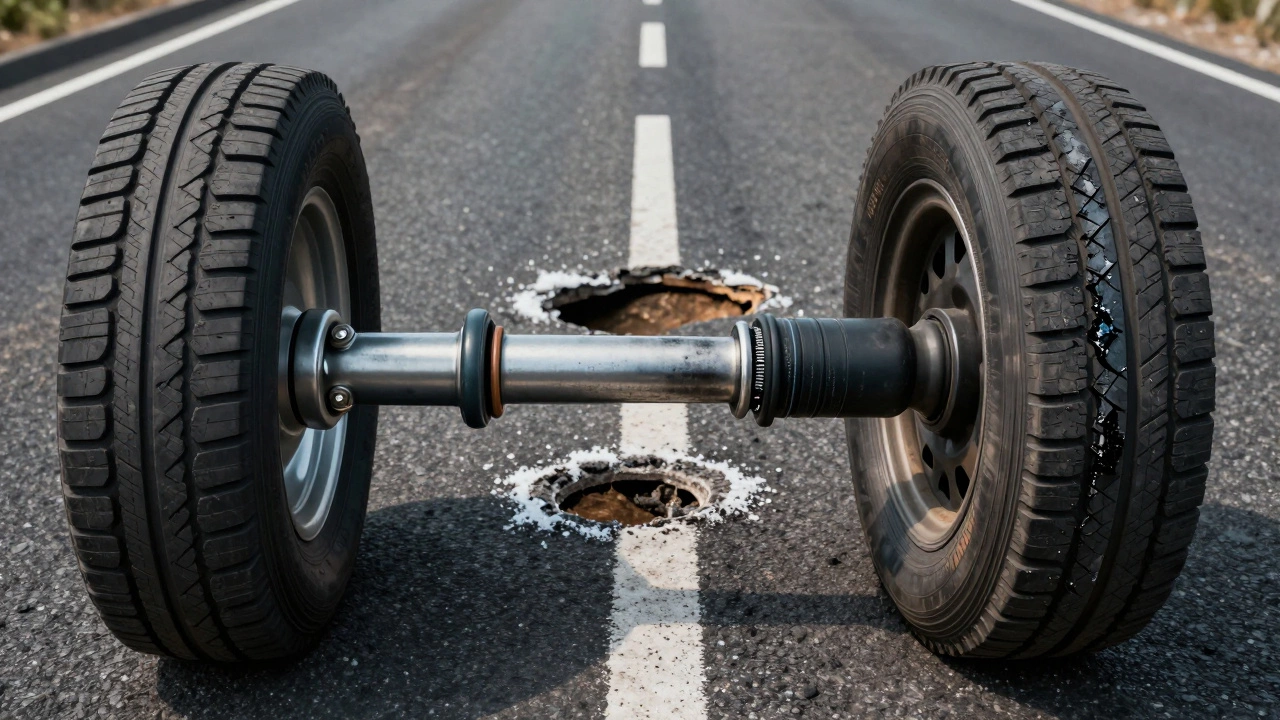
What happens if you ignore bad joints?
Ignoring worn suspension joints doesn’t just make your ride uncomfortable. It’s risky. A failed ball joint can cause the wheel to collapse sideways while you’re driving. That’s not a slow breakdown - it’s a sudden loss of steering. Emergency braking becomes unpredictable. Your tires wear out faster, costing you money. Your alignment goes off, making your car harder to control. And if you get pulled over, a technician can spot the damage instantly. In the UK, a worn suspension joint could fail an MOT. You won’t just pay for repairs - you could get fined or banned from driving until it’s fixed.What to do next
If you’ve noticed any of these signs - noise, uneven tire wear, play in the wheel, pulling, or visible damage - don’t wait. Get your suspension checked by a trusted mechanic. If you’re handy, you can buy replacement joints and do it yourself. Ball joints cost between £30 and £80 each. Labor is £80-£150 per side. But if you’re not sure, get a professional inspection. Most garages offer a free suspension check. Use it. Fixing a joint early saves you money on tires, alignment, and worse - accidents.Prevention tips
- Avoid potholes and curbs whenever possible. Even small impacts add up. - Wash your undercarriage twice a year, especially after winter. Salt accelerates corrosion. - Check your suspension every 10,000 miles or once a year. - Don’t ignore squeaks or clunks. They’re early warnings. - Replace worn joints in pairs. If one side is bad, the other is close behind.Can I drive with bad suspension joints?
You can, but you shouldn’t. Driving with worn suspension joints is risky. The joint could fail suddenly, causing loss of steering control. Even if it doesn’t break right away, it puts extra stress on other parts like tires, struts, and steering components. In the UK, a damaged suspension can cause an MOT failure. If you notice any signs - clunking, pulling, or play in the wheel - get it fixed before your next drive.
How much does it cost to replace suspension joints?
Replacing a single ball joint costs between £30 and £80 for the part. Labor usually runs £80 to £150 per side, depending on the car and garage. Control arm bushings are cheaper to replace - around £50 to £120 total per side. Some cars have integrated control arms, which cost more - up to £300 per side. Replacing both sides at once is recommended, even if only one is bad, because the other is likely worn too.
Do I need to get an alignment after replacing suspension joints?
Yes, absolutely. Suspension joints hold your wheels in position. When you replace them, the alignment changes - even if it’s minor. Without a proper alignment, your tires will wear unevenly again, and your car may still pull to one side. Most mechanics include a free alignment check after suspension work. Always ask for it. A basic alignment costs £40-£70, but it protects your tires and saves you money in the long run.
Can I check suspension joints myself?
Yes, you can do basic checks at home. Jack up the front of your car and wiggle the tire at 9 and 3 o’clock and 12 and 6 o’clock. Any noticeable play means a joint is worn. Look for cracked boots, grease leaks, or rust. Listen for clunks over bumps. These are reliable signs. But for a full diagnosis - especially if you’re unsure - a professional inspection with a lift and tools is best. They can check for wear you can’t see.
What’s the difference between ball joints and control arm bushings?
Ball joints connect the steering knuckle to the control arm and allow the wheel to turn and move up and down. They’re under constant stress and often fail first. Control arm bushings are rubber or polyurethane sleeves that connect the control arm to the car’s frame. They absorb vibrations and let the arm move smoothly. When they wear, you get clunks and poor ride control. Both are critical, but ball joints are more directly linked to steering safety.
How often should I inspect my suspension joints?
Check them every 10,000 miles or once a year - whichever comes first. If you drive on rough roads, gravel, or in winter conditions, check them twice a year. Pay attention after hitting a large pothole or curb. Many people forget about suspension until something breaks. Regular checks catch problems early and prevent costly damage.