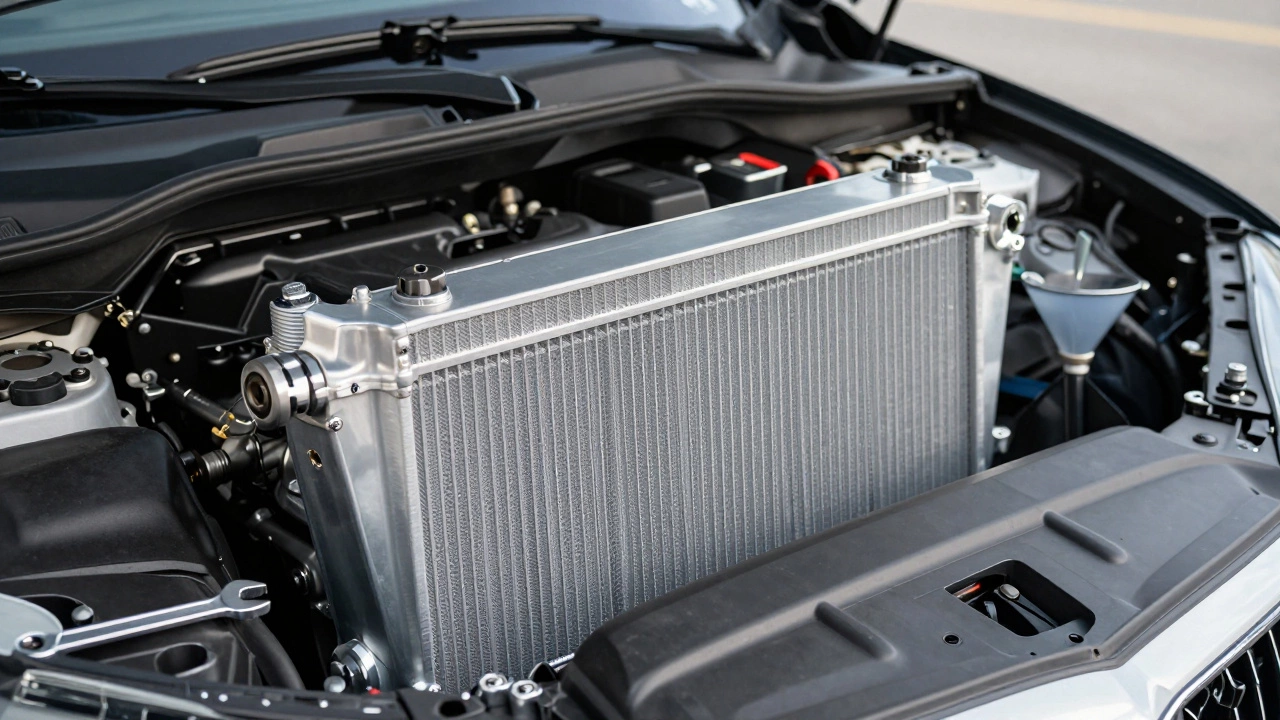
Cooling System Repair Cost Estimator
Select which components need replacing. Prices are average estimates.
Replacing the thermostat and cap now adds very little to the bill but saves you from paying high labor rates again later if they fail.
There is nothing worse than pulling over on a hot day because your temperature gauge has climbed into the red. If you are facing a broken radiator, you might be tempted to just swap out that one part and call it a day. But here is the hard truth: replacing a radiator in isolation is often a recipe for disaster. The cooling system is a closed loop where every component relies on the others. If you install a brand-new, high-efficiency radiator but leave behind an old, failing water pump or a stuck thermostat, you aren't fixing the problem-you are just delaying the next breakdown.
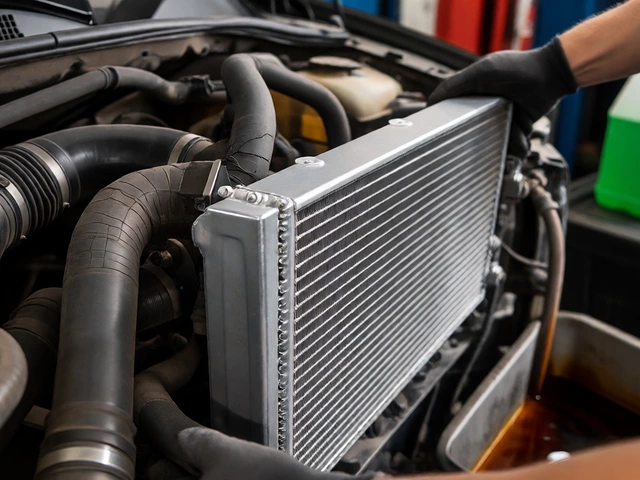
When you replace a car radiator is the primary heat exchanger that transfers engine heat to the air via coolant circulation, you are essentially resetting the health of your vehicle's thermal management. To get the most value from that investment, you need to look at the entire circuit. This guide breaks down exactly what else should be replaced alongside your radiator to ensure your engine stays cool and I drive away with a reliable cooling system.
The Thermostat: The Gatekeeper of Temperature
If there is one part you must replace when swapping a radiator, it is the thermostat is a wax-filled valve that regulates coolant flow between the engine and radiator based on temperature. Think of the thermostat as the gatekeeper. It stays closed when the engine is cold to help it warm up quickly, then opens once it reaches operating temperature (usually around 87°C to 93°C) to let coolant flow to the radiator.
Thermostats are cheap, often costing less than £15, but they fail frequently. A common failure mode is sticking partially open or completely closed. If it sticks closed, your new radiator gets no flow, and you will boil over within minutes. If it sticks open, the engine runs too cool, leading to poor fuel economy and increased wear. Since you have already drained the system and removed hoses to get to the radiator, adding twenty minutes to swap the thermostat is a no-brainer. It ensures your new radiator receives the correct volume of coolant at the right time.
The Water Pump: The Heart of the System
The water pump is a mechanical impeller driven by the timing belt or serpentine belt that circulates coolant through the engine block and radiator is responsible for moving the coolant. Without it, the fluid sits still, and the engine melts. In many modern cars, the water pump is driven by the timing belt. If your car requires a timing belt change soon, this is the perfect time to do it all together. Labor costs for accessing the water pump are high because it is often buried deep in the engine bay.
Even if your water pump isn't leaking yet, age takes its toll. Seals dry out, and bearings wear down. If the pump fails shortly after you install a new radiator, you will have to pay for the same labor twice. Mechanics generally recommend replacing the water pump if it has more than 60,000 miles on it or if the timing belt is being serviced. It is a proactive move that saves money in the long run.
Coolant Hoses: Check for Cracks and Bulges
You cannot ignore the rubber hoses that connect the radiator to the engine. Over time, heat cycles cause rubber to degrade. Look closely at the upper and lower radiator hoses. Are they hard as rock? Do they feel spongy? Are there cracks, bulges, or signs of weeping near the clamps?
- Upper Hose: Carries hot coolant from the engine to the radiator. It is under high pressure and heat.
- Lower Hose: Returns cooled liquid to the engine. It can suffer from internal collapse due to vacuum.
If any hose looks questionable, replace it. A burst hose on the motorway is a nightmare scenario. While you are at it, inspect the heater core hoses that go inside the cabin. These are smaller but prone to leaks that can soak your passenger footwell. Replacing them now prevents a messy and expensive repair later.
Radiator Cap and Pressure Testing
The radiator cap is a pressure valve that maintains system pressure to raise the boiling point of the coolant might seem trivial, but it plays a critical role. Your cooling system operates under pressure-typically 15 to 18 PSI. This pressure raises the boiling point of the coolant, allowing it to absorb more heat without turning to steam. If the cap’s spring is weak or the seal is cracked, the system loses pressure, boils over, and overheats.
Caps are inexpensive, usually under £10. Always replace the cap when installing a new radiator. Additionally, ask your mechanic to pressure test the entire system after reassembly. This test checks for hidden leaks in the heater core, cylinder head gasket, or small cracks in the engine block that might not be visible during a visual inspection.
Flush the System and Replace Coolant
Installing a shiny new radiator into a system filled with old, acidic, and contaminated coolant is like putting fresh food in a dirty fridge. Old coolant loses its corrosion inhibitors. Rust, scale, and debris build up inside the engine passages and the radiator tubes.
Before fitting the new radiator, perform a thorough coolant flush is the process of draining old antifreeze and cleaning the cooling system with water or chemical cleaners to remove sediment. Drain the old fluid, then run plain water through the system until it runs clear. For heavily corroded systems, a chemical flush agent can help dissolve rust deposits. Once clean, refill with the manufacturer-specified coolant mixture. Using the wrong type of coolant (e.g., mixing green IAT with orange OAT) can cause gel-like sludge that blocks flow instantly. Stick to the spec in your owner’s manual.
Air Traps and Bleeding Procedures
One of the most overlooked aspects of radiator replacement is removing air pockets. Air is a great insulator; if trapped in the engine block or head, it creates hot spots that can warp aluminum heads. Modern engines have complex cooling jackets with narrow passages that trap air easily.
Follow the specific bleeding procedure for your vehicle. Some cars require you to start the engine with the radiator cap off and squeeze hoses while it warms up. Others have bleed screws on the thermostat housing or heater control unit. Failing to bleed the system properly is a leading cause of post-repair overheating. Take your time here. It is better to spend an extra ten minutes ensuring all air is purged than to come back two weeks later with a warped head.
| Component | Replace? | Reason |
|---|---|---|
| Radiator | Yes | Primary repair item |
| Thermostat | Highly Recommended | Prevents flow restriction; cheap insurance |
| Water Pump | If >60k miles or leaking | Labor-intensive access; prevent future failure |
| Radiator Cap | Yes | Maintains system pressure; low cost |
| Hoses | If cracked/hard | Prevent roadside leaks |
| Coolant | Yes | Remove contaminants; protect new parts |
Cost-Benefit Analysis: Why Do It All Now?
You might wonder if skipping some parts saves money. Let’s look at the numbers. A standalone radiator job might cost £300-£500 including labor. If you skip the thermostat (£15 part + £30 labor) and it fails in six months, you pay another £100+ for labor to drain and refill the system again. That is inefficient spending.
By bundling these replacements, you leverage the labor already being done. The mechanic has the car up on the lift, the fluids drained, and the hoses disconnected. Adding a thermostat or cap takes negligible extra time. It transforms a reactive repair into a preventive maintenance event. You walk away with a cooling system that functions like new, rather than one that is half-old and half-new.
Can I reuse my old radiator cap?
Technically yes, but it is not recommended. Caps contain rubber seals and springs that degrade over time. A failing cap can cause overheating even with a new radiator. Given the low cost (under £10), replacing it is a smart safety measure.
Do I need to replace the water pump if it is not leaking?
If your water pump is driven by the timing belt and you are changing the belt, yes. If it is belt-driven separately and shows no signs of wear or leakage, you can monitor it. However, if the pump is over 60,000 miles old, replacing it prevents costly future labor charges.
What happens if I don't flush the cooling system?
Old coolant contains rust, scale, and acidic byproducts. Pouring this into a new radiator can clog its fine tubes, reducing efficiency. It can also accelerate corrosion in the new components, shortening their lifespan significantly.
How do I know if my thermostat is bad?
Signs include rapid overheating (stuck closed), engine running cooler than normal (stuck open), or fluctuating temperature gauges. Since thermostats are cheap and easy to swap during radiator work, preemptive replacement is best practice.
Is it safe to mix different types of coolant?
No. Mixing incompatible coolants (like Green IAT with Orange OAT) can cause chemical reactions that form gel-like sludge. This blocks coolant flow and can destroy your new radiator and water pump. Always use the manufacturer-specified type.