Brake Pads Cost: What You Really Pay for Safety and Stopping Power
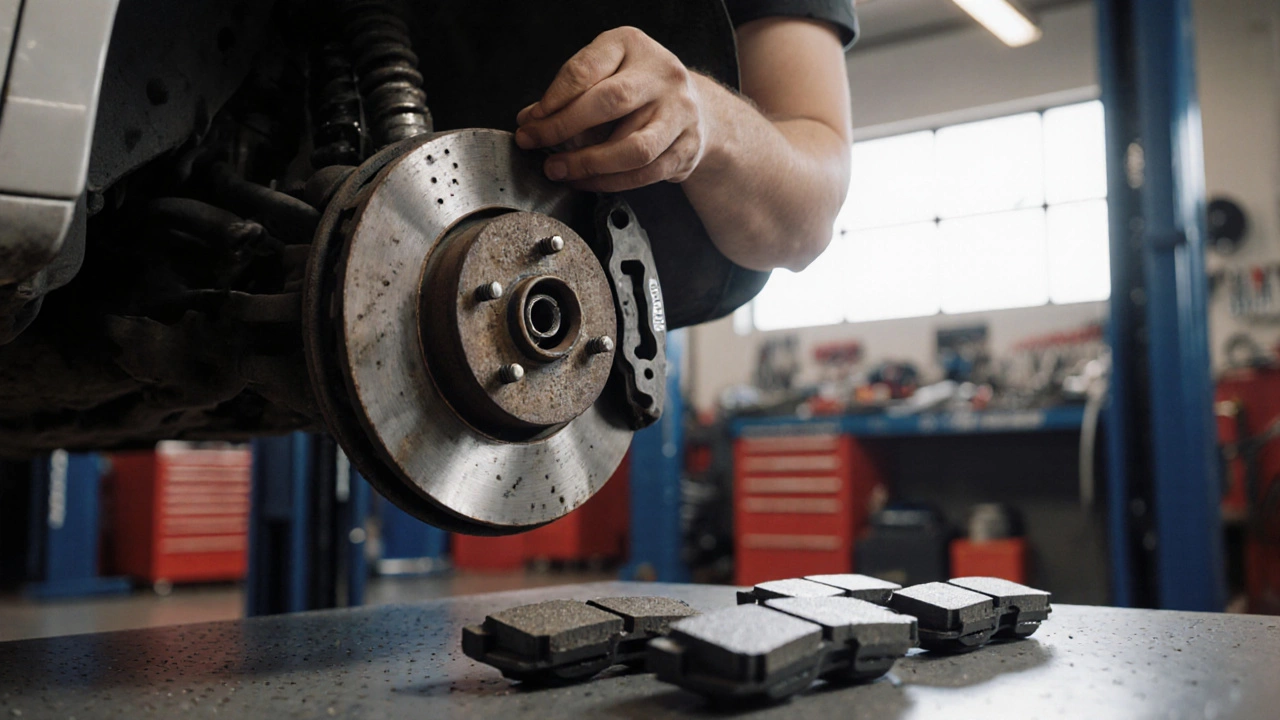
When your car’s brake pads, friction components that clamp down on rotors to stop your vehicle. Also known as brake linings, they’re one of the most critical safety parts in your car. wear out, you don’t just lose stopping power—you risk your life and the lives of others. A set of brake pads might cost between ₹2,000 and ₹8,000 in India, but the real price isn’t just in the parts. It’s in the distance you didn’t stop in time, the damage to your rotors, or the hospital bill you could’ve avoided.
Brake pads don’t last forever. Most last between 30,000 and 70,000 kilometers, depending on how you drive. City driving with constant stops? You’ll wear them out faster. Highway cruising? They’ll last longer. But here’s the thing: you won’t always feel them wearing down. That high-pitched squeal? That’s your brake pad’s wear indicator screaming at you. Vibration when you brake? That’s not normal—it’s your rotor warping from overheating because the pads were too thin. And if you wait until the metal backing plate grinds against the rotor, you’re not just replacing pads—you’re replacing rotors, too. That’s a ₹15,000 job instead of a ₹5,000 one.
The brake system, the complete assembly that converts pedal pressure into stopping force, including pads, rotors, calipers, and fluid. is a chain. Break one link, and the whole thing fails. Bad brake pads strain the calipers. Worn pads cause uneven rotor wear. Dirty brake fluid reduces hydraulic pressure. All of this connects. That’s why a simple brake pad replacement isn’t just about swapping parts—it’s about checking the whole system. A good mechanic will inspect your rotors, check for fluid leaks, and test the caliper movement. Skipping those steps is like changing your oil but ignoring the oil filter.
You’ll find posts here that show you exactly how to tell if your brake pads are worn out—no guesswork. We’ve got real signs: the noise, the feel, the distance it takes to stop. You’ll also see how brake pad cost varies by brand, material (ceramic, semi-metallic, organic), and whether you’re replacing front or rear pads. Front pads wear faster, so they cost more to replace. And yes, we’ve covered what happens when you ignore them—because waiting until your car won’t stop is not a plan.
There’s no magic number for brake pad cost. It depends on your car, your driving, and your choices. But one thing’s certain: cheap pads might save you money today, but they’ll cost you more in the long run—through faster wear, noise, reduced performance, and damage to other parts. This collection gives you the facts you need to make a smart, safe decision—not just the cheapest one.
-
15 Nov
-
30 Oct

How Much Should 4 Brake Pads Cost in 2025? A Realistic Price Guide
Find out how much 4 brake pads should cost in 2025, broken down by car type, material, and quality. Learn what to pay, what to avoid, and how to save money without sacrificing safety.
- Recent
- Popular