Clutch Replacement Duration: How Long Does It Really Take?
When your clutch replacement, the process of removing a worn-out clutch assembly and installing a new one to restore gear shifting in manual transmission vehicles. Also known as clutch repair, it's one of those jobs that sounds simple until you're under the car for eight hours. The actual clutch replacement duration isn't fixed—it depends on your car, your mechanic’s skill, and whether anything else breaks while they’re in there.
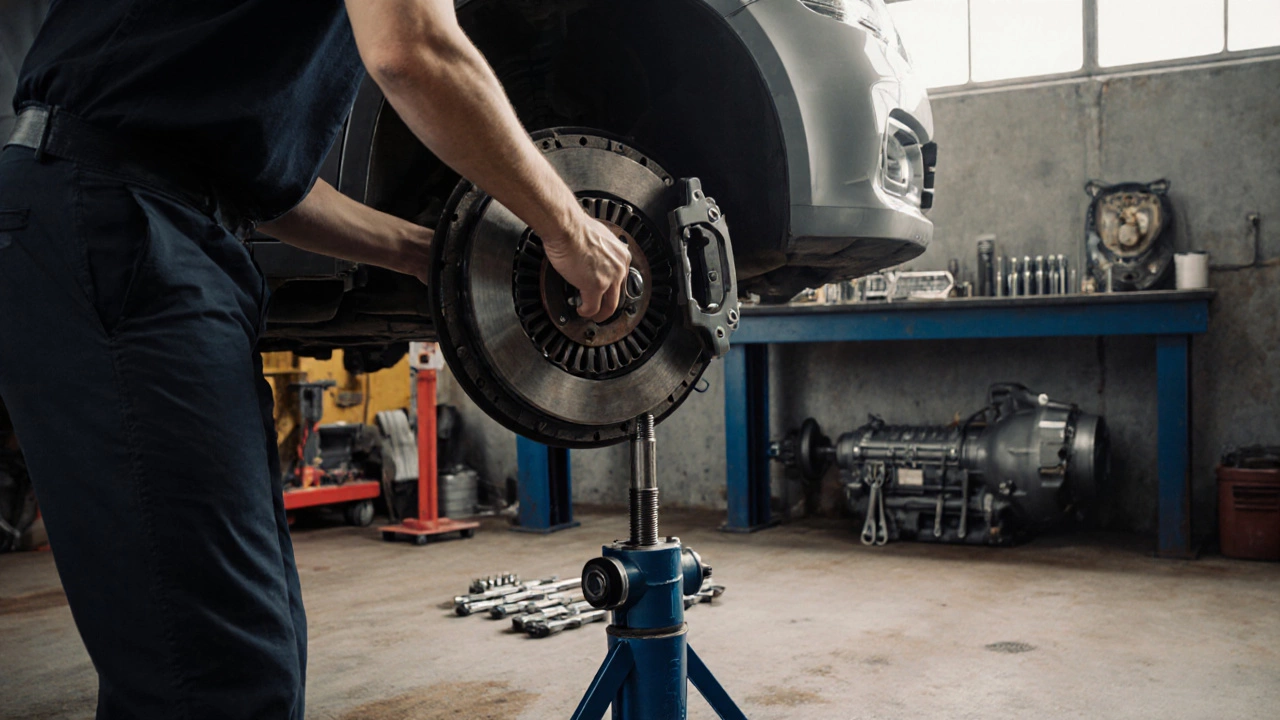
Most clutch kits, a bundled set of parts including the pressure plate, disc, release bearing, and sometimes the pilot bearing or alignment tool come with everything you need, but installing them isn’t just bolt-on work. It requires pulling the transmission or transaxle, which means disconnecting everything attached to it—shifter cables, starter motor, clutch lines, even the exhaust in some models. For a compact hatchback, this might take 4 to 6 hours. For a heavier SUV or truck? You’re looking at 6 to 8 hours, sometimes more if the bolts are rusted or the transmission mount is seized. And if the flywheel needs resurfacing or replacing? That adds another hour or two.
Clutch repair time, the total window from when the car arrives at the shop to when it’s ready to drive often stretches beyond just labor. Shops rarely start work the same day you drop it off. Parts may need ordering, especially for older or less common models. And if the mechanic finds a damaged input shaft, worn synchronizers, or a leaking rear main seal while the transmission is out? You’re looking at a surprise bill and a longer wait. That’s why some people get their clutch done in a day, while others are without their car for three days.
DIYers often underestimate this job. Even with the right tools—a transmission jack, torque wrench, and clutch alignment tool—it’s not a weekend project unless you’ve done it before. One wrong move with the pressure plate bolts and you risk warping the flywheel. Mess up the release bearing alignment, and the clutch won’t disengage properly. And if you skip the break-in period after installation? Your new clutch could glaze over in just a few hundred miles.
What you’ll find below are real experiences from people who’ve been through this. Some replaced their clutch in a single afternoon. Others spent weeks dealing with delays, hidden damage, and parts that didn’t fit. We’ve got guides on how to tell if your clutch is failing, what a clutch kit actually includes, and why some replacements cost more than others—even when the parts look the same. Whether you’re planning to do it yourself or just want to know if your mechanic is overcharging, these posts give you the facts without the fluff.
-
28 Oct
- Recent
- Popular