Oil Contamination Signs: How to Spot Engine Trouble Early
When oil contamination, the presence of foreign substances like water, fuel, metal particles, or soot in engine oil. Also known as dirty engine oil, it’s one of the most silent killers of engines. Most drivers don’t check their oil until it’s too late—when the engine starts knocking or the check engine light flashes. But by then, the damage is often done. Oil isn’t just a lubricant; it’s your engine’s lifeblood, and contamination breaks down its ability to protect moving parts.
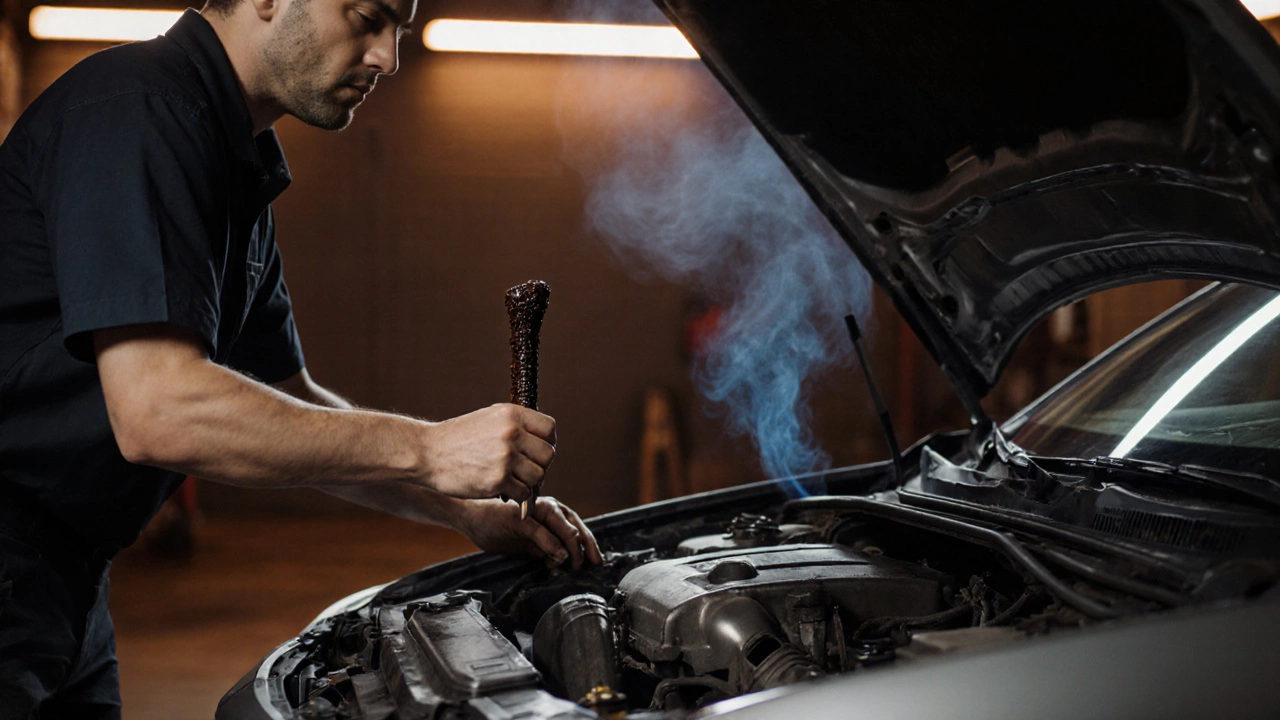
Contaminated oil shows up in obvious ways. If your oil looks milky or has a frothy texture, that’s usually water, moisture that’s leaked into the oil system, often from a blown head gasket or cracked engine block. Thick, black sludge? That’s soot, a byproduct of incomplete combustion, common in diesel engines or cars running rich. Metallic glitter in the oil? That’s metal particles, worn bearings, pistons, or camshafts shedding bits that grind against other components. Fuel dilution is sneakier—it thins the oil, making it less effective at lubrication. You might not see it, but you’ll feel it in poor acceleration or a smell of gasoline when you check the dipstick.
These aren’t just theory. Real-world fixes come from people who caught these signs early. A friend of mine noticed her oil looked like chocolate milk after a long winter. Turns out, her head gasket was leaking coolant. Replacing it cost $1,200. If she’d checked the oil monthly, she could’ve caught it at $300. Same with metal flakes—many assume it’s normal after 50,000 miles. It’s not. It’s a warning. And fuel contamination? It’s common in cars that sit too long or are driven only for short trips. The oil never gets hot enough to burn off the fuel, and it slowly turns into a weak, ineffective fluid.
What you’ll find in the posts below are real stories and practical checks from drivers who’ve dealt with these issues. You’ll learn how to read your dipstick like a mechanic, what tools you can use at home to spot contamination, and when it’s time to walk away from a DIY fix. No fluff. Just what works on Indian roads, in monsoons, in traffic jams, and under extreme heat. If you’ve ever wondered why your engine feels sluggish or smells funny after a short drive, these posts have answers you can use today.
-
24 Oct
- Recent
- Popular