Brake Stopping Distance Estimator
See how much extra distance you need to stop when your brake rotors are worn or damaged. Based on real-world safety data from the National Highway Traffic Safety Administration.
Current Stopping Distance
Enter your current stopping distance at 55 mph in feet (typical range: 120-150 feet)
Rotor Condition
Driving a car with bad rotors isn't just risky-it's asking for trouble. You might think your brakes still work because the pedal feels firm, but that’s a lie your car is telling you. Brake rotors are the heavy metal discs that your brake pads clamp down on to stop your vehicle. When they wear out, warp, or crack, your stopping power drops fast. And no, you can’t safely ignore it until the next oil change.
What Exactly Are Brake Rotors?
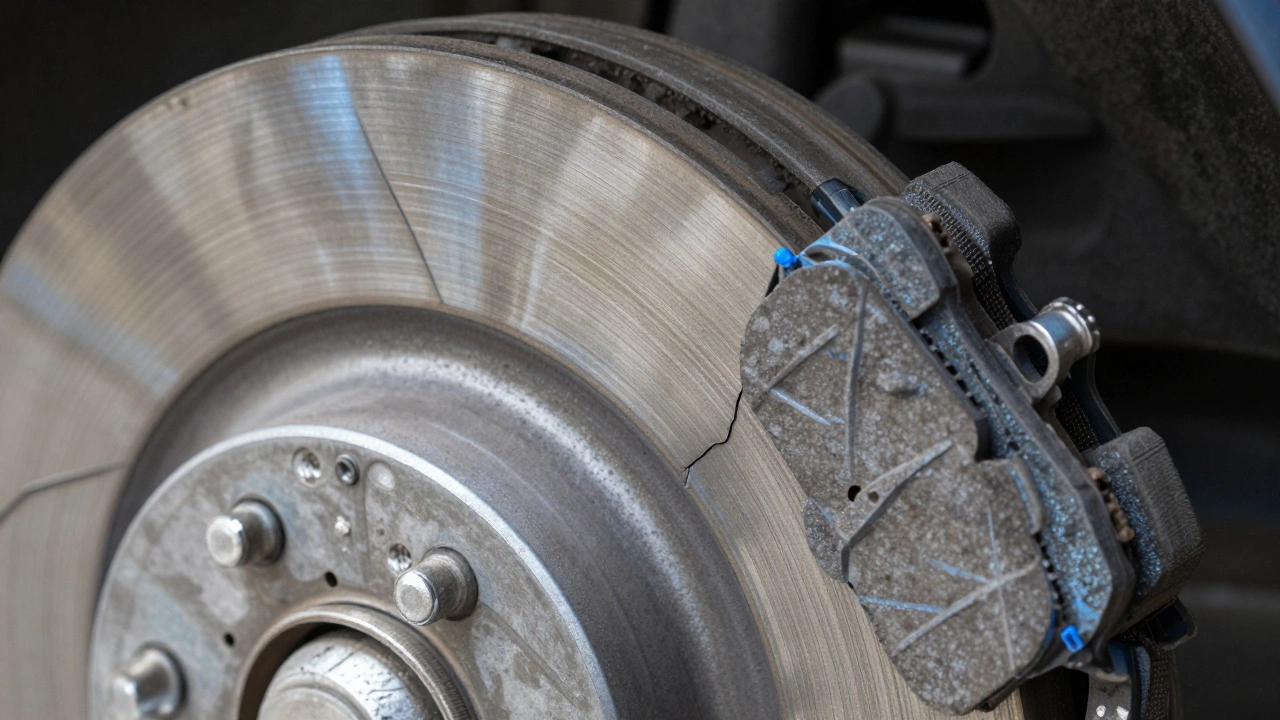
Brake rotors, also called brake discs, are large metal rings attached to each wheel hub. When you hit the brake pedal, the brake pads squeeze against the rotor’s surface, creating friction that slows the wheel. That’s how your car stops. Modern rotors are usually made of cast iron and designed to handle heat from hundreds of stops. A healthy rotor has a smooth, even surface-no grooves, no bluing, no cracks.
Most rotors last between 30,000 and 70,000 miles, depending on your driving habits. City drivers with heavy braking see wear faster. Highway drivers who mostly coast get more life out of them. But once they start showing signs of damage, they don’t just get worse-they start to fail dangerously.
Signs You Have Bad Rotors
You don’t need a mechanic to tell you something’s wrong. Your car will scream it:
- Vibration in the steering wheel or brake pedal when you brake-this is usually warped rotors. The surface isn’t flat anymore, so the pads slap against it like a wobbly record.
- Squealing, grinding, or metallic screeching-if you hear metal-on-metal, your rotors are likely scored or worn past their safe limit.
- Longer stopping distances-you notice you’re braking earlier than usual. That’s because the friction surface is compromised.
- Visible damage-if you can look at the rotor (through the wheel), check for deep grooves, blue spots (from overheating), or cracks. Even a hairline crack can spread under pressure.
One real-world example: A 2020 Honda Civic owner drove for three months with warped rotors. She blamed it on "bad roads" until she nearly hit a stopped car at a red light. Her stopping distance had increased by 40%. The rotors were glazed and uneven-too far gone to resurface.
What Happens If You Keep Driving?
Driving with bad rotors doesn’t just make braking less effective-it can destroy your entire brake system.
- Brake pads wear out faster-worn or warped rotors dig into the pads unevenly. You might need new pads every 10,000 miles instead of 30,000.
- Calipers can seize-if the rotor is warped, the brake caliper has to work harder to keep pressure even. Over time, this can cause the caliper piston to stick or leak fluid.
- Brake fluid overheats-constant dragging and slipping create excess heat. That can boil the brake fluid, leading to a spongy pedal or total brake failure.
- Wheel bearings and suspension parts wear out-the vibration from bad rotors doesn’t stay in the brakes. It travels through the hub, bearings, and control arms. Repairing those later costs way more than replacing rotors early.
There’s a reason mechanics say, "Don’t wait for the warning light." Brake systems don’t have warning lights for rotor wear. They only light up if you’ve already caused catastrophic damage.
Can You Drive a Car with Bad Rotors? The Hard Truth
Technically? Yes, you can. Your car will still move. You can even get from point A to point B.
But should you? No.
At best, you’re risking a costly repair. At worst, you’re risking your life-and the lives of others. Studies from the National Highway Traffic Safety Administration show that brake-related failures contribute to over 200,000 crashes annually in the U.S. Many of those involve worn rotors and pads that were ignored for months.
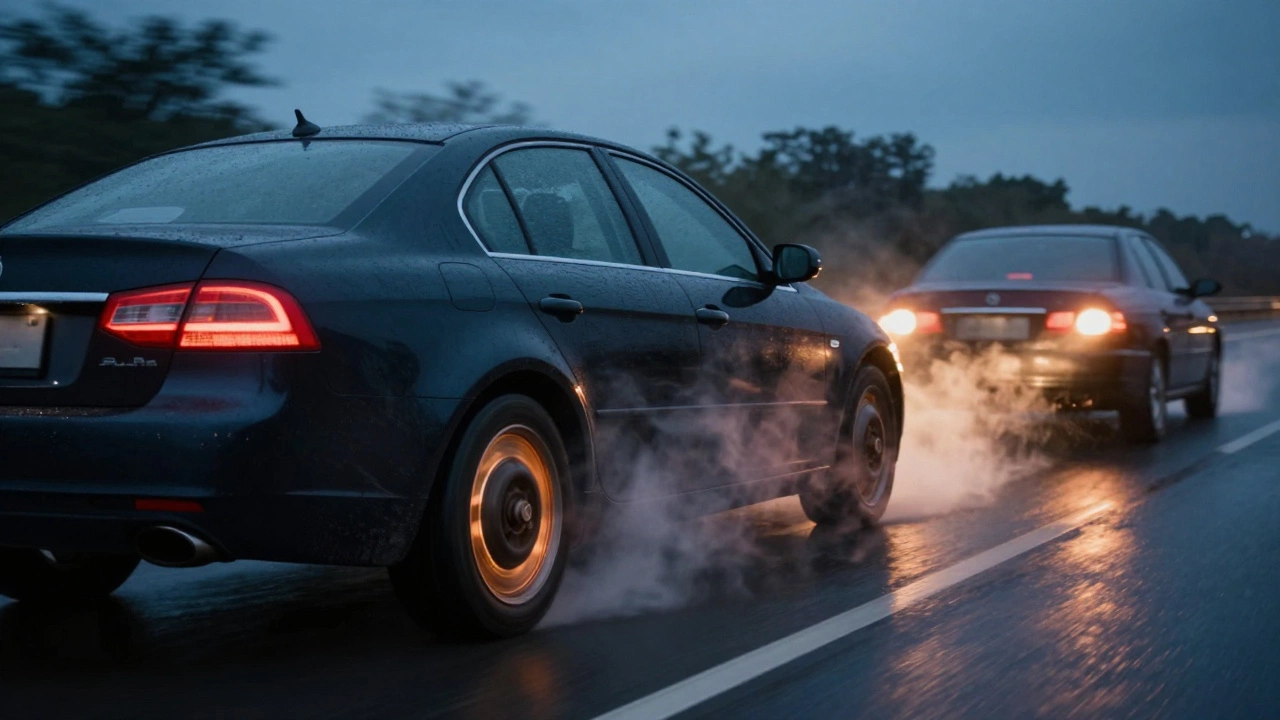
Imagine this: You’re driving at 55 mph on the highway. A car in front of you slams on the brakes. You react. But because your rotors are glazed and thin, your brakes take an extra 15 feet to stop. That’s the length of a small car. That’s enough to turn a near-miss into a head-on collision.
What Should You Do Instead?
If you suspect bad rotors, don’t guess. Get them checked. Here’s what to do:
- Inspect visually-remove the wheel and look at the rotor surface. Smooth and gray? Good. Deep grooves or bluish discoloration? Replace.
- Measure thickness-every rotor has a minimum thickness stamped on it. If it’s below that number, it’s unsafe. Most rotors wear down about 0.01 inch per 10,000 miles.
- Check for runout-a mechanic uses a dial indicator to measure how much the rotor wobbles. More than 0.005 inch means it’s warped and needs replacement.
- Replace in pairs-always replace rotors on both sides of the same axle. Uneven braking can pull your car sideways.
- Replace pads at the same time-old pads won’t seat properly on new rotors. You’ll get noise and uneven wear.
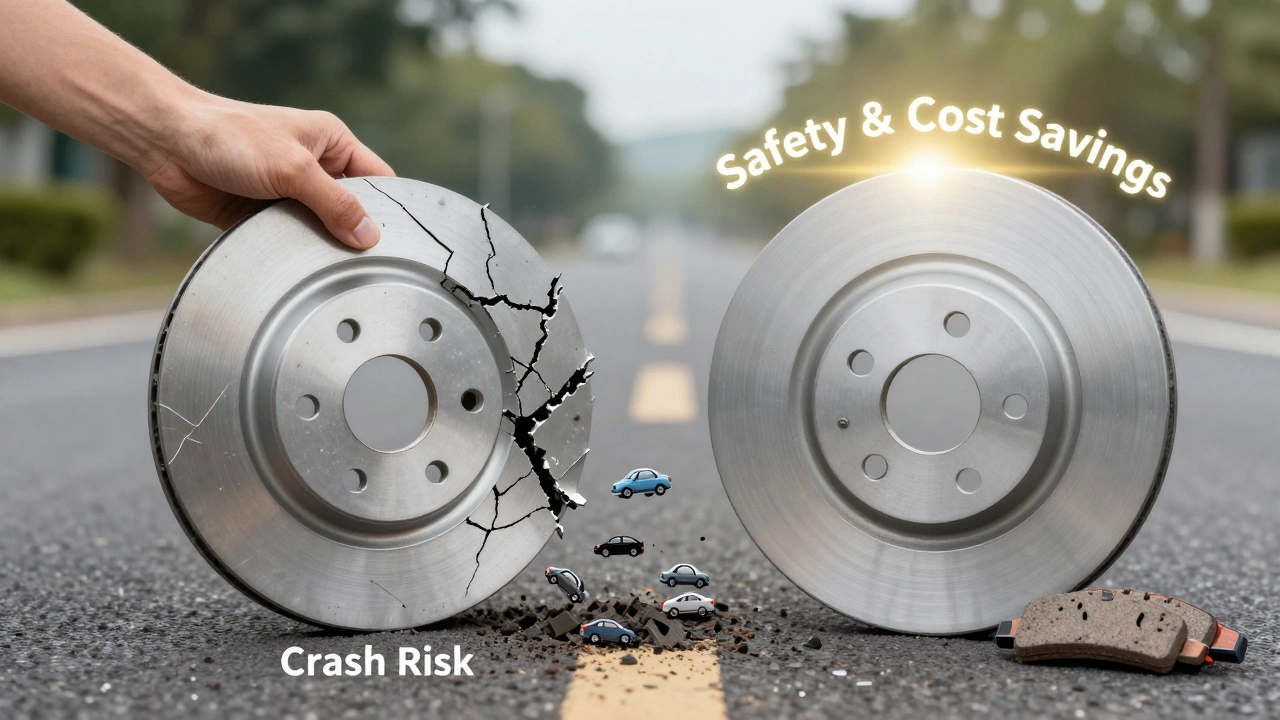
Replacing rotors isn’t expensive. For most cars, labor and parts run between $250 and $500 per axle. Compare that to a $10,000 repair bill after a crash-or worse, a hospital stay.
Prevention Is Simple
Bad rotors don’t appear overnight. They’re the result of neglect. Here’s how to avoid them:
- Get your brakes inspected every 12,000 miles or once a year.
- Listen to your car. Squeaks, vibrations, or longer stops aren’t "normal."
- Don’t ride the brake on hills. Let the engine help slow you down.
- Use quality brake pads. Cheap pads wear rotors faster.
- Avoid driving through deep water after heavy braking. Sudden cooling can warp rotors.
Brakes aren’t a "set it and forget it" system. They’re the most critical safety feature on your car. If you wouldn’t fly on a plane with worn landing gear, don’t drive on bad rotors.
Final Thought
You don’t need to be a mechanic to know this: If your car doesn’t stop like it used to, something’s wrong. Ignoring brake problems doesn’t save money-it just delays the crash. Bad rotors don’t care if you’re busy, broke, or in a hurry. They’ll keep getting worse. And when they fail, they won’t warn you. They’ll just stop working.
Replace them. Now. Your life depends on it.
Can you drive a car with bad rotors if you’re careful?
You can drive slowly and avoid hard braking, but that doesn’t make it safe. Warped or worn rotors reduce stopping power unpredictably. One sudden stop-like a child running into the street-could be the difference between walking away and ending up in the hospital. There’s no "careful" way to drive with failing brakes.
Can you resurface bad rotors instead of replacing them?
Sometimes, yes-if the rotor is still above the minimum thickness and has no cracks. Resurfacing smooths out warping and grooves. But if the rotor is near its wear limit, machining it makes it thinner and more prone to warping again. Most mechanics recommend replacement over resurfacing because it’s more reliable and often costs about the same.
Do all four rotors need to be replaced at once?
No. You only need to replace rotors on the same axle together-front or rear. But if one front rotor is bad, replace both front rotors. The same goes for the rear. Mixing old and new rotors on the same axle can cause uneven braking and pulling.
How long do brake rotors usually last?
Most rotors last between 30,000 and 70,000 miles. But this depends heavily on driving style. Aggressive braking, frequent stops in traffic, or hauling heavy loads can cut that in half. High-performance or heavy-duty vehicles may need replacement even sooner.
Can bad rotors cause a tire to blow out?
Not directly. But bad rotors cause excessive vibration that wears out wheel bearings and suspension parts. Over time, that can lead to a tire losing alignment or uneven wear, which increases the risk of a blowout. So while rotors don’t pop tires, they can set off a chain reaction that leads to one.