Tire Longevity: How to Make Your Tires Last Longer and Avoid Premature Wear
When you buy a new set of tires, you’re not just paying for rubber—you’re paying for tire longevity, the total distance a tire can safely travel before it becomes unsafe or unusable. Also known as tire lifespan, it’s not just about brand or price. It’s about how you drive, how you maintain your car, and whether you ignore warning signs that show up long before the tread disappears. Many drivers think tires last 50,000 miles by default, but that’s only true if everything else is working right. A bad suspension, uneven alignment, or underinflated tires can cut that number in half—and you won’t even notice until it’s too late.
Tire wear, the gradual loss of tread depth and structural integrity, is rarely just about the road. It’s linked to other systems in your car. For example, a worn suspension (like bad shocks or struts) makes your tires bounce instead of roll, creating flat spots and uneven contact with the pavement. A misaligned wheel causes one side of the tire to scrub against the road, wearing it down faster than the other. And if your tires are consistently underinflated, the edges wear out first—leaving you with a tire that looks fine in the middle but is dangerously thin on the sides. These aren’t isolated problems. They’re connected. Fixing one often helps the other. That’s why a tire that’s wearing out too fast is usually a symptom of something deeper—like a failing suspension, poor alignment, or even aggressive driving habits like hard braking or fast cornering.
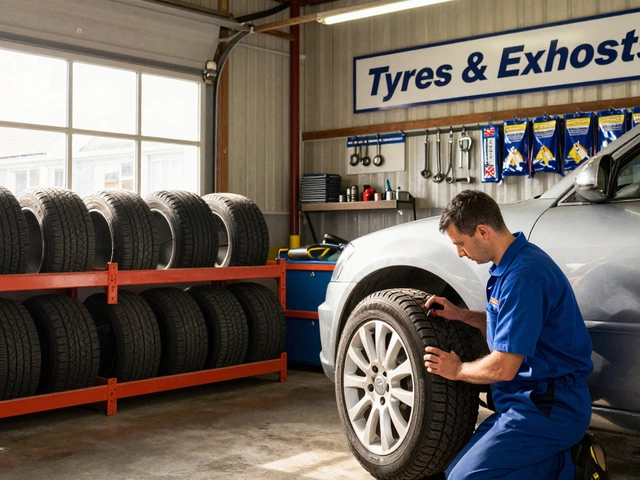
Some people replace tires because they’re old, not because they’re worn. Rubber degrades over time, even if you haven’t driven much. Heat, sunlight, and chemicals on the road make tires brittle. A five-year-old tire with plenty of tread can still be unsafe. And if you’ve hit a curb, pothole, or debris, you might have internal damage you can’t see. That’s why checking your tires isn’t just about measuring tread depth—it’s about looking for cracks, bulges, and odd vibrations while driving.
What you’ll find below are real-world stories from drivers who learned the hard way. One person replaced their tires twice in three years—until they found out their alignment was off by 3 degrees. Another thought their clutch was slipping, but it was actually the tires losing grip because of uneven wear. These aren’t theory pieces. They’re fixes that saved people hundreds, sometimes thousands, in repeated replacements. You’ll see how brake pad wear, suspension noise, and even air filter neglect can tie back to tire longevity. It’s all connected. And once you understand how, you won’t just buy better tires—you’ll know how to make them last.
-
20 Jan
- Recent
- Popular