Topping Up Oil: What You Need to Know Before You Pour
When your car’s engine oil level, the amount of lubricating fluid circulating in your engine to reduce friction and prevent overheating. Also known as motor oil, it keeps your engine running smooth under pressure. drops below the minimum mark, you might think topping up oil is the quick fix. And sometimes, it is. But if you’re doing it often, you’re not solving the problem—you’re just delaying the bill. Oil doesn’t just vanish. It burns, leaks, or gets contaminated. Ignoring why it’s low can turn a simple top-up into a $3,000 engine rebuild.
Not all oils are the same. Your car’s manual says engine oil type, the specific viscosity and formulation recommended by the manufacturer, like 5W-30 or 10W-40 for a reason. Mixing synthetic with conventional, or using the wrong grade, can hurt performance and even damage seals. If you’re topping up, match the exact type—same brand, same viscosity, same API rating. Don’t guess. Check the dipstick, yes, but also check the bottle. And if you’ve had to add more than a quart between oil changes, something’s wrong. High oil consumption, the abnormal rate at which an engine burns or loses oil during normal operation often points to worn piston rings, valve seals, or a cracked gasket. A little smoke from the tailpipe? A puddle under the car? These aren’t normal. They’re red flags.
Some drivers top up oil because they skip oil changes. That’s a dangerous habit. Old oil turns to sludge. It loses its ability to cool and clean. Even if the level looks fine, the oil inside could be dead. Topping up dirty oil just makes more dirty oil. And if you’re doing it because you’re avoiding the cost of an oil change? You’re setting yourself up for a bigger one. Replacing a blown head gasket or a seized engine costs ten times more than a regular service.
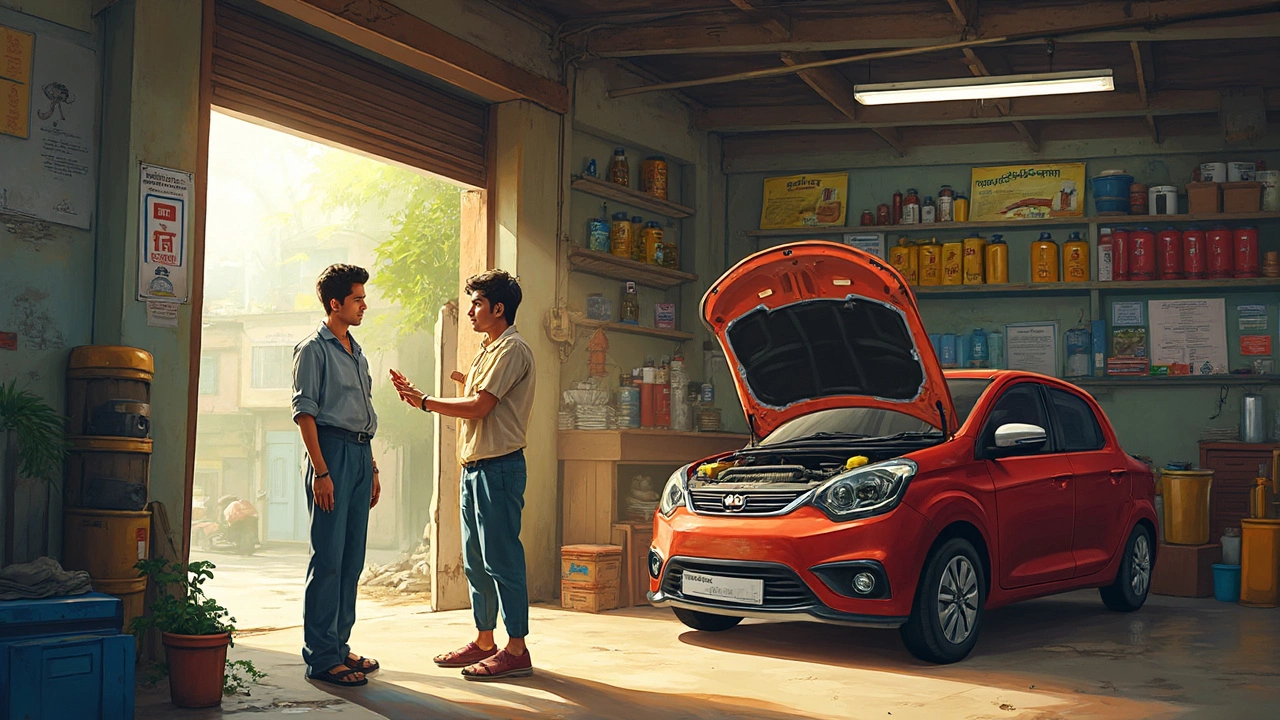
You don’t need to be a mechanic to check your oil. Do it every week, especially before long trips. Park on level ground. Wait five minutes after turning off the engine. Pull the dipstick, wipe it clean, reinsert, then pull again. If it’s below the lower mark, add half a quart at a time. Don’t overfill. Too much oil can foam up, cause pressure leaks, and damage the catalytic converter. And never use engine oil for anything else—no, not your lawnmower, not your bicycle chain. It’s not a universal fix.
What you’ll find below are real stories from people who ignored the warning signs. Some lost engines. Others saved thousands by catching the problem early. We’ll show you how to spot oil leaks, understand oil burn rates, and decide when a top-up is okay—and when it’s time to call a pro. This isn’t about being perfect. It’s about being smart before it’s too late.
-
6 May
- Recent
- Popular
-
 Deep Sounding Exhaust: Practical Ways to Make Your Car Roar
Jul 2 2025
Deep Sounding Exhaust: Practical Ways to Make Your Car Roar
Jul 2 2025
-
 Maximizing the Lifespan of Your Car Tires
Jan 20 2025
Maximizing the Lifespan of Your Car Tires
Jan 20 2025
-
 Does Engine Oil Choice Really Matter?
Mar 11 2025
Does Engine Oil Choice Really Matter?
Mar 11 2025