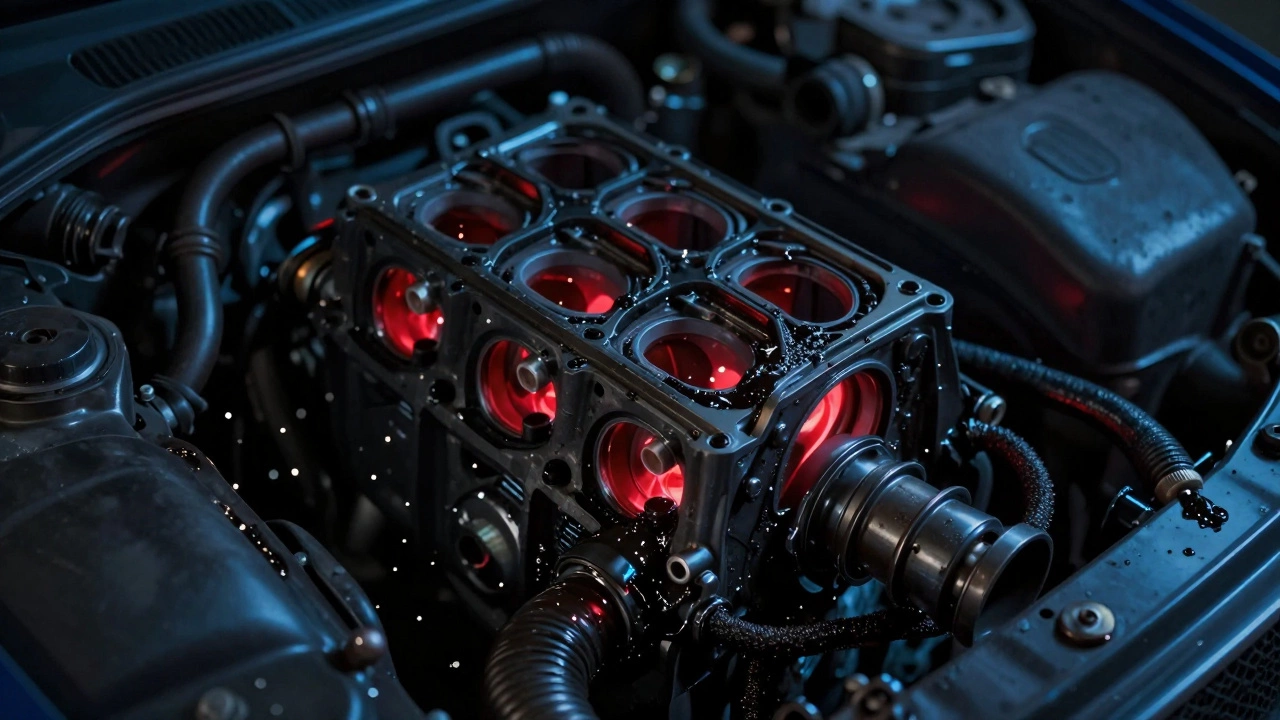
Oil Change Calculator
Determine Your Oil Change Needs
Enter your vehicle's current mileage and time since last oil change to see if you're overdue for an oil change. Our calculator uses manufacturer guidelines and real-world driving conditions to provide accurate recommendations.
Cost Comparison
| Service | Cost Range | Time Required |
|---|---|---|
| Oil Change | £45-£70 | 1 hour |
| Engine Flush | £150-£300 | 2-3 hours |
| Partial Engine Rebuild | £1,500-£3,000 | 1-2 weeks |
| Full Engine Replacement | £3,000-£6,000 | 1-3 weeks |
Skipping your oil change might seem harmless at first. You drive fine. The engine still starts. No warning lights pop up. But behind the scenes, something quiet and dangerous is happening inside your engine. Motor oil doesn’t just get dirty-it breaks down. And when it does, your engine pays the price.
Your Engine Runs on Oil, Not Just Gas
Think of engine oil as the lifeblood of your car. It’s not just a lubricant. It cools critical parts like pistons and valves, cleans away tiny metal shavings, seals gaps between rings and cylinders, and prevents rust. Fresh oil has additives that do all this. But over time, those additives burn out. The oil thickens, turns sludgy, and loses its ability to flow. When that happens, metal starts grinding against metal-even if you don’t feel it.
Modern engines run hotter than ever. A typical gasoline engine operates between 195°F and 220°F. At those temperatures, oil can break down in as little as 5,000 miles if it’s not synthetic. Even synthetic oils, which last longer, start losing effectiveness after 7,500 to 10,000 miles. If you’re driving 12,000 miles a year and only changing oil every 18 months? You’re pushing it.
What Happens After 10,000 Miles Without an Oil Change?
At 10,000 miles past the recommended interval, the oil has already lost most of its protective qualities. Here’s what’s going on under the hood:
- Sludge builds up-Thick, tar-like residue forms around the oil passages, blocking flow. This is why older engines with neglected oil changes often seize.
- Increased friction-Without proper lubrication, moving parts like camshafts and lifters wear faster. You might not hear it yet, but you’ll feel it in reduced power and poor fuel economy.
- Overheating risk-Oil helps transfer heat away from the piston rings. When it’s degraded, those parts can overheat and warp. In extreme cases, pistons crack or melt.
- Oil pressure drops-As sludge clogs the oil pump intake, pressure falls. Low oil pressure triggers a warning light, but by then, damage is already done.
One mechanic in Bristol told me about a 2018 Honda Civic that came in with 18,000 miles overdue. The owner swore it ran fine. But when they pulled the oil pan, the bottom was coated in black gunk. The oil pump pickup tube was half-blocked. The engine had to be rebuilt. That repair cost £2,800. A simple oil change? £45.
It’s Not Just About Mileage-Time Matters Too
Many people think oil only degrades with mileage. That’s wrong. Oil breaks down from heat cycles, moisture, and combustion byproducts-even if you barely drive. If you commute short distances, stop-and-go in traffic, or leave your car parked for weeks, the oil is aging faster than your odometer shows.
Moisture from condensation gets into the oil. It doesn’t evaporate unless the engine gets hot enough for long enough. That’s why winter drivers in Bristol often see sludge form even with low mileage. Oil that’s been sitting for 12 months, even with only 3,000 miles on it, can be worse than fresh oil at 8,000 miles.
Most manufacturers recommend oil changes every 12 months or 10,000 miles-whichever comes first. If you ignore the time part, you’re gambling.

What About Synthetic Oil? Doesn’t It Last Longer?
Synthetic oil does last longer. But not forever. Full synthetic oils can handle 12,000 to 15,000 miles under ideal conditions. But real-world driving isn’t ideal. Dust, dirt, fuel dilution from short trips, and high engine loads all shorten oil life.
Also, synthetic doesn’t fix worn seals or old filters. If your PCV valve is clogged or your oil filter is stuck, fresh synthetic won’t help. The oil will still get contaminated. And once contaminants mix in, even the best oil can’t protect your engine.
Some drivers stretch synthetic oil to 20,000 miles. That’s a gamble. A 2023 study by the Society of Automotive Engineers found that engines running beyond 15,000 miles between oil changes showed 40% more wear on valve train components than those changed at 10,000 miles.
Signs You’ve Waited Too Long
You don’t need a diagnostic tool to know your oil is failing. Here are real signs you’ve pushed it too far:
- Engine noise-A ticking or knocking sound from the top of the engine? That’s likely worn lifters or valves without proper lubrication.
- Check Engine light-It might not be the oil sensor. It could be misfires caused by carbon buildup from degraded oil.
- Smoke from the exhaust-Blue smoke means oil is burning in the combustion chamber. That happens when seals are worn and oil is too thin to stay where it should.
- Oil smell inside the cabin-If you smell burning oil while driving, it’s leaking onto hot parts. That’s a red flag.
- Lower fuel economy-You’re not driving differently, but your MPG dropped? Old oil increases friction. Your engine works harder. It burns more fuel.
These aren’t myths. They’re symptoms mechanics see every week. And they’re avoidable.
What’s the Real Cost of Waiting?
Let’s break it down:
| Scenario | Cost | Time Lost |
|---|---|---|
| Regular oil change (synthetic) | £45-£70 | 1 hour |
| Engine flush (to clean sludge) | £150-£300 | 2-3 hours |
| Oil pump replacement | £400-£700 | 4-6 hours |
| Partial engine rebuild (pistons, rings, bearings) | £1,500-£3,000 | 1-2 weeks |
| Full engine replacement | £3,000-£6,000 | 1-3 weeks |
Most people think they’re saving money by skipping the oil change. They’re not. They’re just delaying a bigger bill. And if you’re unlucky, you could end up stranded on the M4 with a dead engine.

How to Stay on Track
Set a reminder. Use your phone. Write it on your calendar. Or better yet, ask your garage to text you. Most reputable garages in Bristol offer free reminders. You don’t need a fancy app.
Check your owner’s manual. Don’t trust the “maintenance light” on your dashboard-it’s often based on mileage only, not driving conditions. If your manual says 10,000 miles or 12 months, stick to that. Even if you drive less, change it yearly.
Keep receipts. If you ever sell your car, a full service history with oil changes listed makes it worth more. Buyers trust cars that were maintained. They’ll pay more.
What If You’ve Already Overdue?
If you’re 2,000 miles past your change? Get it done now. No panic. Just go.
If you’re 5,000+ miles overdue? Don’t drive it hard. Avoid high speeds and heavy loads. Get the oil changed immediately, then have the mechanic check for sludge. They can use a borescope to look inside the engine without tearing it apart.
If you’re over 10,000 miles overdue? Don’t drive it at all. Have it towed. Running it now could cause irreversible damage. A simple oil change might still save your engine. But if you keep driving, you’re asking for a total failure.
Bottom Line
Your engine doesn’t care how much you love your car. It only responds to what you give it. Oil isn’t magic. It wears out. And when it does, your engine doesn’t get a second chance. Skipping an oil change isn’t a small thing. It’s the most common reason engines die early. Don’t wait for the noise. Don’t wait for the smoke. Change it on time. It’s the cheapest insurance you’ll ever buy for your car.
Can I just top up the oil instead of changing it?
No. Topping up oil doesn’t remove contaminants, sludge, or broken-down additives. It just adds more oil to bad oil. You’re diluting the problem, not fixing it. Over time, the oil becomes a thick, dirty slurry that can’t protect your engine. Changing the oil means removing all of the old stuff and replacing it with fresh, clean fluid.
Does driving style affect how often I need an oil change?
Yes. Short trips, stop-and-go traffic, towing, or driving in dusty conditions all shorten oil life. If you mostly drive under 5 miles at a time, your oil never gets hot enough to burn off moisture. That leads to sludge. If you haul heavy loads or drive on gravel roads, dirt and metal particles get into the oil faster. Most manuals include a "severe service" schedule for these conditions-usually every 5,000 miles or 6 months.
What’s the difference between conventional and synthetic oil?
Conventional oil is refined from crude oil and has inconsistent molecular sizes. Synthetic oil is chemically engineered for uniformity and stability. It flows better in cold weather, resists heat better, and lasts longer. But synthetic oil still breaks down over time. It doesn’t last forever. Most modern cars require synthetic oil for better performance and protection. Check your manual.
Is it okay to change oil every 15,000 miles?
Only if your car specifically allows it. Some newer models with advanced engines and full synthetic oil can go 15,000 miles. But most cars-especially older ones-aren’t designed for that. Manufacturers test their engines under real conditions. If they say 10,000 miles, that’s the safe limit. Going beyond that increases wear and voids warranties.
Can old oil cause my car to fail its MOT?
Not directly. The MOT doesn’t check oil condition. But if old oil has caused engine damage-like excessive smoke, oil leaks, or low compression-you’ll fail the emissions or mechanical inspection. A car burning oil due to worn rings or valve seals will fail on emissions. So while the oil itself isn’t tested, the damage it causes definitely is.