Oil Overfill Calculator
This tool calculates the potential impact of overfilling your engine oil. Based on your vehicle's specified capacity and the amount of oil added, it will show you if you're in the safe, risky, or dangerous zone.
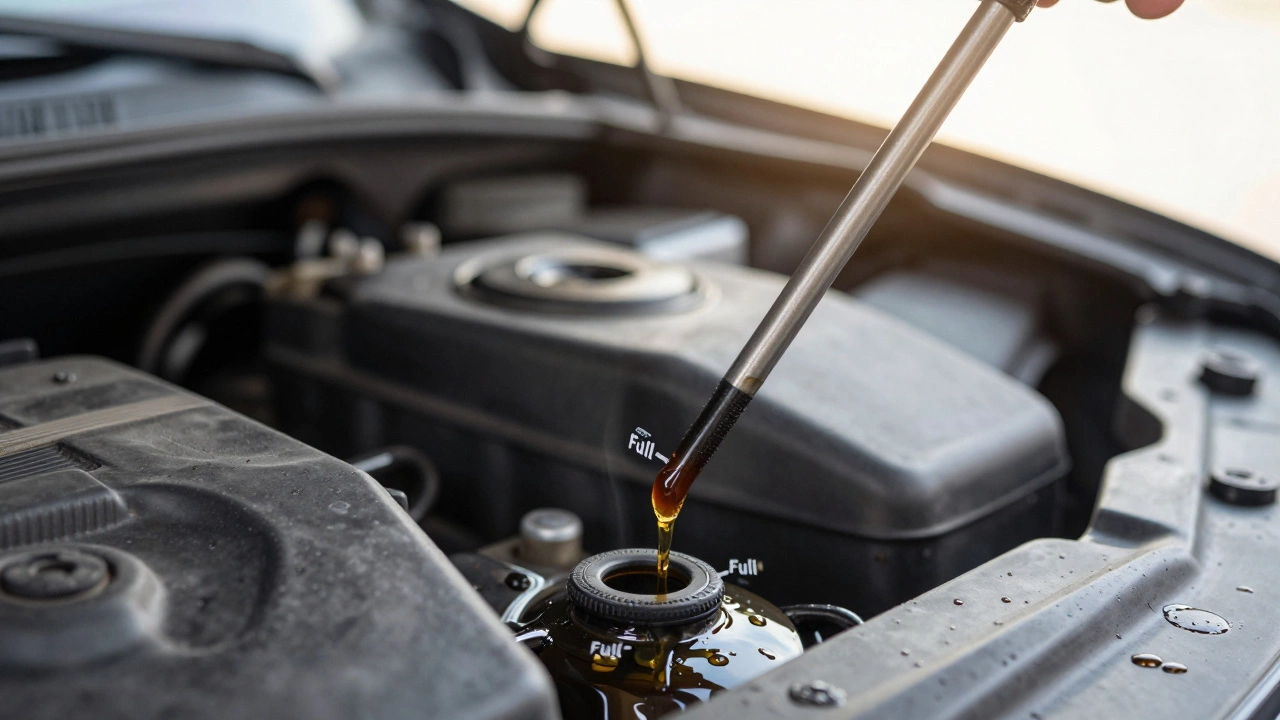
You just finished an oil change. You poured in the full five quarts the manual says you need. But then you notice the dipstick reads just a hair above the full mark. Did you accidentally add an extra quart? Should you panic? Is your engine about to blow? The short answer: one extra quart won’t destroy your engine overnight-but it’s not harmless either.
What happens when you overfill engine oil?
Engines aren’t designed to hold more oil than their specified capacity. Most passenger cars take between four and six quarts. That number isn’t random-it’s calculated based on how the oil circulates, cools, and lubricates moving parts. Add even one extra quart, and you start pushing the system beyond its limits.
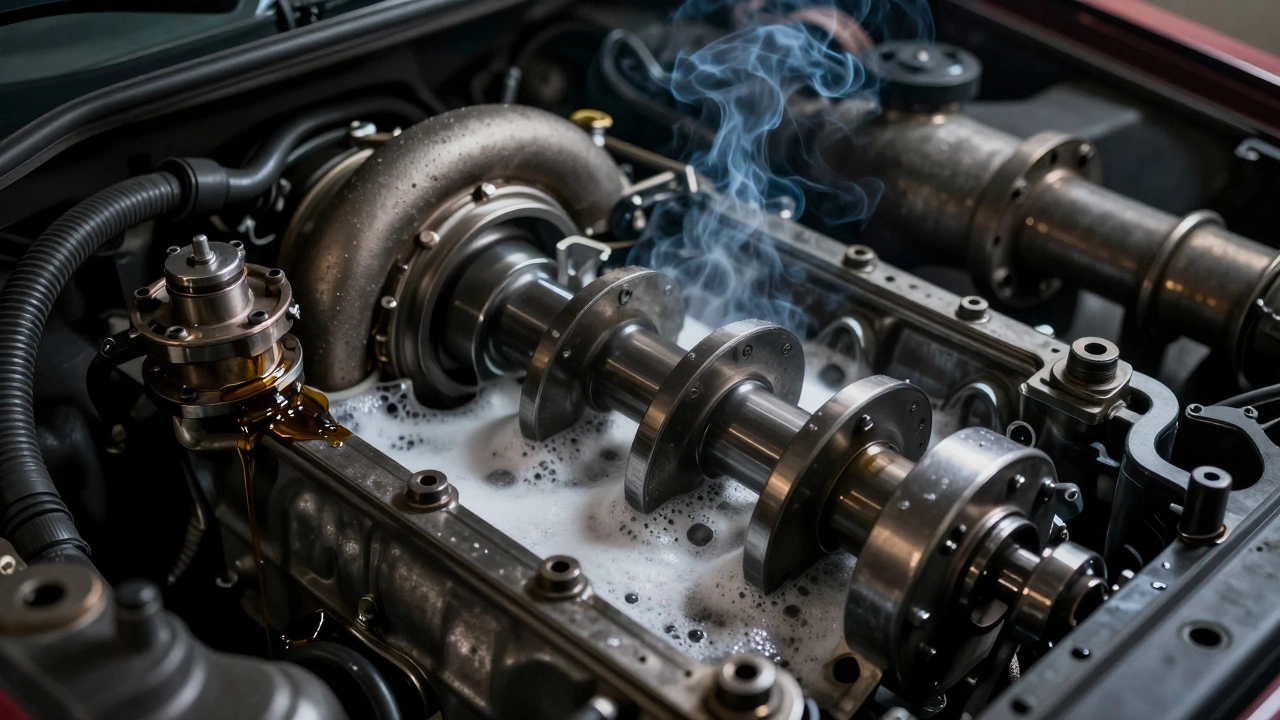
The main problem? Excess oil gets churned by the rotating crankshaft. Think of it like stirring a pot of soup too fast-it creates foam. When oil foams, it loses its ability to lubricate properly. Foam doesn’t flow the way liquid oil does. It can’t reach critical parts like the camshaft, lifters, or main bearings. That’s when you risk metal-on-metal contact, even if only for a few seconds at a time.
Overfilled oil also increases pressure inside the crankcase. That pressure has to go somewhere. It can force oil past seals and gaskets you didn’t even know existed-like the valve cover gasket, oil pan gasket, or even the rear main seal. The result? Leaks. Not always dramatic at first. Maybe just a slow drip under your car after parking. But over time, that’s how you lose oil, and then you’re running low again. A vicious cycle.
Why does foam matter more than you think
Most people think oil is just oil. It’s not. Modern engine oils are complex blends with additives that reduce friction, clean deposits, and prevent oxidation. But when oil gets whipped into foam by a spinning crankshaft, those additives break down. The bubbles collapse quickly, but the damage is already done: lubrication drops by 30% or more in foamy conditions.
Engineers test oil performance under ideal conditions. They don’t test it under foam. That’s why manufacturers specify exact capacities. A 2023 Honda Civic, for example, holds exactly 3.7 quarts with a filter change. Add half a quart more, and you’re already in risky territory. A 2024 Toyota Camry holds 4.6 quarts. One extra quart pushes it past 50% above the recommended level. That’s not a small mistake.
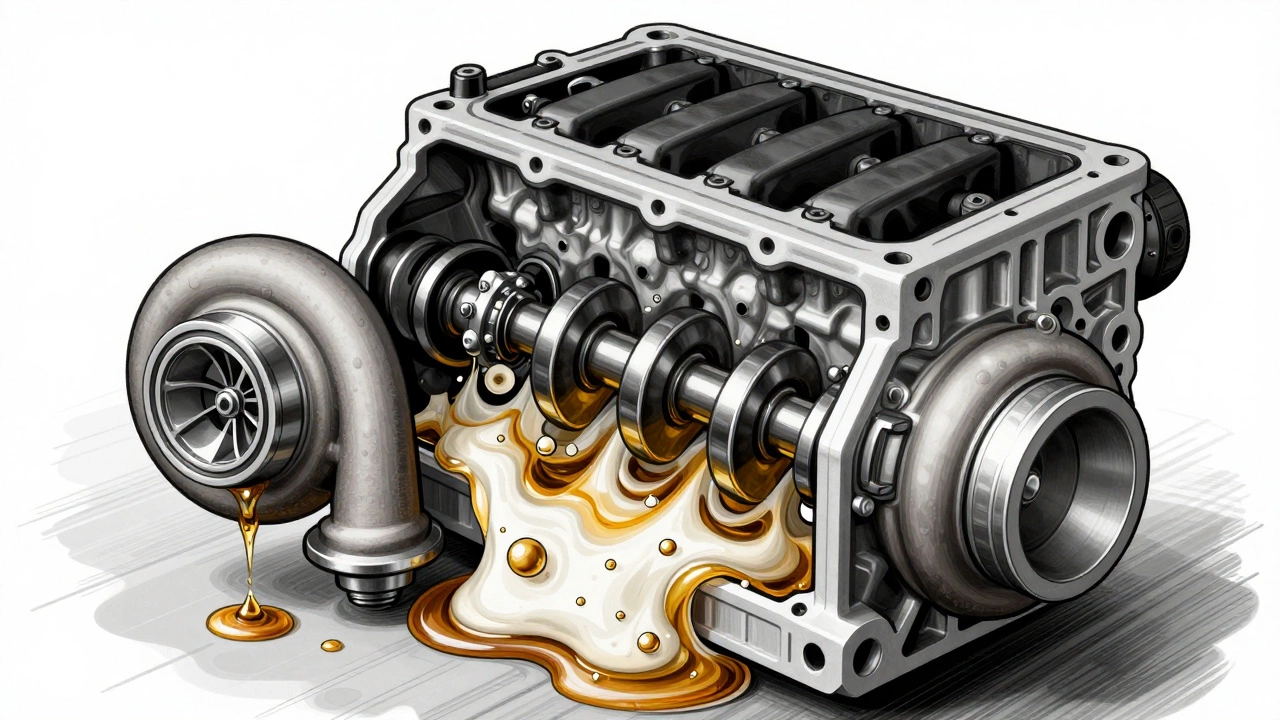
And here’s something most DIYers don’t realize: turbocharged engines are even more sensitive. The turbo spins at over 100,000 RPM. It needs clean, consistent oil flow. Foamy oil can starve the turbo bearing, leading to premature failure. Replacing a turbo costs more than three oil changes.
Signs you’ve overfilled your oil
You don’t need a mechanic to tell you something’s wrong. Your car will give you clues:
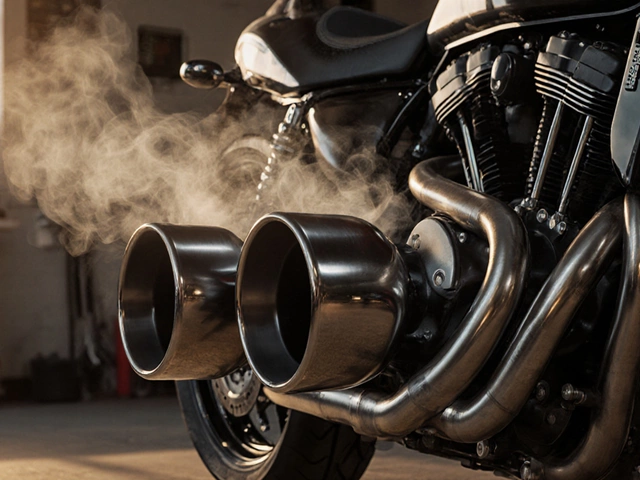
- Blue smoke from the exhaust-especially when you start the engine or accelerate. That’s oil being burned in the combustion chamber because it’s seeping past piston rings or valve seals.
- Oil leaks you didn’t have before-check under the car after parking. New drips mean pressure is blowing out seals.
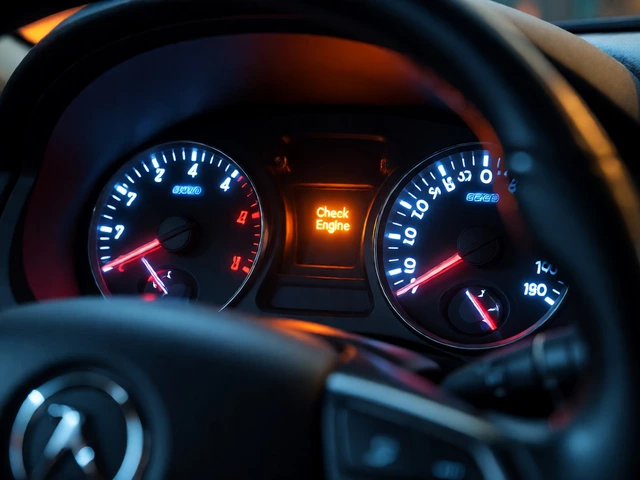
- Check engine light-not always, but sometimes excess oil triggers sensor readings related to emissions or misfires.
- Engine running rough or stalling-oil in the combustion chamber can cause misfires. Your engine might hesitate or stumble.
- Oil smell inside the cabin-if you notice a burning oil odor while driving, it’s likely oil leaking onto hot engine parts.
None of these are guaranteed to show up immediately. But if you’ve added an extra quart and notice any of these within a few hundred miles, don’t wait. Get it checked.
How to fix it
If you just added the extra quart and haven’t driven yet, don’t start the engine. Drain it out. Use a suction pump-those cheap ones sold at auto parts stores for $15. Slide the tube down the dipstick tube and suck out the excess. It’s messy, but it’s the safest way.
If you’ve already driven the car, don’t panic. But don’t ignore it either. Check the oil level again after the engine has been off for 10 minutes. If it’s still above the full mark, plan to drain the excess. You don’t need to change the whole oil again-just remove what’s extra. Use a funnel and a clean container to catch it.
Some people suggest letting the engine idle to burn off the excess. Don’t do that. It won’t help. Oil doesn’t evaporate like fuel. It either leaks, burns, or stays in the system-where it’s doing damage.
How much is too much?
There’s no universal rule, but here’s a practical guideline:
- Up to 0.5 quarts over-risky, but unlikely to cause immediate harm if you catch it fast.
- 1 quart over-definitely problematic. You’re in the danger zone.
- More than 1 quart over-you’re asking for trouble. Get it drained ASAP.
For reference: most engines have a 1-quart buffer between the low and high marks on the dipstick. That’s not extra room for error. That’s the normal operating range. If you’re at the top of that range, you’re already at the limit.
Why do people overfill oil?
It’s usually one of three things:
- Confusing capacity with the dipstick range-some think if the dipstick reads from low to full over a 2-quart span, they can fill to the top. No. The full mark is the limit.
- Not letting oil settle-after adding oil, you need to wait 3-5 minutes before checking the level. Oil drains into the pan slowly. Checking too soon gives a false low reading, so you add more.
- “Better safe than sorry” mentality-some believe more oil = better lubrication. That’s a myth. Engines are precision machines. They don’t work better with extra fluid.
Pro tip: Always use the dipstick. Don’t trust the numbers on the bottle. Some cars take 5 quarts, others take 6. Your manual is the only source you can trust.
What about synthetic vs conventional oil?
It doesn’t matter. Whether you’re using full synthetic, synthetic blend, or conventional oil, the viscosity and volume limits are the same. Overfilling synthetic oil causes the same foam, pressure, and seal damage as overfilling conventional. The additives might be better, but they still break down under agitation.
And no, synthetic oil won’t “handle” extra volume better. It’s still a liquid. It still foams. It still leaks.
Can you drive with a little extra oil?
You can, but you shouldn’t. Driving with even half a quart over can cause long-term damage you won’t notice until it’s too late. A small leak now might mean a $2,000 repair six months down the road. A foamy oil film on your bearings might cause microscopic wear that adds up over time.
Think of it like driving with your tires overinflated. It might seem fine at first. The car handles better, right? But you’re wearing out the center of the tread faster. Same here. You’re not saving money by adding more oil. You’re risking expensive repairs.
Fix it now. It takes 20 minutes. You’ll save yourself hundreds-or thousands-in the long run.
How to avoid this mistake next time
Here’s a simple routine to prevent overfilling:
- Drain the old oil completely. Let it sit for 10 minutes.
- Install the new filter. Apply a little fresh oil to the rubber seal.
- Add 80% of the recommended amount-say, 3.5 quarts if your car needs 4.5.
- Start the engine. Let it run for 30 seconds. Turn it off.
- Wait 5 minutes. Check the dipstick.
- Add oil one-quarter quart at a time until you hit the full mark.
This method ensures you never overshoot. It’s how professionals do it. It’s slower, yes. But it’s foolproof.
And always, always double-check your owner’s manual. Don’t rely on YouTube videos or forum advice. Your manual has the exact numbers for your model, year, and engine type.