Spark Plug Risk & Cost Estimator
Select your current symptoms to determine if you should stop driving immediately or schedule a repair.
Risk Assessment
Please select a symptom above.
Cost Comparison: Prevention vs. Cure
You’re halfway to work, the check engine light just blinked on, and your car feels like it’s trying to cough up a lung. The first thing that pops into your head is usually expensive: "Is my engine blowing up?" But more often than not, the culprit is something small, cheap, and easy to ignore until it isn’t: spark plugs. You might be wondering if you can just push through the drive or if you need to pull over immediately.
The short answer is: yes, you can physically drive with bad spark plugs, but you really shouldn’t. It’s like walking on a sprained ankle-you can do it for a few steps, but every step makes the injury worse. While you won’t necessarily break down on the highway in seconds, continuing to drive with worn-out plugs accelerates wear on other critical engine components, turning a £10 part problem into a £500+ repair bill. Let’s break down exactly what happens when you ignore those misfires, how to spot the warning signs early, and when you absolutely must stop.
What Actually Happens When Spark Plugs Fail?
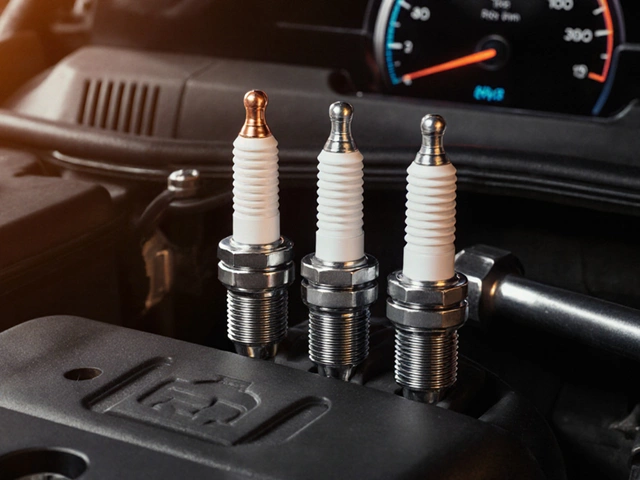
To understand the risk, you need to know what these tiny components do. A spark plug is an electrical component that delivers high-voltage electricity from the ignition system to the combustion chamber of the engine. Its job is simple: create a spark to ignite the air-fuel mixture. When they are new, they fire precisely. When they get old, the gap widens, carbon builds up, or the electrode erodes.
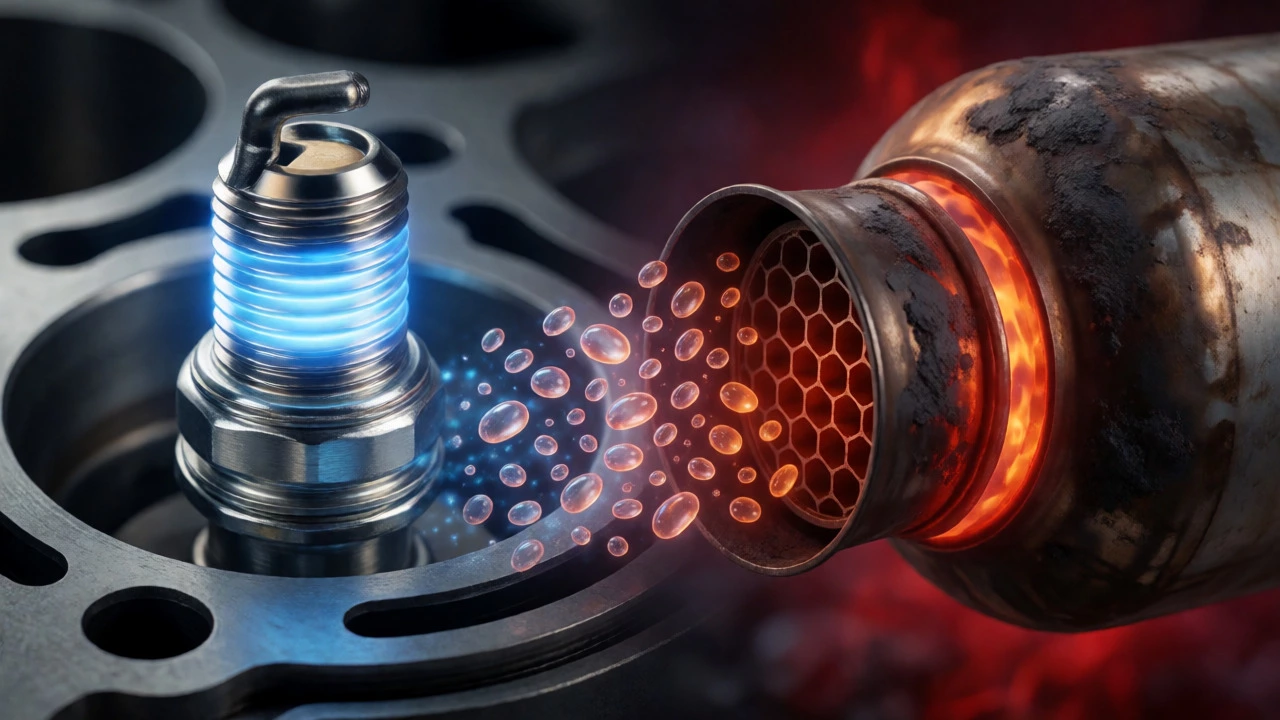
If one plug fails, the cylinder it serves stops firing correctly. This is called a misfire. In a four-cylinder engine, losing one cylinder means you’ve instantly lost 25% of your power. In a V8, you lose 12.5%. But it’s not just about power loss. Unburnt fuel gets pushed out of the exhaust valve and into the catalytic converter. This is where things get expensive. The catalytic converter is designed to clean exhaust gases using precious metals like platinum and palladium. Raw, unburnt gasoline overheats this unit, potentially melting its internal honeycomb structure. Replacing a catalytic converter costs hundreds, sometimes thousands, of pounds. Replacing a spark plug costs less than a takeaway dinner.
Top Warning Signs Your Plugs Are Dying
Your car will tell you something is wrong before the engine seizes. Pay attention to these specific symptoms:
- Rough Idling: When you’re stopped at traffic lights, does the car shake or vibrate excessively? That’s likely a misfire.
- Slow Acceleration: You press the pedal, and the car hesitates or stumbles instead of responding smoothly.
- Poor Fuel Economy: If you’re visiting petrol stations more often without changing your driving habits, inefficient combustion is burning money.
- Hard Starting: The engine cranks longer than usual before catching, especially in cold weather.
- Engine Noise: Listen for a ticking, knocking, or popping sound coming from the engine bay.
Don’t rely solely on the Check Engine Light (CEL). Sometimes the CEL flashes rapidly-that means severe misfire happening right now, damaging the cat converter. A steady CEL means the issue is stored, but still active. If the light is flashing, pull over safely as soon as possible.

How Long Can You Safely Drive?
This depends on the severity of the failure. Here is a realistic breakdown based on common scenarios:
| Symptom Severity | Estimated Safe Distance | Immediate Action Required |
|---|---|---|
| Mild Hesitation | Up to 50 miles | No. Schedule replacement within a week. |
| Constant Shaking/Rough Idle | 10-20 miles | Yes. Avoid highways; keep RPMs low. |
| Flashing Check Engine Light | Stop Immediately | Yes. Risk of permanent catalytic converter damage. |
| Smell of Rotten Eggs/Gasoline | Stop Immediately | Yes. Cat converter is overheating or failing. |
If you’re just noticing a slight stumble on acceleration, you can likely make it home or to a local garage. However, if the car is shaking violently while idling, you are putting stress on the engine mounts and transmission. Do not attempt long motorway runs in this condition.
The Domino Effect: Ignoring Small Problems
It’s tempting to think, "It’s just one plug." But engines are balanced systems. When one cylinder misfires, the others have to work harder to maintain momentum. This imbalance causes vibrations that can loosen bolts, crack engine mounts, and put undue strain on the crankshaft bearings over time.
Furthermore, modern cars use oxygen sensors to monitor exhaust output. A misfire confuses these sensors, causing the engine computer (ECU) to inject more fuel in an attempt to compensate. This creates a rich mixture, which further fouls the remaining good spark plugs. Suddenly, you don’t have one bad plug; you have two or three. What started as a minor maintenance item becomes a full tune-up scenario.
DIY vs. Professional Replacement: Is It Worth Doing Yourself?
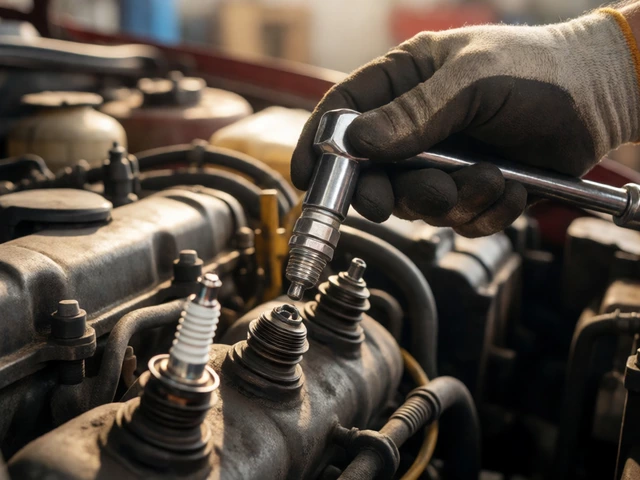
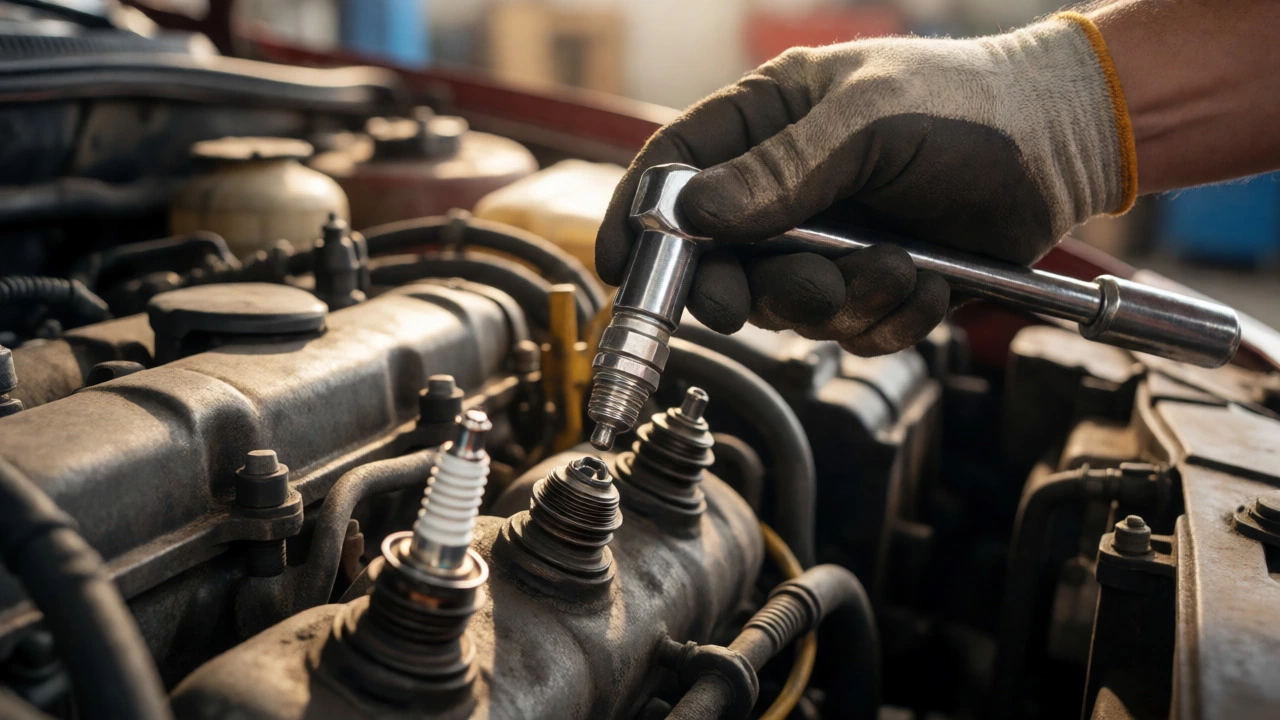
Changing spark plugs is one of the most accessible DIY jobs for beginners. Most modern cars require only a socket wrench and a spark plug socket. However, there are pitfalls.
Torque Matters: Over-tightening can crack the ceramic insulator or strip the threads in the aluminium cylinder head. Under-tightening allows compression to leak past the plug, causing similar symptoms to a bad plug. Always use a torque wrench if possible, or follow the manufacturer’s specified tightness (usually hand-tight plus a quarter turn).
Gap Check: New plugs come pre-gapped, but shipping can knock them out of alignment. Use a feeler gauge to ensure the gap matches your vehicle’s spec (often between 0.7mm and 1.1mm for modern engines).
If you drive a luxury car with complex ignition coils or a transverse V6/V8 where access is tight, paying a mechanic £50-£80 for labour might save you hours of frustration and potential stripped threads.
Preventing Future Misfires
You don’t want to be stranded again. Prevention is cheaper than cure.
- Follow Maintenance Schedules: Standard copper plugs last ~30,000 miles. Platinum/Iridium plugs can last 60,000-100,000 miles. Check your owner’s manual.
- Use Quality Parts: Cheap aftermarket plugs may fail prematurely or cause inconsistent sparks. Stick to reputable brands like NGK, Bosch, or Denso.
- Check Ignition Coils: Often, the coil pack fails alongside the plug. If you replace plugs and the problem persists, inspect the coils.
- Avoid Short Trips: Frequent short journeys prevent the engine from reaching optimal temperature, leading to carbon buildup on plugs.
Driving with bad spark plugs is a gamble. You might get lucky and reach your destination without incident. But statistically, you are risking expensive collateral damage to your exhaust system and engine balance. If you hear the rattle, smell the gas, or see the flash-stop. Fix it now, and save yourself the headache later.
Will driving with one bad spark plug ruin my engine?
It is unlikely to destroy the entire engine block immediately, but it can severely damage the catalytic converter due to unburnt fuel entering the exhaust. Prolonged driving can also cause increased vibration that wears out engine mounts and affects other cylinders.
How much does it cost to fix bad spark plugs?
Parts typically range from £5 to £15 per plug depending on material (copper vs. iridium). Labour at a garage usually costs £40-£80 for a standard 4-cylinder replacement. Total cost is often under £150. Compare this to £500+ for a new catalytic converter.
Can I drive with a flashing check engine light?
No. A flashing check engine light indicates a severe misfire occurring in real-time. Continuing to drive risks melting the catalyst substrate inside your catalytic converter. Pull over safely and call for assistance or tow the vehicle.
Do all spark plugs need replacing at once?
Yes, mechanics recommend replacing all spark plugs simultaneously. They experience similar wear patterns. Replacing only one or two can lead to uneven engine performance and unnecessary future labour costs.
How do I know if it's the spark plug or the coil?
Swap the suspected bad plug with a known good one from another cylinder. If the misfire moves to the new cylinder, the plug is faulty. If the misfire stays in the original cylinder, the ignition coil or injector is likely the problem.