Engine Oil Health Estimator
Enter your current driving stats below to estimate the condition of your engine oil and whether you need to schedule a service immediately.
Assessment Results
Why this matters?
Oil degrades due to heat, friction, and time. Once additives are depleted, contaminants like soot and acids can form sludge, blocking oil passages and causing wear.
You’re driving along, checking your mileage counter, and you realize you’ve hit 5,200 miles since that last oil change. Panic sets in. Did you just kill your engine? Will the dealer charge you double for a late service? The short answer is no, you haven’t destroyed your car. But the long answer involves understanding what motor oil actually does inside your internal combustion engine and why time matters as much as distance.
Most modern cars are engineered with wider tolerances than vehicles from twenty years ago. Manufacturers like Toyota and Honda often recommend intervals of 7,500 to 10,000 miles using synthetic blends. If you drive an older model or one requiring conventional oil, sticking to the traditional 3,000 to 5,000 mile rule is safer. Going over 5,000 miles isn’t a catastrophic failure event; it’s a gradual degradation process. Let’s break down exactly what happens under the hood when you push past that limit.
The Chemistry of Breakdown
Oil isn’t just a lubricant; it’s a chemical cocktail designed to handle extreme heat and friction. Fresh engine oil contains additives-detergents, dispersants, anti-wear agents, and antioxidants-that keep the engine clean and cool. As you drive, these additives get consumed. They neutralize acids formed by combustion, suspend soot particles, and prevent metal-on-metal contact.
When you exceed the recommended interval, say pushing to 6,000 or 7,000 miles on a 5,000-mile schedule, two main things happen. First, the additive package depletes. Once the detergents are used up, they can’t keep contaminants suspended. Second, the base oil itself oxidizes. Heat breaks down the molecular structure of the oil, turning it thicker and more acidic. This is why old oil looks black and feels gritty compared to the golden, slippery fluid you started with.
Sludge Formation: The Silent Killer
The most visible consequence of skipping an oil change is engine sludge. Think of this as the cholesterol of your engine. It’s a thick, tar-like substance formed when oxidized oil mixes with dirt, fuel residue, and moisture. Sludge blocks narrow oil passages, starving critical components like camshafts and crankshaft bearings of lubrication.
If you go just a few hundred miles over, sludge might not form immediately. However, if you consistently ignore the interval, you create a breeding ground for deposits. In severe cases, this leads to hydraulic lifter noise, where the engine sounds like a sewing machine because the lifters aren’t getting enough pressure. While a single instance of going over 5,000 miles rarely causes immediate sludge buildup, it accelerates the timeline for its formation, especially in stop-and-go city traffic where engines don’t reach optimal operating temperatures frequently.
Heat and Friction Risks
Oil acts as a coolant, carrying heat away from the pistons and cylinder walls. Degraded oil loses its thermal stability. It becomes less effective at dissipating heat, causing internal engine temperatures to rise. Higher temperatures accelerate wear on piston rings and cylinder liners. You might not notice this immediately, but over time, it reduces compression and efficiency.
Consider a scenario where you’re towing a trailer or driving uphill in summer. The engine works harder, generating more heat. If your oil is already past its prime, it struggles to cope. This increases the risk of warping of engine components or premature failure of turbochargers in forced-induction engines. Turbochargers spin at over 100,000 RPM and rely entirely on oil for cooling and lubrication. Old, thinning oil can lead to turbo shaft play, resulting in expensive repairs.
Conventional vs. Synthetic: Does Type Matter?
Your tolerance for exceeding the interval depends heavily on the type of oil you use. Conventional mineral oils break down faster than full synthetics. Here’s a quick comparison to help you gauge your risk.
| Oil Type | Typical Recommended Interval | Risk Level When Exceeding by 1,000-2,000 Miles | Best For |
|---|---|---|---|
| Conventional Oil | 3,000 - 5,000 miles | High (Rapid oxidation) | Older, low-mileage vehicles |
| Synthetic Blend | 5,000 - 7,500 miles | Moderate | Daily commuters |
| Full Synthetic | 7,500 - 10,000+ miles | Low (Stable molecules) | Turbocharged, high-performance, or extended drain intervals |
If you run full synthetic, going over 5,000 miles is often within the manufacturer’s safety margin. Many modern cars have oil life monitoring systems that calculate remaining oil quality based on engine revolutions, temperature, and idle time. These sensors are far more accurate than a simple mileage counter. Trust them over generic advice.
What About Warranty Claims?
This is the big worry for new car owners. Dealerships sometimes argue that missing scheduled services voids the powertrain warranty. Technically, under laws like the Magnuson-Moss Warranty Act in the US, a manufacturer cannot void your warranty simply because you didn’t use their branded oil or missed a service by a small margin, provided you can prove proper maintenance was done.
However, going significantly over-say, 8,000 miles on a 5,000-mile schedule-gives them grounds to deny a claim related to engine failure. Keep receipts showing you did change the oil, even if late. Documenting that you used the correct specification (e.g., API SP, ACEA C3) protects you. A 500-mile overrun is negligible; a 2,000-mile overrun invites scrutiny.

Signs Your Oil Is Too Old
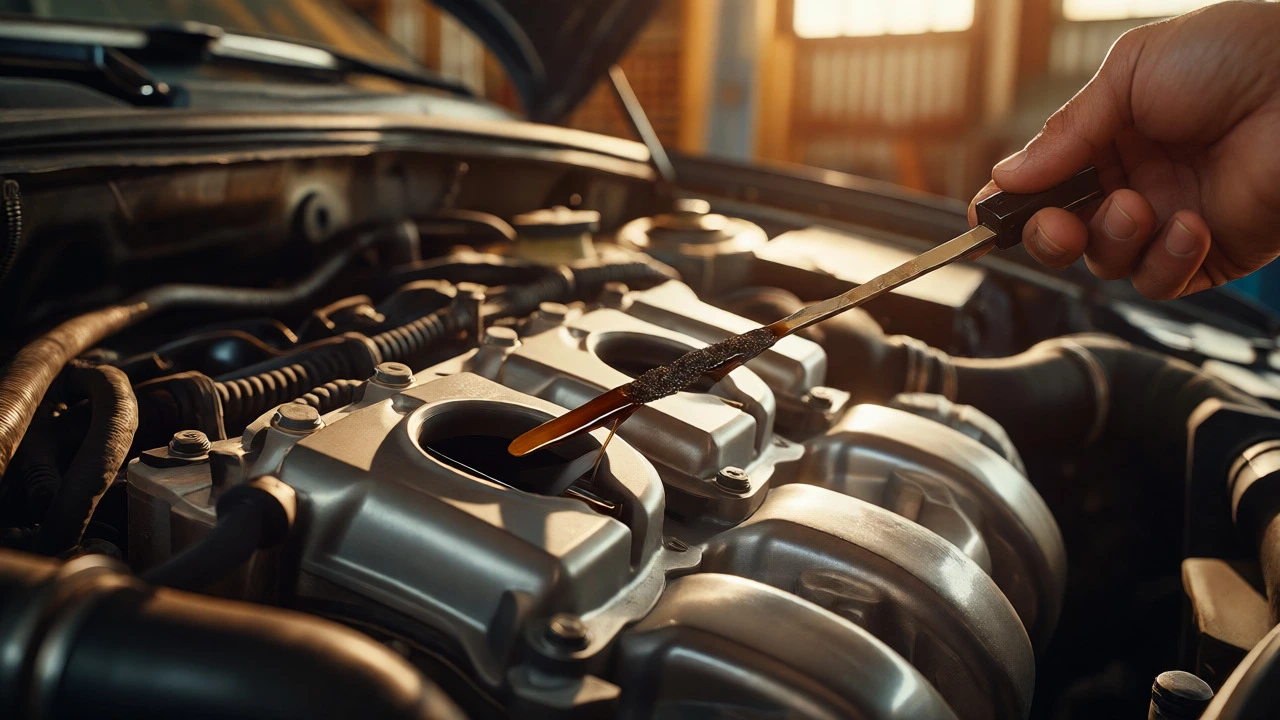
Don’t wait for the check engine light. Inspect your dipstick regularly. Healthy oil is amber to brown and smooth. Bad oil is black, opaque, and may feel gritty between your fingers. Look for these warning signs:
- Dark Color: While dark oil isn’t always bad (it means detergents are working), jet-black oil combined with a rough texture suggests saturation.
- Loud Engine Noise: Increased ticking or knocking indicates poor lubrication.
- Burning Smell: If the oil smells burnt or acrid, it has oxidized severely.
- Low Oil Level: Old oil burns off faster due to thinner viscosity after breakdown. Check levels weekly.
How to Recover After Missing a Change
If you realized you’re at 5,500 miles, don’t panic. Get an oil and filter change immediately. There’s no need for a special "flush" unless you suspect heavy sludge. Simply draining the old oil and replacing it with fresh, high-quality synthetic will restore protection. For future prevention, consider setting a calendar reminder three months before your next due date. Better yet, switch to a higher-grade synthetic oil if your vehicle allows it, extending your safe interval to 7,500 miles.
Remember, time is also a factor. Even if you only drove 3,000 miles, if it’s been 12 months, the oil still degrades due to moisture accumulation and oxidation while sitting. Always follow whichever comes first: miles or months.
Is it bad to go 1,000 miles over an oil change?
No, going 1,000 miles over is generally safe for most modern vehicles, especially those using synthetic oil. The oil still provides adequate lubrication, though protective additives are diminished. Schedule a service as soon as possible to reset the cycle.
Can I use a flush if I went over the interval?
Engine flushes are controversial. For a minor overrun, a standard oil and filter change is sufficient. Flushes are better suited for engines with known sludge issues or very high mileage where deposits are suspected. Aggressive flushing can dislodge debris that then clogs oil pick-up screens.
Does driving style affect how fast oil degrades?
Yes. Stop-and-go city driving, frequent short trips, towing, and dusty conditions are considered "severe service." These conditions cause oil to degrade faster than highway driving. If you drive severely, stick strictly to the lower end of your recommended interval.
Will my oil pressure light come on if I’m overdue?
Not necessarily. The oil pressure light usually indicates low oil level or pump failure, not oil age. You can have plenty of oil volume but poor quality. Rely on mileage and time intervals rather than waiting for warning lights.
How often should I check my oil level?
Check your oil level once a month or every other fuel fill-up. Older engines consume more oil. Catching a low level early prevents damage from running dry, which is far worse than running slightly overdue on a change.