Exhaust Sound Tuner
Enter your vehicle details and click "Analyze" to see recommended modifications.
Recommended Pipe Diameter
Component Strategy
Drone & Noise Risk
You know that feeling when you start your car in a quiet suburban street and the engine just... hums? It’s polite. It’s efficient. But it’s also boring. You want that low, throaty rumble that makes people turn their heads-not because they’re annoyed, but because they respect the machine. Getting a deeper exhaust sound isn’t just about making noise for noise's sake; it’s about tuning the acoustic signature of your vehicle to match its performance potential.
But here’s the catch: most people get this wrong. They slap on a cheap "universal" muffler delete from an online marketplace, drive away thinking they’ve unlocked supercar status, and end up with a high-pitched drone that gives them a headache after ten minutes on the motorway. Or worse, they fail their MOT test because the emissions sensors got confused by the lack of backpressure. So, how do you actually achieve that deep tone without ruining your car or your ears? Let’s break down the physics, the parts, and the practical steps to get it right.
The Physics of Sound: Why Your Car Sounds Like a Sewing Machine
To fix the sound, you have to understand what’s creating it. Engine noise is generated by combustion pulses-tiny explosions happening thousands of times per minute. These pulses create pressure waves that travel down the exhaust pipes. The job of your stock exhaust system is to dampen these waves so they don’t annoy everyone within a three-mile radius.
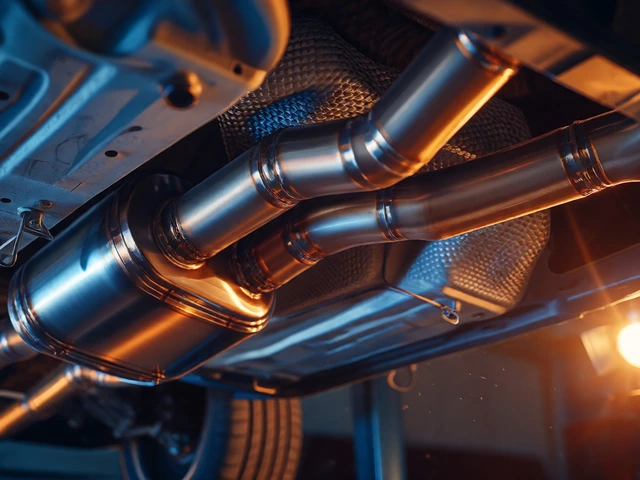
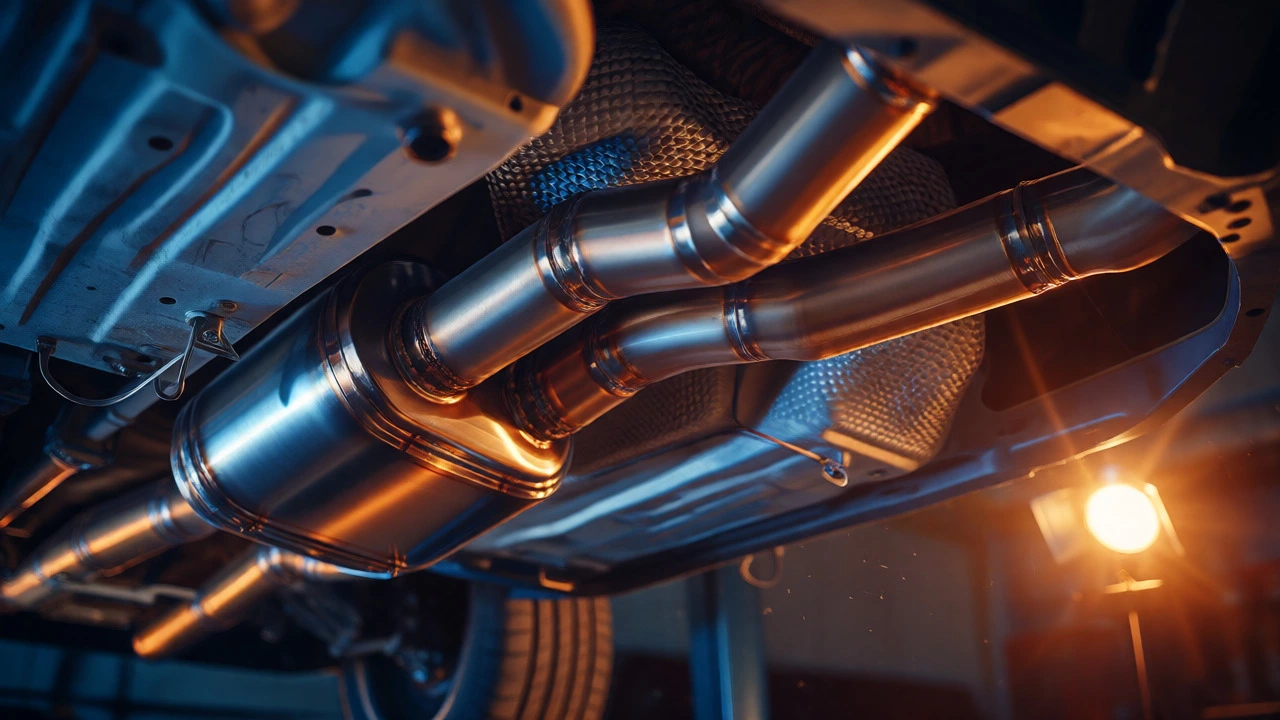
Your factory setup usually includes a catalytic converter, a resonator, and a muffler. Each plays a role:
- Catalytic Converter: Reduces harmful emissions. It creates significant backpressure, which naturally lowers pitch and volume.
- Resonator: Designed specifically to cancel out annoying frequencies (like drone) using Helmholtz resonance principles. It doesn’t reduce volume much; it smooths the tone.
- Muffler: Uses chambers and baffles to reflect sound waves against each other, cancelling out noise energy.
If you want a deeper note, you need to change how these waves behave. Lower frequencies (the "deep" sound) require longer wavelengths. Think of it like a guitar string: thicker strings vibrate slower and produce lower notes. In exhaust terms, larger diameter pipes and less restrictive flow paths allow lower-frequency waves to pass through while filtering out higher-pitched shrieks.
Option 1: The Resonator Swap (The Smart Move)
Before you go chopping metal off your car, look at the resonator. This is often the unsung hero of exhaust tuning. Many enthusiasts mistake the resonator for a restriction, but removing it entirely often leads to harshness, not depth.
A better approach is swapping a standard steel resonator for a stainless steel resonator with a different internal design. Stainless steel reflects sound differently than aluminized steel-it tends to preserve more of the low-end growl while reflecting some of the high-frequency buzz back into the cabin or out the tailpipe, depending on the design. Look for "straight-through" or "glass-pack" style resonators if you want minimal restriction, but be warned: glass packs can degrade over time as the fiberglass matting blows out, leading to a rattly mess.
Pro Tip: If you drive a turbocharged car, keep the resonator. Turbos generate a lot of high-frequency whistle. Removing the resonator amplifies this whine, making your car sound like a vacuum cleaner rather than a muscle car.
Option 2: Muffler Modification vs. Replacement
The muffler is where the real character lives. Factory mufflers are designed for comfort, meaning they aggressively kill sound energy. Aftermarket options give you control over the tone.
| Muffler Type | Sound Character | Performance Impact | Durability |
|---|---|---|---|
| Baffle Box | Deep, muscular, controlled | Minimal loss | High (if stainless) |
| Glass Pack | Loud, raw, unfiltered | Low backpressure | Low (mat degrades) |
| Straight Pipe | Very loud, droney | Best flow | N/A (no muffler) |
| Chambered | Complex tone, varied | Moderate | Moderate |
For most daily drivers, a baffle box muffler is the sweet spot. Brands like Flowmaster or Borla use intricate chamber designs that create interference patterns to cancel specific annoying frequencies while letting the bass notes escape. This results in that "burble" on deceleration that petrolheads love. Avoid cheap straight-pipe setups unless you enjoy having conversations shouted over a constant drone.

Option 3: Increasing Pipe Diameter
Here’s a common misconception: bigger is always better. Not necessarily. If you widen your exhaust pipes too much on a small-displacement engine (say, under 2.0L), you lose exhaust gas velocity. Low velocity means the gases aren’t pulled out efficiently, which hurts low-end torque. More importantly, acoustically, very large pipes can make the sound thinner and higher-pitched because the air column vibrates faster.
The rule of thumb for a deeper tone? Match the pipe diameter to your engine size:
- Small engines (1.6L - 2.0L): Stick to 2.0" or 2.25" piping. Going wider often raises the pitch.
- Mid-size engines (2.0L - 3.0L): 2.25" to 2.5" is ideal for a balanced, deep note.
- Large engines (3.0L+): 2.5" to 3.0" allows the massive air volume to flow freely, producing a natural, guttural roar.
Remember, the goal is to maintain enough backpressure to keep the exhaust gases moving fast. Fast-moving gases carry sound energy more effectively, contributing to a richer tone.
The Drone Problem: How to Fix It Before It Starts
Nothing kills the joy of a modified exhaust faster than cabin drone. That’s the low-frequency hum that vibrates your dashboard and makes long drives exhausting. Drone happens when the exhaust frequency matches the natural resonant frequency of the car’s interior cavity.
You can mitigate this without sacrificing sound quality:
- Add Mass Dampening: Apply Dynamat or similar sound-deadening material to the boot floor and rear wheel arches. This changes the resonant frequency of the cabin, pushing the drone out of the audible range.
- Adjust Tailpipe Position: Moving the exit point further back can sometimes alter how sound waves enter the cabin area.
- Use a Dual-Pass Muffler: Some aftermarket mufflers are designed with dual-pass channels that specifically target drone frequencies.
If you already have drone, try installing a secondary resonator near the front of the exhaust system. This acts as a filter before the sound even reaches the main muffler.

Legal and Practical Considerations
In the UK, and many other places, there are strict laws regarding exhaust noise and emissions. The MOT test checks both noise levels and emissions output.
Noise Limits: Most cars have a maximum permitted noise level (often around 74dB(A) for modern vehicles). If you remove the catalytic converter or go full straight-pipe, you might exceed this. A good rule of thumb: if you can hear your exhaust clearly inside the car with the windows up, you’re probably too loud for public roads.
Emissions: Removing the catalytic converter will trigger a Check Engine Light and cause an MOT failure due to increased hydrocarbon and nitrogen oxide emissions. Always keep the cat, or replace it with a high-flow sports cat if you need more power.
Warranty: Modifying your exhaust can void parts of your warranty, particularly if the modification causes issues with the ECU or oxygen sensors. Keep your original parts stored safely in case you need to revert for a service claim.
DIY or Professional Installation?
Can you install a new muffler yourself? Yes, if you have basic tools and space. You’ll need a jack, axle stands, penetrating oil (for rusty bolts), and possibly a reciprocating saw to cut old clamps. However, welding is often required for custom fits or if you’re changing pipe diameters.
Professional installation ensures:
- Correct hanger alignment (prevents vibration transfer to the chassis).
- Proper sealing (prevents leaks that ruin the tone).
- Compliance with local regulations.
If you’re unsure, pay for a professional fitment. A poorly installed exhaust can rattle against the heat shield or bodywork, creating an annoying metallic ping that no amount of muffler choice can fix.
Frequently Asked Questions
Does deleting the resonator make the exhaust louder?
Yes, but it primarily removes the smoothing effect on the sound. Without a resonator, the exhaust becomes harsher and more raspy, especially at mid-range RPMs. It may not significantly increase overall volume compared to removing the muffler, but it drastically changes the quality of the noise, often introducing unpleasant drone.
Will a bigger exhaust pipe always give a deeper sound?
No. On smaller engines, increasing pipe diameter beyond a certain point can actually raise the pitch and reduce low-end torque. The key is matching the pipe size to the engine's displacement and airflow characteristics. For most 2.0L engines, sticking to 2.25-inch piping provides the best balance of depth and performance.
Is a muffler delete bad for my car?
Mechanically, it rarely harms the engine itself, though it can affect sensor readings. Legally, it is often problematic. In the UK, a muffler delete frequently fails MOT tests due to excessive noise and altered emissions profiles. Additionally, it exposes the underbody to road debris and moisture, potentially accelerating corrosion on other components.
How do I stop exhaust drone in my car?
To stop drone, you need to disrupt the resonance between the exhaust and the cabin. Effective methods include adding sound deadening material (like Dynamat) to the boot floor, installing a second resonator closer to the engine, or switching to a baffle-box style muffler that cancels specific frequencies. Sometimes, simply adjusting the position of the exhaust hangers can shift the vibration nodes and reduce the hum.
Do exhaust tips change the sound?
Barely. Exhaust tips are largely cosmetic. While a rolled tip or a larger outlet might slightly disperse the sound wave, the actual tone and volume are determined by the muffler and pipe length behind it. Don't spend big money on fancy tips expecting a transformation; focus on the internal components first.