Car Battery Health Diagnostic Tool
Enter your multimeter readings below to get an instant diagnosis of your car battery's condition.
Resting Voltage
Engine OFF. Car sat for 1+ hour.
Load Test Voltage
During engine crank (optional).
Battery Age
Years since manufacture.
There is nothing quite like the sinking feeling of turning your key and hearing nothing but a sad click. It’s usually not the engine that failed; it’s the car battery, which is essentially a rechargeable energy storage device that powers your vehicle's electrical systems when the engine is off. Most drivers ignore their battery until it quits, often in the coldest month or right before a long trip. But you don’t have to be a mechanic to know if yours is on its last legs. With a few simple checks, you can spot trouble weeks in advance and save yourself a tow truck bill.
The Quick Visual Inspection
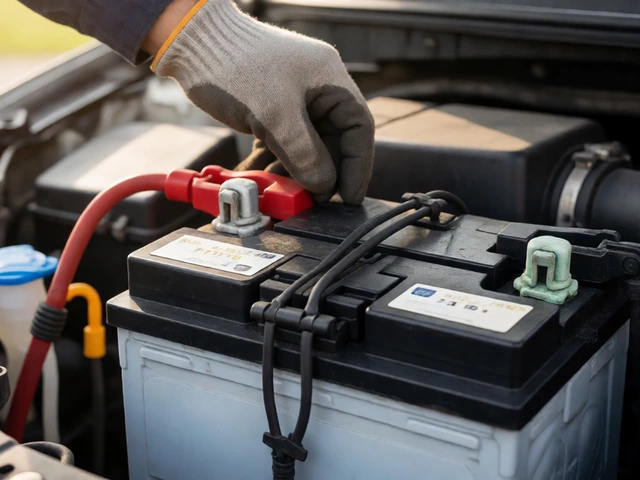
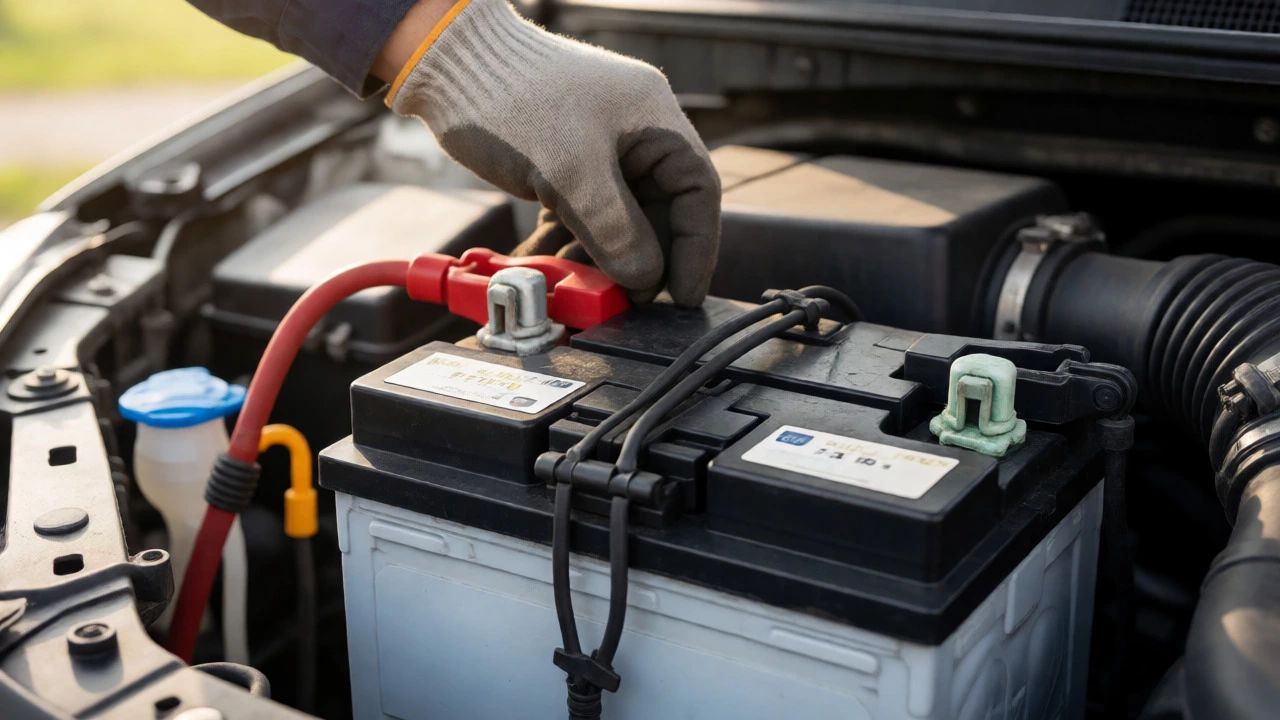
Before you grab any tools, look at the battery itself. You are checking for physical signs of distress. Pop the hood and locate the rectangular box with two terminals (positive red, negative black). Is the case bulging? A swollen battery case means internal plates have warped due to excessive heat or overcharging. This is a critical failure point; a swollen battery will not hold a charge reliably and needs replacement immediately.
Next, check the terminals. Do you see a white, blue, or greenish crusty powder? That is corrosion. While it looks nasty, it’s mostly lead sulfate or copper sulfate caused by acid vapors reacting with the metal. Corrosion creates resistance, meaning your alternator has to work harder to push current through, and your starter gets less juice. You can clean this off with a mixture of baking soda and water, but if the corrosion keeps coming back quickly, your battery might be leaking acid from a cracked seal.
Using a Multimeter for Voltage Checks
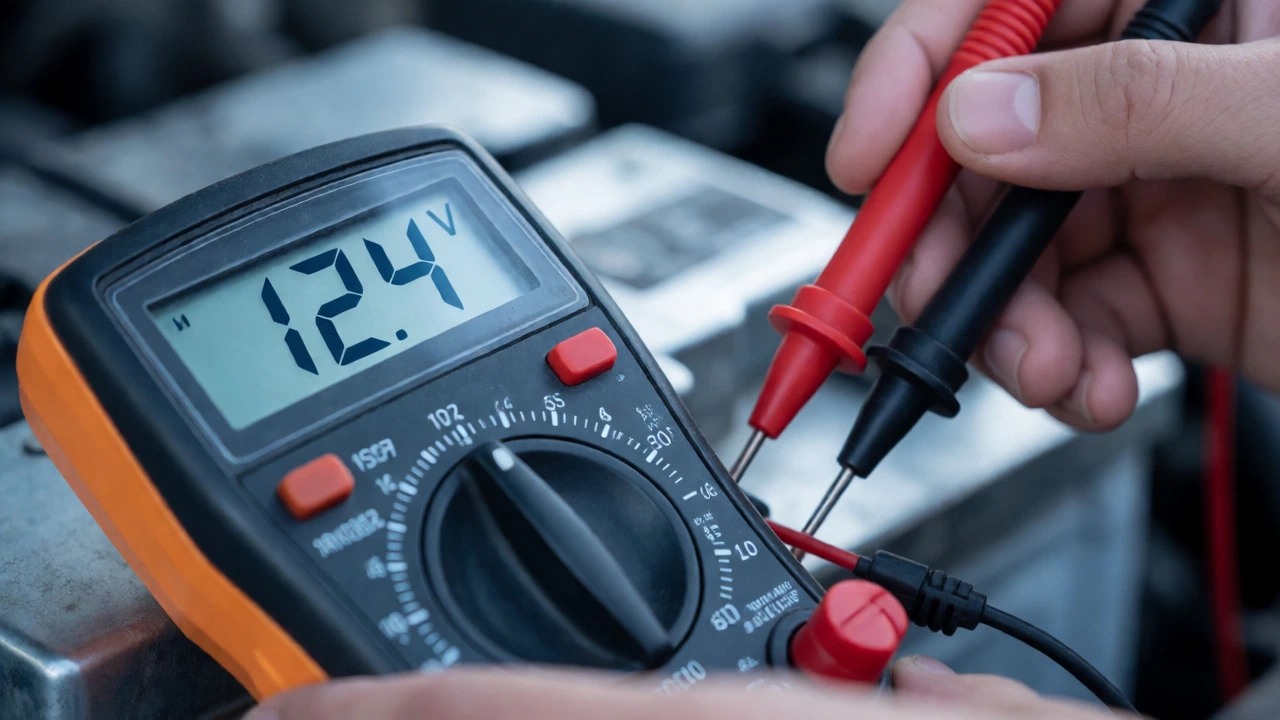
This is the most accurate way to gauge health without special equipment. A standard digital multimeter is a handheld tool used to measure voltage, current, and resistance. Set it to DC Volts (usually marked with a V with straight lines). Here is what you need to do:
- Ensure the car is off and has been sitting for at least an hour. Surface charge from recent driving can give false readings.
- Touch the red probe to the positive terminal and the black probe to the negative terminal.
- Read the number on the screen.
Here is how to interpret those numbers:
| Voltage Reading | Battery Status | Action Required |
|---|---|---|
| 12.6V - 12.7V | Healthy (100% Charged) | No action needed. |
| 12.4V - 12.5V | Good (75% Charged) | Monitor closely; consider charging. |
| 12.2V - 12.3V | Weak (50% Charged) | Recharge immediately; likely aging. |
| Below 12.0V | Dead/Discharged | Test under load or replace. |
If your battery reads below 12.4 volts after resting overnight, it’s struggling to hold a charge. If it drops rapidly while you’re watching, there is likely an internal short circuit.
The Load Test: The Real Stress Test
Voltage tells you the potential energy, but it doesn’t tell you if the battery can deliver power under stress. A battery can show 12.6 volts but fail instantly when you turn the key because its internal resistance is too high. To test this, you need to simulate starting the engine.
You can use a dedicated battery load tester, which draws heavy current to mimic the starter motor. If you don’t have one, you can perform a simplified version with your multimeter and a helper:
- Have someone sit in the driver’s seat with the headlights on (low beam) to draw some baseline power.
- Connect your multimeter to the battery terminals as described above.
- Ask your helper to crank the engine for about 5 seconds while you watch the meter.
- Note the lowest voltage reading during the cranking process.
A healthy battery should maintain at least 9.6 volts during this 5-second cranking period. If it drops below 9.6 volts, the battery is weak. If it drops below 9.0 volts, it is failing. Note that cold weather affects these numbers slightly, but the 9.6V threshold is a solid rule of thumb for most modern vehicles.
Check the Manufacture Date
Batteries don’t last forever, even if they sit unused. Most automotive batteries have a lifespan of three to five years. Manufacturers stamp a date code on the top or side of the casing. It usually looks like a small sticker or an embossed code with letters and numbers.
For example, a code like "A8" might mean January 2018 (A = January, 8 = year). Some brands use different formats, so check the specific brand’s decoding chart online. If your battery is more than four years old and you live in a climate with extreme temperatures-like the damp winters here in Bristol-you should be suspicious. Heat kills batteries faster than cold; cold just reveals that they are already dead.
Watch for Electrical Symptoms
Your car talks to you through its lights and electronics. Dimming headlights when idling is a classic sign. When the engine is running, the alternator generates electricity to run the car and recharge the battery. If the battery is sulfated (crystallized internally), it resists accepting charge. The alternator works overtime, causing voltage fluctuations that make lights flicker or dim.
Other subtle signs include:
- Slow engine crank: The starter sounds labored, like it’s trying to lift something heavy.
- Dashboard warning lights: The battery icon stays on briefly after starting or flickers.
- Electrical glitches: Power windows move slower than usual, or the radio resets frequently.
If you notice these symptoms alongside a low voltage reading, the issue is almost certainly the battery, not the alternator or starter motor.

When to Replace vs. Recharge
Not every weak battery needs replacing. If you left your interior light on overnight and drained a healthy battery, a simple recharge with a smart charger will restore it to full health. Smart chargers automatically detect voltage levels and apply the correct current, preventing overcharging.
However, if the battery fails a load test despite being fully charged, or if it is older than five years, replacement is the safer bet. Trying to revive a deeply sulfated old battery is often a waste of time. You’ll spend hours charging it only to find it dies again the next morning. In that scenario, buying a new battery saves money on fuel wasted by a struggling alternator and prevents getting stranded.
Pro Tips for Extending Battery Life
Once you’ve checked your battery, take steps to keep it healthy. Avoid short trips repeatedly. Short drives don’t give the alternator enough time to fully recharge the battery after the initial startup surge. Try to combine errands into one longer drive.
Keep the terminals clean and tight. Loose connections cause arcing, which damages both the battery posts and the cable ends. Use dielectric grease on the terminals after cleaning to prevent future corrosion.
Finally, minimize parasitic drain. If you have aftermarket accessories like dash cams or alarm systems, ensure they are wired correctly. A faulty dash cam can drain a battery flat in two days if it doesn’t shut off properly when the car is parked.
Can I test my car battery while the engine is running?
You can, but it tests the alternator, not the battery's stored capacity. A running engine should produce between 13.7 and 14.7 volts. If it’s lower, your alternator isn't charging the battery. If it’s higher, the voltage regulator may be faulty, which can damage the battery. For a true battery health check, the engine must be off.
How long does a car battery typically last?
Most conventional lead-acid batteries last between three and five years. Factors like extreme heat, frequent short trips, and leaving lights on can shorten this lifespan. AGM (Absorbent Glass Mat) batteries, often found in cars with start-stop technology, may last slightly longer but are more expensive to replace.
What does CCA mean on a battery label?
CCA stands for Cold Cranking Amps. It measures how many amps a battery can deliver at 0°F (-18°C) for 30 seconds while maintaining at least 7.2 volts. Higher CCA ratings are better for cold climates. Always replace your battery with one that meets or exceeds the original manufacturer's CCA specification.
Is it safe to touch battery terminals?
Generally, yes, because the voltage is low (12V) and won't shock you through dry skin. However, battery acid is corrosive, and hydrogen gas emitted during charging is flammable. Wear safety glasses and gloves when handling batteries, especially if there is visible corrosion or leakage. Never smoke near a battery.
Why does my battery die overnight?
If a healthy battery dies overnight, you likely have a parasitic drain. This is an electrical component staying on when it shouldn't, such as a glove box light, trunk light, or aftermarket stereo. You can test for this by disconnecting the negative terminal and placing an ammeter in series; normal drain should be under 50 milliamps.