Suspension Health Diagnostic Tool
Check the boxes below that match your current driving experience or vehicle inspection results. This tool helps prioritize which components might need attention.
Next Steps
- High Urgency: Schedule a mechanic visit immediately. Do not ignore knocking or excessive diving.
- Medium Urgency: Plan for repairs within the next few weeks. Check tire pressure and alignment.
- Low Urgency: Monitor during your next service. May be cosmetic or minor wear.
There is a specific feeling you get when your car suspension starts to fail. It’s not just a noise; it’s a shift in how the road talks to you. Suddenly, that familiar hum of driving turns into a clatter over speed bumps, or worse, a floaty, uncontrolled drift on the motorway. If you’re wondering whether those rattles are just loose trim or a genuine safety hazard, you need to know exactly what to look for. Ignoring these signs doesn’t just cost you money in repairs later-it puts your tires and your brakes at risk right now.
| Symptom | Likely Cause | Urgency Level |
|---|---|---|
| Dipping front end when braking | Worn front shock absorbers | High |
| Bouncing after bumps | Failing dampers/shocks | Medium-High |
| Uneven tire wear | Misalignment or worn bushings | Medium |
| Knocking sounds over bumps | Loose ball joints or control arms | High |
| Steering wanders | Worn tie rods or bushings | Medium |
The Bounce Test: Diagnosing Shock Absorbers
You don’t need a lift to check the health of your shock absorbers. The most reliable DIY method is the bounce test. Park your car on a flat surface and push down firmly on one corner of the hood or trunk until it bottoms out, then release it quickly. Watch how the car settles. A healthy suspension should rebound once and settle immediately. If your car bounces up and down two, three, or more times like a pogo stick, your dampers are shot.
This isn’t just about comfort. When shocks fail, they stop controlling the spring’s energy. That means your tires lose contact with the road during rapid compression and extension. On wet roads, this significantly increases stopping distances. In fact, tests by automotive safety organizations have shown that worn shocks can add several meters to braking distance at highway speeds. If you notice your car feels "floaty" after hitting a dip, or if you feel every tiny crack in the asphalt, your dampers aren’t doing their job.
Listening for Knocking and Clunking Noises
Noise is often the first warning sign, but it can be tricky to pinpoint. A sharp knocking sound when going over bumps usually points to metal-on-metal contact where there should be rubber. This could be a worn ball joint, a broken sway bar link, or a collapsed strut mount.
Try this: drive slowly over a rough patch or a speed bump. Listen carefully. Does the noise come from the front or rear? Does it change when you turn the steering wheel? If the knocking gets louder when you turn sharply, it’s likely a CV joint or a worn outer tie rod end. If it’s a deep thud straight up and down, think strut mounts or lower control arm bushings. Don’t ignore these sounds. A failed ball joint can literally separate the wheel from the car while you’re driving, which is a catastrophic failure mode, not just an annoyance.
Inspecting Tires for Uneven Wear Patterns
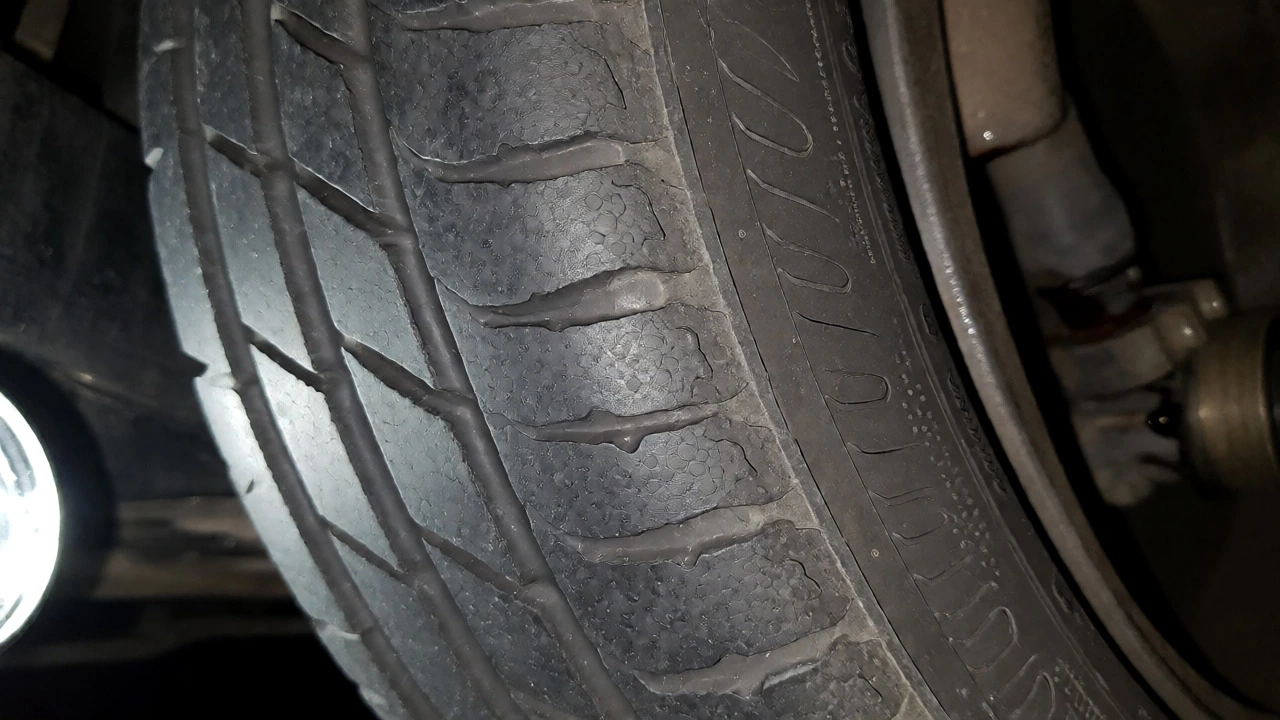
Your tires are the black box recorder of your suspension system. Before you even open the hood, walk around your car and look at the tread. You are looking for uneven tire wear.
- Cupping (Scalloping): This looks like dips or cups worn into the tread along the circumference. It’s a classic sign of worn shock absorbers. The tire is bouncing against the road surface instead of staying planted.
- Inner Edge Wear: If the inside edge of the tire is bald while the outside looks fine, you likely have negative camber caused by sagging springs or worn control arm bushings.
- Feathering: One side of the tread rib is smooth, and the other is sharp. This usually indicates alignment issues stemming from worn suspension components.
If you see cupping, replacing the tires won’t fix the problem. They will just wear out again in a few thousand miles. You must address the underlying suspension issue first.
Visual Inspection: Leaks and Rust
Get down low. Use a flashlight and look closely at each shock absorber and strut. New ones are dry and clean. Old, failing units often show signs of hydraulic fluid leakage. Look for dark, oily residue running down the body of the shock. While a slight film might be normal condensation, heavy dripping means the internal seal has failed, and the damper is effectively dead.
Also, check the coil springs. Are they rusted through? Did one break? A broken coil spring often makes a loud "bang" when it snaps, followed by an immediate drop in ride height on that corner. If one side of your car sits noticeably lower than the other, inspect the springs immediately. Rust buildup can also weaken the metal, leading to sudden fractures under stress.

Testing Handling and Steering Response
Take your car for a short drive on a safe, empty road. Pay attention to how it handles corners. Do you feel excessive body roll? When you lean into a curve, does the car feel like it’s about to tip over? Worn sway bars and bushings allow the chassis to tilt too much, reducing stability.
Next, try a lane change. Does the car respond instantly to your steering input, or does it lag? If you have to fight the steering wheel to keep the car straight, or if it wanders across lanes without you touching the wheel, you likely have play in your steering linkage. Grab the top of your front tires (with the car parked) and rock them back and forth. Any significant movement suggests worn tie rods or ball joints. Finally, brake hard in a safe area. If the nose dives excessively, your front shocks are no longer resisting the weight transfer.
When to Seek Professional Help
Some checks are easy to do yourself, but others require specialized tools. If you suspect a problem with the subframe, control arm geometry, or complex multi-link setups found in modern SUVs and luxury cars, take it to a mechanic. They use a four-wheel alignment machine to measure camber, caster, and toe angles precisely. These measurements reveal hidden damage that visual inspections miss.
Remember, suspension parts are consumables. They wear out. There is no set mileage for replacement because it depends entirely on your driving style and road conditions. However, if you are experiencing any of the symptoms above-bouncing, knocking, uneven wear, or poor handling-don’t wait. Driving on bad suspension accelerates wear on your tires, brakes, and even your transmission mounts. Fixing it early is always cheaper than fixing the collateral damage.
Can I drive with bad suspension?
You can drive for a short time, but it is risky. Bad suspension reduces tire grip, increases braking distance, and causes unpredictable handling. It also damages other parts like tires and brakes rapidly. If you hear loud knocking or feel the car pulling violently, stop driving and get a tow.
How much does it cost to replace suspension parts?
Costs vary widely based on the vehicle make and model. Replacing a pair of shock absorbers might cost between £150 and £400 including labor. Full strut assemblies can range from £300 to £800 per corner. Labor is often the biggest factor because suspension work requires removing wheels and sometimes disassembling complex brackets.
Do I need an alignment after changing suspension parts?
Yes, almost always. Changing struts, control arms, or tie rods alters the geometry of your wheels. An alignment ensures your tires meet the road at the correct angle, preventing premature wear and ensuring straight-line tracking.
What is the difference between shocks and struts?
A shock absorber is a standalone component that only damps spring oscillation. A strut is a structural part of the suspension assembly that holds the wheel in place and includes a shock absorber and a coil spring. Struts are more complex and expensive to replace because they support the vehicle's weight.
Why does my car knock only when turning?
Knocking specifically during turns often points to worn CV joints or outer tie rod ends. When you turn, the angle changes, causing loose components to click or clunk. If the noise happens only when going over bumps while turning, it could also be a worn stabilizer bar link.