Suspension Part Lifespan & Wear Calculator
Calculate Component Health
| Component | Expected Life Range | Status |
|---|
There is a specific sound that tells you your car's suspension system is failing. It’s that rhythmic clunk or thud when you hit a speed bump. If you ignore it, the damage spreads from one cheap part to expensive ones. Knowing exactly which components fail first can save you hundreds of pounds in unnecessary repairs.
The suspension isn't just about comfort; it keeps your tires on the road. When parts wear out, your steering gets loose, braking distance increases, and your alignment goes off. This guide breaks down the specific parts that go bad, how long they last, and the exact signs to look for before they cause major damage.
Key Takeaways
- Shock absorbers and struts are the most common failures, typically lasting 50,000 to 100,000 miles depending on driving conditions.
- Ball joints and tie rod ends often fail due to lack of lubrication, causing uneven tire wear and wandering steering.
- Ignoring a small leak in a strut can lead to complete failure, leaving you with no damping and potential loss of control.
- Regular inspection every 12 months or 12,000 miles prevents minor issues from becoming major overhauls.
The Core Damping Components: Shocks and Struts
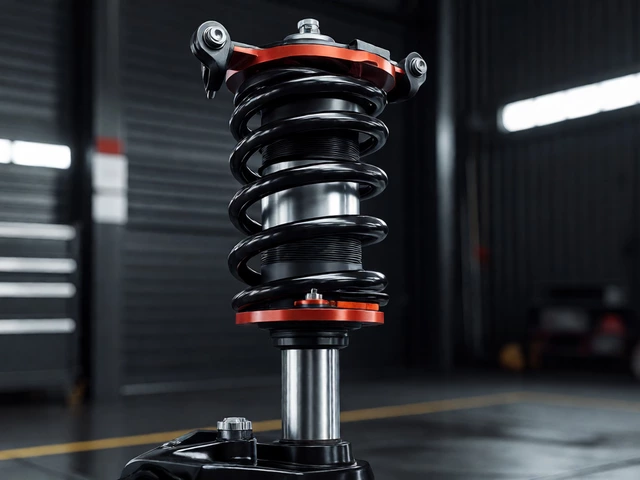
Let’s start with the heart of the system: the shock absorbers and strut assemblies. These are hydraulic devices that stop the springs from bouncing uncontrollably after hitting a bump. Without them, your car would feel like a boat on rough water.
In modern vehicles, the front suspension usually uses struts. A strut is essentially a shock absorber combined with a structural mount point for the wheel. Because it holds up the engine weight, it takes more abuse than a simple shock. You’ll know a strut is going bad if the car continues to bounce for several seconds after hitting a pothole. That’s called "diving" or excessive rebound.
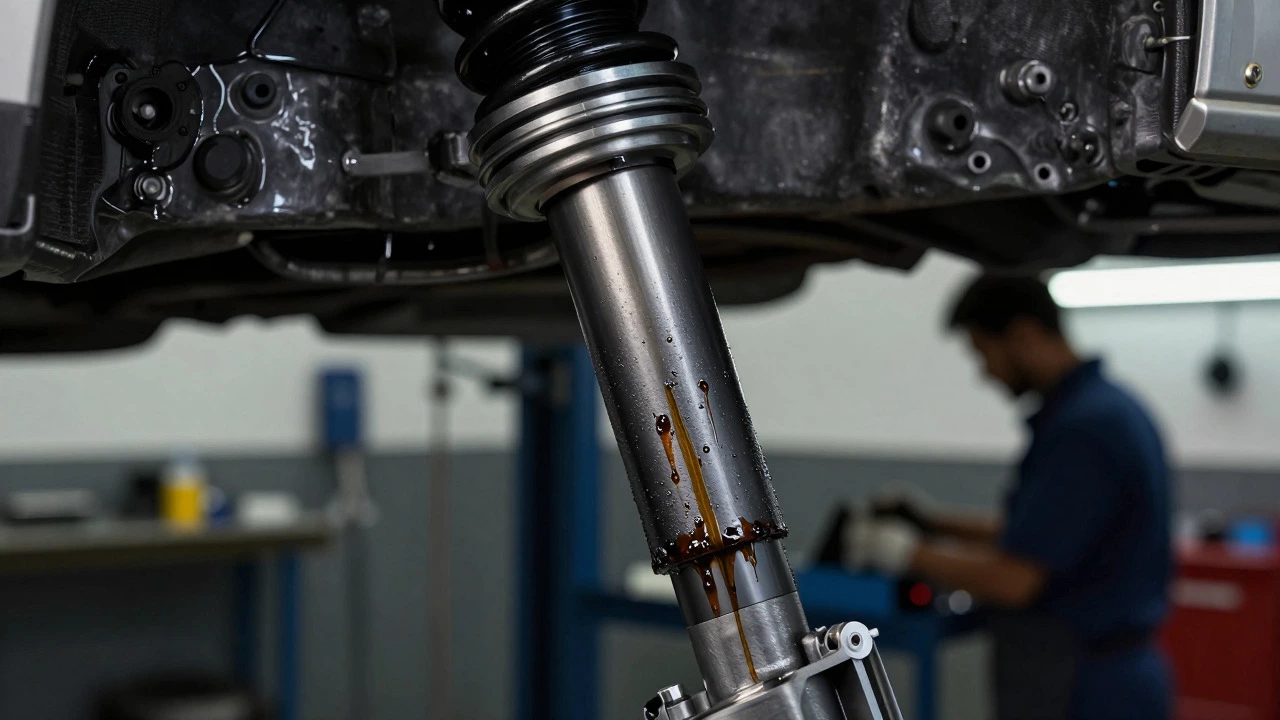
Check the exterior of the strut for oil leaks. A little moisture is normal, but if you see wet oil streaks running down the piston shaft, the internal seals have failed. Once the fluid escapes, the gas pressure drops, and the damping effect disappears. Replacing these early is cheaper because you don’t risk damaging the upper mounts or the coil spring seats.
Steering Linkages: Tie Rods and Ball Joints
Next up are the connection points that allow the wheels to steer and move up and down. The tie rod ends connect the steering rack to the knuckles. They are filled with grease to prevent rust and wear. Over time, the rubber boots crack, letting dirt in and grease out. When this happens, the metal-on-metal contact grinds away the joint.
A failing tie rod end feels like the steering wheel has too much play. If you hold the wheel at 9 o'clock and 3 o'clock positions and wiggle it, any movement means the linkage is loose. This directly affects your tire tread, causing feathered edges on the inner or outer sides of the tires.
Similarly, ball joints connect the control arm to the steering knuckle. They handle both vertical and lateral forces. Unlike tie rods, ball joints don't have visible external wear indicators until they are completely gone. However, a rattle noise when driving over rough roads is a classic sign. If you lift the car and rock the wheel by hand, and you hear a click or feel slack, the ball joint is ready to let go. Driving with a broken ball joint can cause the wheel to detach entirely, so don't delay this repair.
Structural Support: Control Arms and Bushings
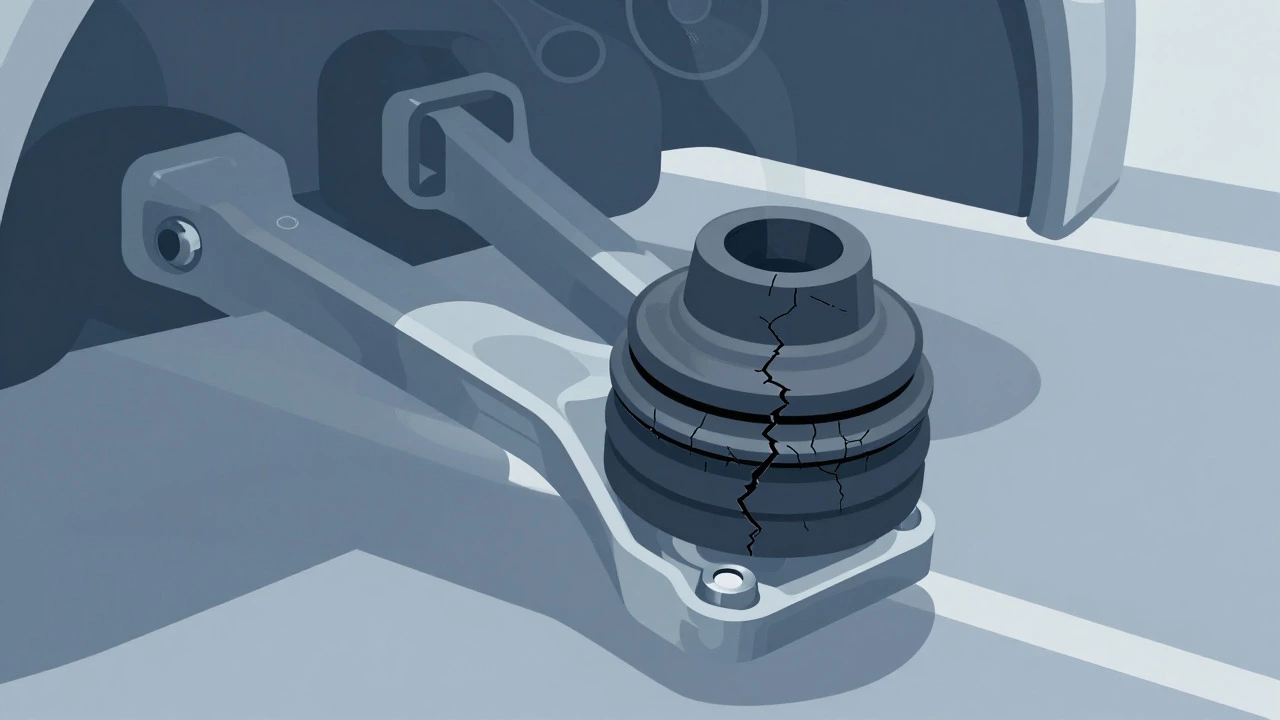
The control arms (also known as wishbones) form the triangle that holds the wheel assembly to the chassis. They rarely break unless you hit something massive, but their rubber bushings almost always fail. These bushings isolate the vibration between the metal arm and the car body.
When rubber ages, it hardens and cracks. This allows the control arm to shift slightly under load. You might notice a creaking sound when turning the wheel slowly at low speeds. More importantly, worn bushings throw off your wheel alignment repeatedly. Even if you get a new alignment, the car will drift out of spec within weeks because the geometry is shifting as you drive.
Replacing just the bushings is possible, but often the cost of labor equals the cost of a new arm. In many cases, swapping the entire control arm is the smarter economic choice. It ensures the mounting points are clean and undamaged, saving time during installation.
Tire Wear Patterns: Your Diagnostic Tool
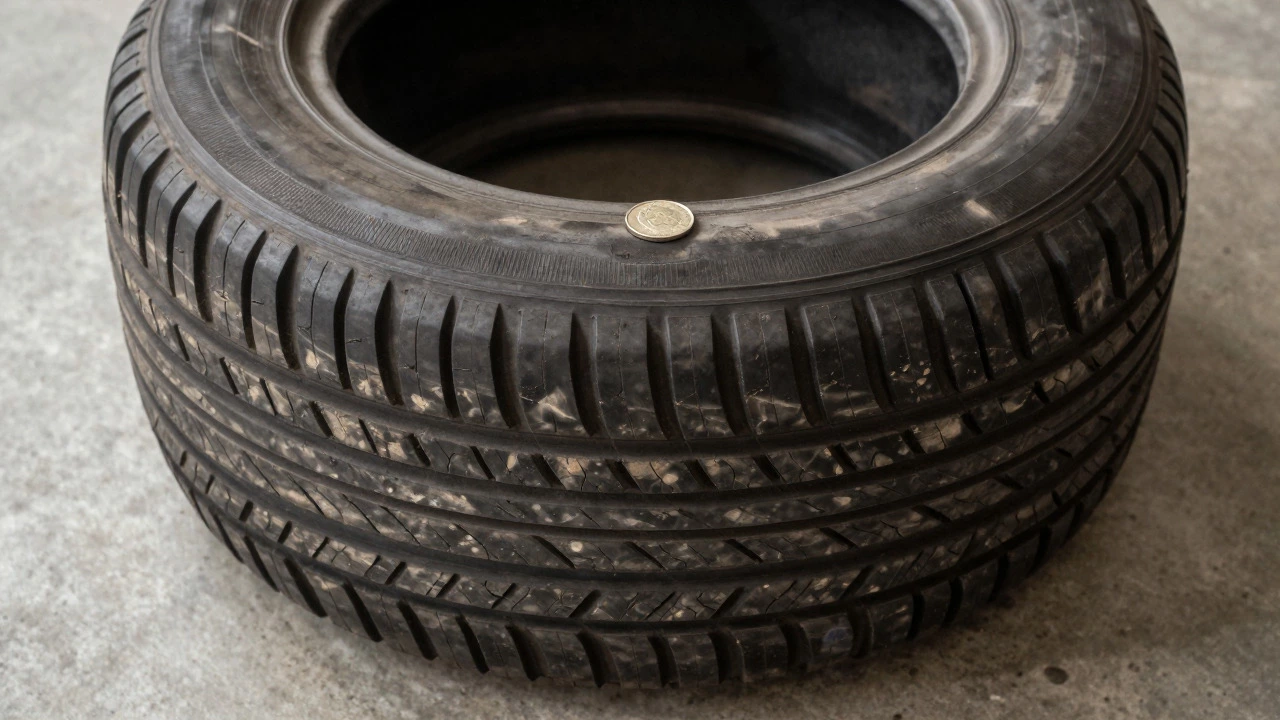
Your tires tell you what is wrong before you feel it in the steering. Look at your tread depth across the width of the tire. Use a tread gauge or a simple coin test.
Wear Pattern Likely Cause Action Required Even wear all around Normal aging Rotate tires regularly Inner edge only Negative camber or worn lower control arm bushing Check alignment and control arms Outer edge only Positive camber or worn upper strut mount Inspect strut mounts and alignment Cupping (scalloped dips) Failed shock absorbers or struts Replace dampers immediately Feathered edges (sharp ridge) Loose tie rod ends or ball joints Inspect steering linkages
Maintenance Schedule and Cost Prevention
How often should you check these parts? There is no single rule, but here is a practical schedule:
- Every 6 months: Visual check for oil leaks on struts and cracks in rubber boots on tie rods.
- Every 12 months or 12,000 miles: Have a mechanic inspect ball joints and control arm bushings while rotating tires.
- Every 40,000-60,000 miles: Consider replacing struts if you drive on rough roads or carry heavy loads frequently.
Frequently Asked Questions
Can I drive with a leaking shock absorber?
Yes, but only for short distances. A leaking shock loses its damping ability, making the ride bouncy and reducing tire grip. Long-term driving increases the risk of damaging other suspension components and wearing out your tires prematurely.
Do ball joints need regular greasing?
Most modern cars use sealed, lifetime-lubricated ball joints. However, some older models or specific aftermarket parts have grease nipples. Check your owner's manual. If there is no nipple, do not force grease in, as it can damage the seal.
Why does my car make a clunking noise over bumps?
Clunking is usually caused by loose fasteners or worn joints. Common culprits include sway bar links, control arm bushings, or ball joints. The noise occurs when metal parts collide due to excessive play. A professional inspection is needed to pinpoint the exact source.
Should I replace suspension parts in pairs?
For shocks and struts, yes. Replacing them in pairs ensures even handling and stability. For ball joints and tie rods, you can replace just the failed side, but it is wise to inspect the opposite side closely, as they often wear at similar rates.
How do I know if my control arm bushings are bad?
Look for visible cracks or tears in the rubber. Listen for creaking sounds when turning the wheel slowly. If your car pulls to one side despite a recent alignment, the bushings are likely allowing the arm to shift under load.