Engine Oil Recommendation & Cost Calculator
You walk into an auto shop or browse online for a quick top-up, and you see two distinct labels. One says engine oil, the other screams "100% Synthetic." You might pause, wondering if they are two completely different fluids or just marketing terms for the same stuff. It’s a common point of confusion that can lead to expensive mistakes if you pick the wrong bottle.
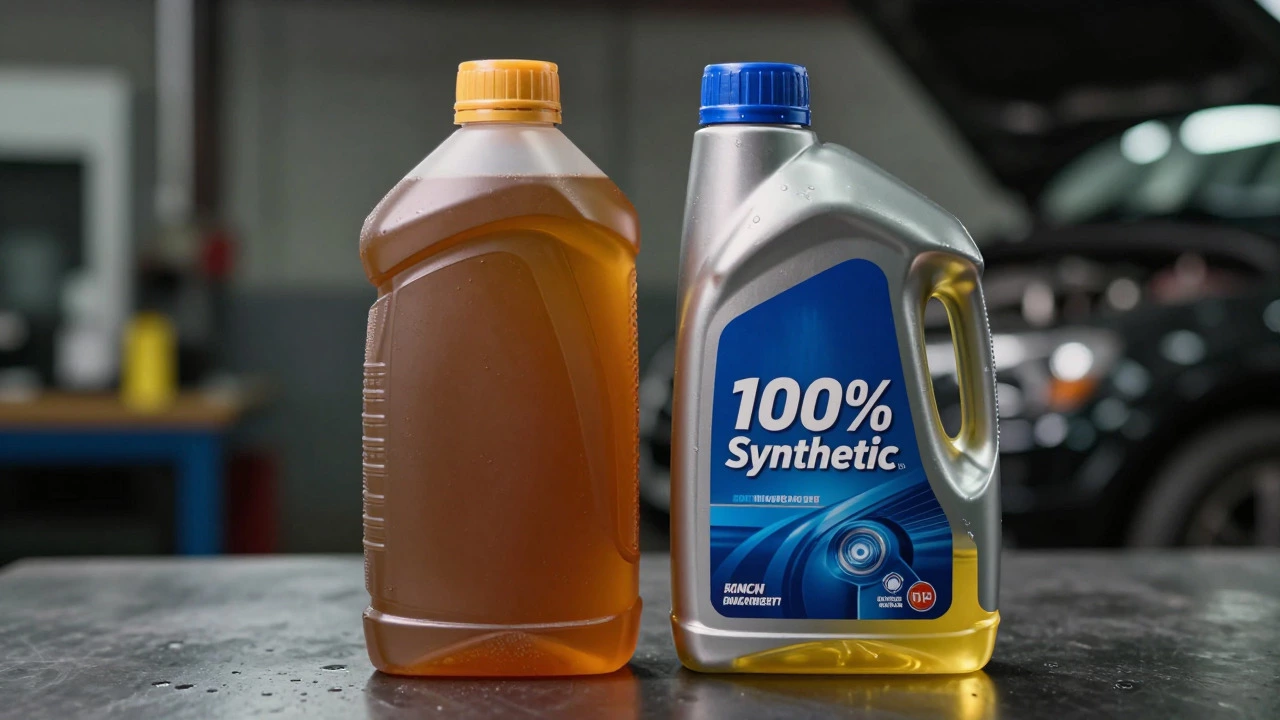
The short answer is no, they are not the same thing in how they are made or how they perform, but yes, they both fall under the broad umbrella of lubricants designed for your car's engine. Think of it like coffee. "Coffee" is the general category. "Ground beans from Ethiopia" is a specific type. "Instant powder" is another. They all brew into a drink, but the taste, quality, and longevity differ significantly.
Is synthetic oil better than regular engine oil?
Yes, generally speaking. Synthetic oil offers superior protection against heat, cold, and sludge buildup compared to conventional mineral oil. It lasts longer and keeps engines cleaner, though it costs more upfront.
The Umbrella Term: What Is Engine Oil?
When people say "engine oil," they are usually referring to the generic category of fluid used to lubricate internal combustion engines. This category includes three main types: conventional (mineral) oil, synthetic blend, and full synthetic oil. If you look at the back of any bottle, you will see it meets certain standards set by organizations like the American Petroleum Institute (API). These standards ensure the fluid does its job: reducing friction between moving metal parts, cooling the engine, and cleaning away contaminants.
Conventional oil is derived directly from crude oil through refining. It contains natural impurities and inconsistent molecular structures because crude oil is a complex mixture of hydrocarbons. It works fine for older cars or simple engines that don’t face extreme stress. However, because the molecules vary in size and shape, they break down faster under high heat and shear forces.
Imagine trying to pack a suitcase with random objects-shoes, books, and apples. There are gaps, things shift around, and it’s inefficient. That’s what conventional oil looks like on a microscopic level. It gets the job done, but it’s not optimized for performance.
The Refined Choice: What Is Synthetic Oil?
Synthetic oil is chemically engineered. Instead of relying on the natural composition of crude oil, manufacturers strip away impurities and create uniform molecules from scratch. This process results in a fluid where every molecule is roughly the same size and shape. Going back to the suitcase analogy, synthetic oil is like packing identical, neatly folded t-shirts. Everything fits perfectly, there’s no wasted space, and nothing shifts around unexpectedly.
This uniformity allows synthetic oil to flow better in extreme temperatures. In freezing British winters, synthetic oil remains fluid and reaches critical engine parts almost instantly upon startup. In scorching summers or during heavy towing, it resists breaking down and thinning out too much. Most modern vehicles, especially those with turbochargers or direct injection systems, run hotter and harder than engines from twenty years ago. They demand this higher level of stability.
Manufacturers like Mobil 1, Castrol, and Shell Helix dominate this space, each using slightly different base stocks and additive packages. For example, Shell often uses Group III+ base oils derived from gas-to-liquid technology, while Mobil 1 has historically leaned on PAO (Polyalphaolefin) synthetics. Both achieve similar results, but the chemical pathways differ.
Synthetic Blend: The Middle Ground
If you’re confused about the binary choice between conventional and full synthetic, there’s a third option: synthetic blend. As the name suggests, this is a mix of conventional mineral oil and synthetic base stocks, typically ranging from 20% to 50% synthetic content. It aims to offer some of the benefits of full synthetic-like better oxidation resistance and improved low-temperature flow-at a lower price point than 100% synthetic.
Synthetic blends are popular in fleet vehicles or mixed-use cars that occasionally tow light loads or drive in varying climates. They provide a step up in protection over pure mineral oil without the premium cost of full synthetic. However, they don’t last as long as full synthetic and may require more frequent changes, usually around 5,000 to 7,000 miles rather than the 10,000+ miles possible with full synthetic.
| Feature | Conventional (Mineral) | Synthetic Blend | Full Synthetic |
|---|---|---|---|
| Molecular Structure | Inconsistent, natural | Mixed | Uniform, engineered |
| Change Interval | 3,000 - 5,000 miles | 5,000 - 7,000 miles | 7,500 - 15,000 miles |
| High-Temp Performance | Good | Better | Excellent |
| Low-Temp Flow | Poorer | Improved | Best |
| Cost per Quart | £2 - £4 | £4 - £6 | £6 - £10+ |

Why the Confusion Exists
The reason many people ask if synthetic oil is the same as engine oil is because retailers and mechanics use the terms interchangeably. When a mechanic says, "Your engine needs oil," they mean the general substance. When you buy a bottle labeled "Engine Oil," it could be any of the three types. The packaging often highlights "Synthetic" in large letters because it’s a selling point, implying superiority. This creates a perception that "synthetic" is a separate product category rather than a subtype of engine oil.
Additionally, older drivers who grew up changing their own oil every 3,000 miles with conventional mineral oil might view synthetic as a new, unnecessary invention. Meanwhile, newer car owners are told by their manuals to use only full synthetic. This generational and technological gap fuels the debate.
Can You Mix Them?
In an emergency, yes. If you’re stranded and need to top up, mixing conventional and synthetic oil won’t destroy your engine immediately. Modern additives are compatible, and the oil will still lubricate. However, you dilute the benefits of the synthetic oil. It’s like adding tap water to a fine wine-it’s still drinkable, but you’ve lost the quality. Ideally, stick to one type throughout the drain interval.
If you switch from conventional to synthetic, it’s actually beneficial. Many people worry about leaks appearing when switching to synthetic. This is a myth. Synthetic oil doesn’t cause leaks; it reveals existing ones. Because it flows better and cleans more effectively, it can wash away old sludge that was temporarily plugging minor seal imperfections. Once clean, the leak becomes visible. This isn’t damage caused by the oil; it’s maintenance deferred for too long.

What Does Your Car Need?
Check your owner’s manual. It’s the final authority. Most cars manufactured after 2010 recommend full synthetic oil. Turbocharged engines, which run at significantly higher temperatures, benefit immensely from the thermal stability of synthetic oil. Electric vehicles (EVs) also use specialized synthetic fluids for their gearboxes and battery cooling systems, though these are distinct from traditional engine oil.
If you have an older, high-mileage vehicle, look for "High Mileage" formulations. These are often synthetic blends or full synthetics with added seal conditioners to prevent leaks and reduce burn-off. Using the wrong viscosity (thickness) is far more damaging than choosing the wrong type. Always follow the SAE grade specified by the manufacturer, such as 5W-30 or 0W-20.
Cost vs. Value
While synthetic oil costs more per quart, the extended drain intervals often make it cheaper in the long run. If you change conventional oil every 3,000 miles and synthetic every 10,000 miles, you’re buying less oil and fewer filters over the life of the car. Plus, reduced wear means fewer repairs down the line. In Bristol, where winter roads can be slushy and summer traffic congested, the consistent protection of synthetic oil helps maintain engine health across varied driving conditions.
Ultimately, "engine oil" is the family name. "Synthetic" is the high-performance member of that family. Choosing the right one depends on your car’s requirements, your driving habits, and your budget. But knowing they aren’t the same thing empowers you to make a smarter choice for your vehicle’s longevity.
Does synthetic oil last longer than conventional oil?
Yes. Synthetic oil is more resistant to breakdown and contamination, allowing for drain intervals of 7,500 to 15,000 miles, whereas conventional oil typically needs changing every 3,000 to 5,000 miles.
Will synthetic oil hurt my old engine?
No. Synthetic oil is safe for older engines. It provides better protection and cleaning. Any leaks that appear are usually due to pre-existing wear revealed by the oil's superior cleaning ability, not caused by the oil itself.
What is the difference between synthetic blend and full synthetic?
Full synthetic is 100% chemically engineered with uniform molecules. Synthetic blend mixes conventional mineral oil with synthetic base stocks, offering moderate improvements in performance and protection at a lower cost.
Do I need synthetic oil for a turbocharged engine?
Most manufacturers strongly recommend or require full synthetic oil for turbocharged engines due to the extreme heat and stress turbos place on the lubricant.
Can I switch from conventional to synthetic oil?
Yes, you can switch at any oil change. It is beneficial for engine health. Just ensure you use the correct viscosity grade specified in your owner's manual.