Car Cooling System: How It Works and Why It Matters
When your engine runs, it gets incredibly hot—hot enough to melt metal if left unchecked. That’s where the car cooling system, a network of parts designed to regulate engine temperature by circulating coolant and dissipating heat. Also known as the engine cooling system, it’s not just a radiator and a hose—it’s a precision balance of fluid flow, airflow, and heat exchange that keeps your engine alive. Even electric vehicles need one. Yes, even though they don’t burn fuel, their batteries and motors generate heat that must be managed. Ignore it, and you’re looking at a warped cylinder head, a blown head gasket, or worse—a total engine failure that costs thousands.
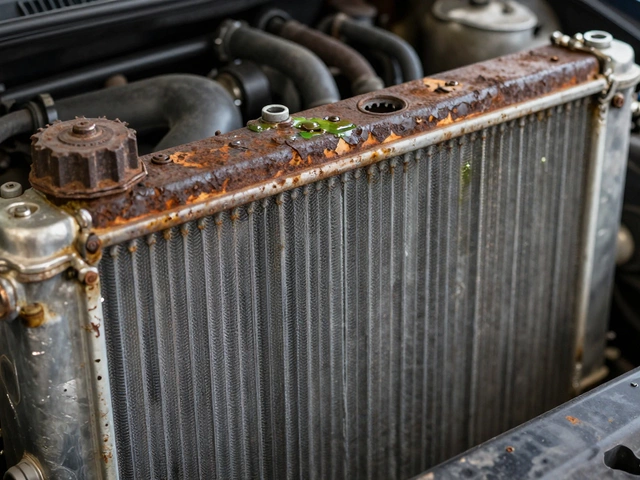
The heart of this system is the car radiator, a heat exchanger that transfers engine heat to the air flowing through it. It’s not going away, even as designs get smaller and smarter. Modern radiators are made of aluminum and plastic, they’re lighter, and they work harder than ever. But they still rely on the same basic principle: coolant flows through the engine, picks up heat, travels to the radiator, and loses that heat to the outside air. If the radiator clogs, leaks, or the fan stops working, the whole system fails. And that’s not just a repair—it’s a breakdown waiting to happen. The coolant itself is another key player. It’s not just water. It’s a mix of ethylene glycol and additives that prevent freezing, boiling, and corrosion. Old or dirty coolant turns into sludge, clogs passages, and turns your cooling system into a time bomb. You can’t see it working until it stops—and then it’s too late.
There’s also the electric vehicle cooling, a more complex version that uses pumps, heat exchangers, and sometimes liquid cooling loops for the battery pack. It’s not just about the engine anymore—it’s about keeping the battery at the perfect temperature so it lasts longer and charges faster. This means even if you drive an EV, you still need to check coolant levels, inspect hoses, and watch for warning lights. The rules have changed, but the stakes haven’t. And while you might think your car’s cooling system is "set and forget," the truth is, it’s one of the most overlooked parts of maintenance. A small leak, a worn water pump, or a failing thermostat can creep up on you. One day, your temperature gauge climbs. The next, you’re stranded.
What you’ll find below are real stories from drivers who ignored the signs—until it cost them. You’ll see how a bad radiator leads to a burnt clutch, why a clogged cooling system can kill your AC, and how modern cars are changing the game. No fluff. No theory. Just what you need to know to keep your engine running cool, even when the weather isn’t.
-
7 Apr
- Recent
- Popular