Car Radiator Problems: Signs, Causes, and What to Do Next
When your car radiator, the main component that cools your engine by circulating coolant. Also known as engine radiator, it’s not just a metal box under the hood—it’s the lifeline of your engine’s temperature control. If it fails, your engine doesn’t just overheat. It can seize, warp, or blow a head gasket—all within minutes. And yes, even electric cars have cooling systems. They might not use a traditional radiator, but they still rely on liquid cooling to manage battery and motor heat. Ignoring radiator problems isn’t laziness—it’s a gamble with your wallet.
Common radiator failure, when the radiator can no longer regulate engine temperature effectively shows up in ways you can’t miss: steam rising from under the hood, the temperature gauge climbing into the red, or coolant puddles under your car after parking. Sometimes it’s quieter—a faint sweet smell, like maple syrup, means coolant is leaking and burning off. Other times, it’s loud: a gurgling noise from the dashboard area means air is trapped in the cooling system, a sign the radiator cap or hoses are failing. These aren’t vague warnings. They’re red flags tied directly to the cooling system, the network of hoses, thermostat, water pump, and radiator that keeps your engine from overheating. If one part breaks, the whole system suffers. A bad thermostat, a clogged hose, or a cracked radiator tank all lead to the same end: engine damage.
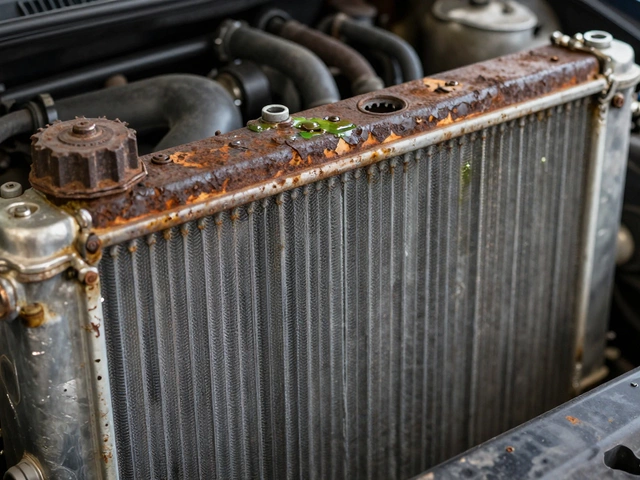
What makes radiator problems worse is how slow they sneak up. You don’t wake up one day with a blown engine. You start noticing you’re topping off coolant every week. Then every few days. Then the warning light comes on during your commute. By then, the damage is done. Replacing a radiator isn’t cheap—especially if the water pump or head gasket already gave out. But catching it early? That’s just a matter of knowing what to look for. You don’t need a mechanic to spot a cracked hose or a rusty radiator tank. A quick visual check, a sniff test, and watching your temperature gauge can save you hundreds—or thousands.
And here’s the truth: modern cars don’t make radiators easier to fix. They’re smaller, packed tighter, and often made of plastic and aluminum that cracks easier than old-school copper. So even if your car is new, it’s not immune. The posts below cover everything from how to tell if your radiator is failing to why ignoring a small leak leads to big bills. You’ll find real examples of what failed radiators look like, how long replacements take, and what to ask a mechanic so you don’t get overcharged. No fluff. No theory. Just what you need to know before your engine turns into a paperweight.
-
8 Jun
- Recent
- Popular