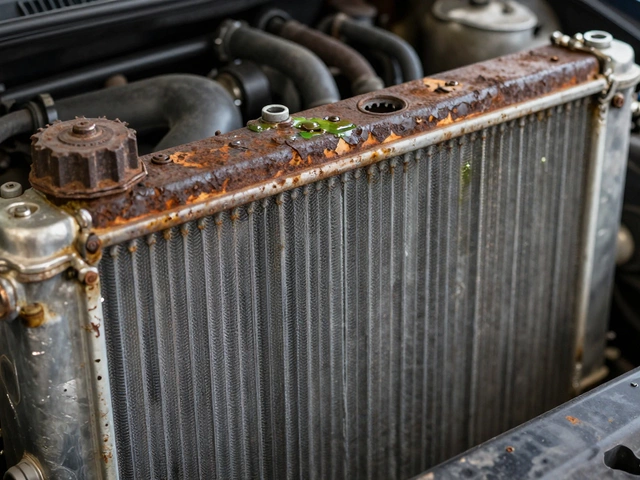
Cracked Radiator: Signs, Risks, and What to Do Next
When your cracked radiator, a damaged component in your car’s engine cooling system that allows coolant to leak. Also known as a leaking radiator, it’s one of the most urgent issues you can face on the road. If you ignore it, your engine will overheat—and that’s not just a warning light. It’s a ticket to a $2,000 repair bill or worse.
A cracked radiator doesn’t always leak right away. Sometimes it starts as a tiny hairline fracture, hidden under dirt or corrosion. You might notice steam coming from under the hood, a sweet smell like syrup, or puddles of green, orange, or pink fluid under your car. These aren’t just inconveniences—they’re red flags. The cooling system, the network of hoses, thermostat, water pump, and radiator that keeps your engine at the right temperature is designed to handle pressure and heat. A crack breaks that balance. Coolant escapes, air gets in, and your engine starts running hotter than it should. Over time, this leads to warped cylinder heads, blown head gaskets, or even a seized engine. The radiator replacement, the process of removing a damaged radiator and installing a new one to restore proper engine cooling isn’t cheap, but it’s cheaper than replacing your entire engine.
What causes a radiator to crack? Age is the biggest factor. Most radiators last 8 to 12 years, but in places like India, where roads are rough and temperatures spike, they wear out faster. Poor maintenance plays a role too. If you never flush the coolant or use the wrong type, it turns acidic and eats away at the metal or plastic. A bad thermostat can cause pressure spikes, and a loose hose clamp can rub against the radiator until it wears through. Even a minor collision—like hitting a pothole hard—can crack the tank or core.
You don’t need to be a mechanic to spot trouble. Check your coolant level every few weeks. If it drops fast, something’s leaking. Listen for hissing noises when the engine is hot. Look for discolored streaks around the radiator cap or bottom tank. If your temperature gauge creeps into the red, stop immediately. Don’t keep driving. Let it cool. Then check the radiator for visible cracks or wet spots.
Some people try to patch a cracked radiator with sealant. It might work for a week. But it’s a band-aid on a broken bone. The pressure and heat in the system will eventually break the seal. A proper fix means replacing the radiator—and often the thermostat, hoses, and coolant at the same time. Skip the cheap parts. A low-quality replacement can crack again in months.
What you’ll find below are real stories from car owners who ignored the signs, and those who acted fast. You’ll see how much a radiator replacement actually costs in India, what symptoms to watch for before it’s too late, and how to avoid being scammed by repair shops. This isn’t theory. It’s what happens when you drive with a cracked radiator—and how to stop it before it costs you everything.
-
3 Feb
- Recent
- Popular