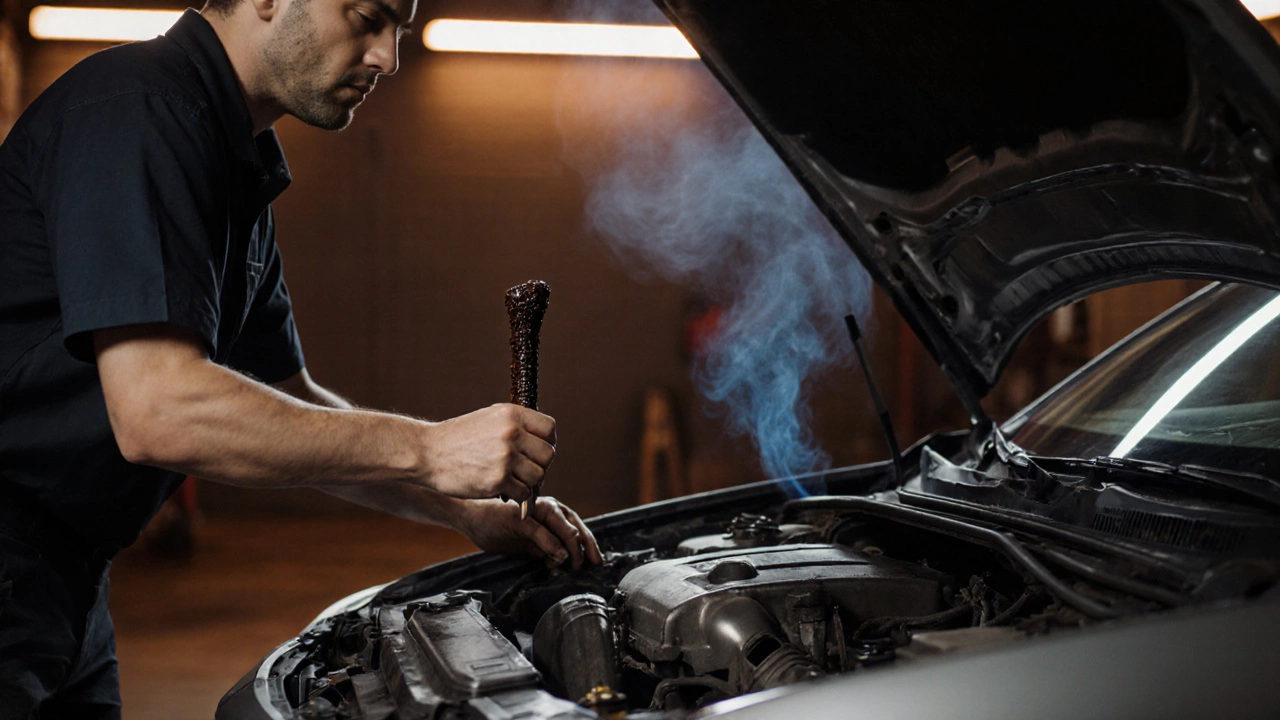
Dirty Engine Oil Symptoms: Signs Your Car Needs an Oil Change
When your dirty engine oil, used motor oil that has lost its ability to lubricate and clean due to heat, dirt, and breakdown. Also known as contaminated engine oil, it’s one of the most common but ignored causes of premature engine failure. Most drivers don’t check their oil until the dashboard light flashes—but by then, the damage is already happening.
Engine oil, a critical fluid that cools, cleans, and lubricates internal engine parts turns dark and thick over time because it’s doing its job: trapping metal shavings, soot, and combustion byproducts. But when it gets too dirty, it stops flowing properly. That means parts like the camshaft, pistons, and bearings start grinding against each other. You might not feel it right away, but your engine’s lifespan is shrinking. And if you skip oil changes, you’re not just saving money—you’re risking a $3,000+ engine rebuild.
Here’s what to look for: if your oil looks like thick mud instead of smooth amber, that’s a red flag. If you notice a burning smell under the hood, or your engine runs louder than usual, especially at idle, that’s often dirty oil failing to cushion moving parts. A check engine light paired with poor acceleration? Could be oil-related. Even a simple dipstick check can tell you a lot—if the oil feels gritty between your fingers, it’s time to change it. And don’t trust the color alone—some synthetic oils stay dark even when clean. The texture and smell matter more.
Oil contamination, the buildup of dirt, fuel, coolant, or metal particles in engine oil doesn’t happen overnight. It’s caused by short trips where the engine never warms up fully, leaking gaskets, or using low-quality oil. If you drive mostly in city traffic, stop-and-go, or in dusty areas, your oil degrades faster. That’s why a 6-month or 5,000-mile rule doesn’t work for everyone. Your driving habits matter more than the calendar.
What you’ll find below are real-world guides from drivers who’ve dealt with this exact problem. You’ll learn how to check your oil properly, what noises to listen for, how to tell if your oil filter is clogged, and why ignoring these signs leads to expensive repairs. We’ve pulled from posts about engine wear, oil change intervals, and even clutch and brake issues—because a dirty engine doesn’t just affect the motor. It strains everything connected to it. Whether you’re a DIYer or just want to know when to take your car in, these posts give you the facts—no fluff, no hype, just what actually happens when oil goes bad.
-
24 Oct
- Recent
- Popular