How Long to Change Clutch: Time, Cost, and What to Expect
When you're dealing with a failing clutch, the component that connects your engine to the transmission and lets you shift gears smoothly. Also known as a clutch assembly, it's one of those parts that works quietly until it doesn't—and then everything changes. If you've noticed slipping, grinding, or a pedal that feels spongy, your clutch is likely worn out. But how long does it actually take to replace it? And is it something you can do yourself, or should you leave it to a pro?
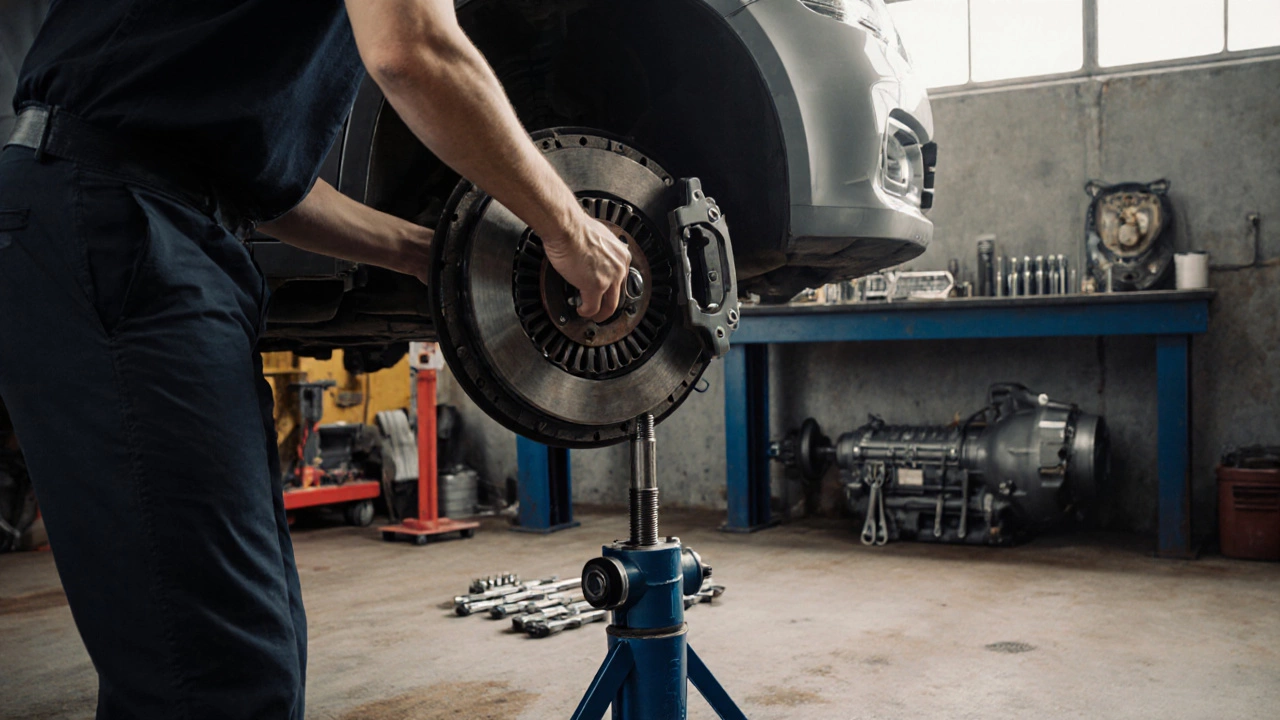
Most mechanics say a standard clutch replacement, the process of removing the old clutch and installing a new clutch kit. Also known as a clutch repair, it typically takes between 4 to 8 hours. That’s a full day’s work, even for experienced technicians. Why so long? Because the clutch isn’t just a single part—it’s a system. You’re dealing with the clutch disc, pressure plate, release bearing, and often the flywheel too. And to reach any of them, you have to pull the transmission out. That means lifting the car, draining fluids, disconnecting linkages, and carefully reassembling everything. No shortcuts here.
What affects the time? Your car’s make and model matters. A compact hatchback might take 4 hours. A heavy SUV or truck? Could be 8 hours or more. If the flywheel is warped or damaged, you’ll need to replace or resurface it, adding another hour or two. And if you’re doing it yourself? Double the time. First-timers often spend a weekend just figuring out where the bolts go. You’ll need a jack, transmission jack, torque wrench, and patience. A clutch kit, a bundled set of all the parts needed for a full replacement. Also known as a clutch package, usually costs between ₹8,000 and ₹20,000 in India, depending on brand and quality. Labor adds another ₹5,000 to ₹12,000. If you skip the kit and buy parts separately, you risk mismatched components that wear out faster.
Don’t wait until the clutch fails completely. Signs like a spongy pedal, difficulty shifting, or a burning smell mean it’s already on its last legs. Waiting could damage the flywheel or transmission—costing you thousands more. And if you’re the type who rides the clutch, revs high in traffic, or does frequent hill starts, your clutch might need replacing before 60,000 km. Others who drive gently can hit 1,00,000 km or more.
There’s no magic number for clutch life, but there are clear signals. You don’t need to be a mechanic to spot them. If your car hesitates when you press the gas after shifting, or if you have to press the pedal all the way to the floor to get power, your clutch is signaling trouble. It’s not a minor issue. It’s a safety and performance problem that gets worse fast.
Below, you’ll find real-world guides on what to expect when your clutch fails, how to spot wear before it’s too late, whether you can replace it yourself, and how much it really costs in 2025. No fluff. Just facts from people who’ve been there.
-
28 Oct
- Recent
- Popular