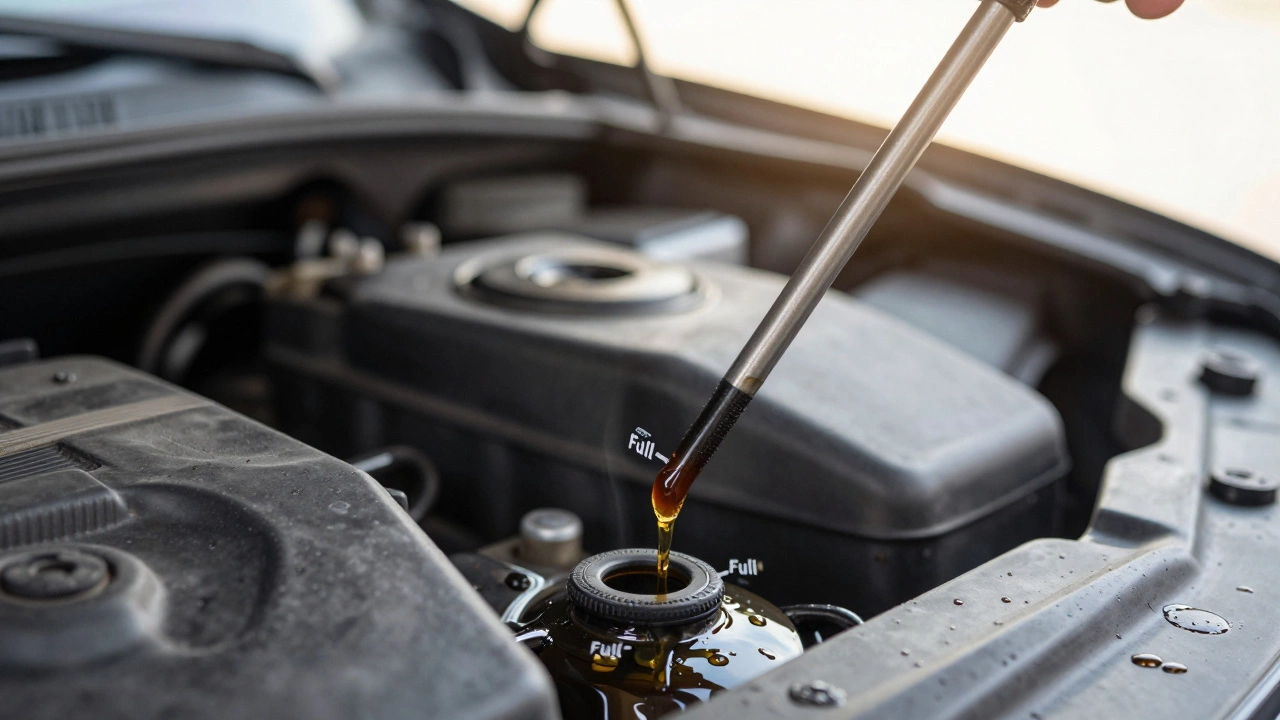
Oil Capacity: What You Need to Know About Engine Oil Levels and Maintenance
When you hear oil capacity, the total amount of engine oil your vehicle’s crankcase can hold. Also known as engine oil volume, it’s not just a number on a sticker—it’s the difference between your engine running smoothly and seizing up. Every car has a specific oil capacity, usually between 4 and 8 quarts, depending on the engine size and design. If you add too little, your engine doesn’t get enough lubrication. Too much, and you risk foaming, pressure build-up, and even damage to seals or the catalytic converter.
Engine oil, a vital fluid that reduces friction, cools parts, and cleans debris from the engine. It flows through tiny channels, coating pistons, bearings, and valves. Without enough of it, metal touches metal—and that’s how expensive repairs start. Motor oil, the specific type of oil designed for internal combustion engines. It comes in different viscosities like 5W-30 or 10W-40, and using the wrong one can affect oil flow, especially in cold weather. Your owner’s manual tells you exactly which grade and how many quarts your engine needs. Ignore that, and you’re guessing with your engine’s life.
Many people think oil changes are just about mileage, but oil capacity matters just as much. If you’re topping off between changes, you might be hiding a leak. If you’re overfilling because you "just want to be safe," you’re creating a new problem. Even a half-quart too much can cause issues. Mechanics often see engines with oil levels way above the dipstick mark—and it’s usually because someone poured in an entire extra bottle "just in case."
Some cars have dry sump systems or turbocharged engines that need more oil than standard models. Trucks and SUVs often hold more than compact cars. Electric vehicles don’t use engine oil at all, but that doesn’t mean oil capacity is irrelevant—it just means you’re not dealing with it. If you’re unsure, check your manual, look under the hood for a sticker, or search your exact make, model, and year online. Don’t rely on what worked for your neighbor’s car.
Knowing your oil capacity helps you spot problems early. If you’re using a quart every 1,000 miles, something’s wrong. If your dipstick shows nothing after an oil change, you didn’t add enough. And if you’re changing oil yourself, always measure what you pour in—not just eyeball it. A funnel and a measuring cup take 30 seconds and can save you hundreds.
Below, you’ll find real guides on what engine oil actually does, how to tell if your oil is dirty, what happens when you skip changes, and how much oil different vehicles need. No fluff. No theory. Just what works on the road in India’s heat, traffic, and dusty roads.
-
9 Dec
- Recent
- Popular