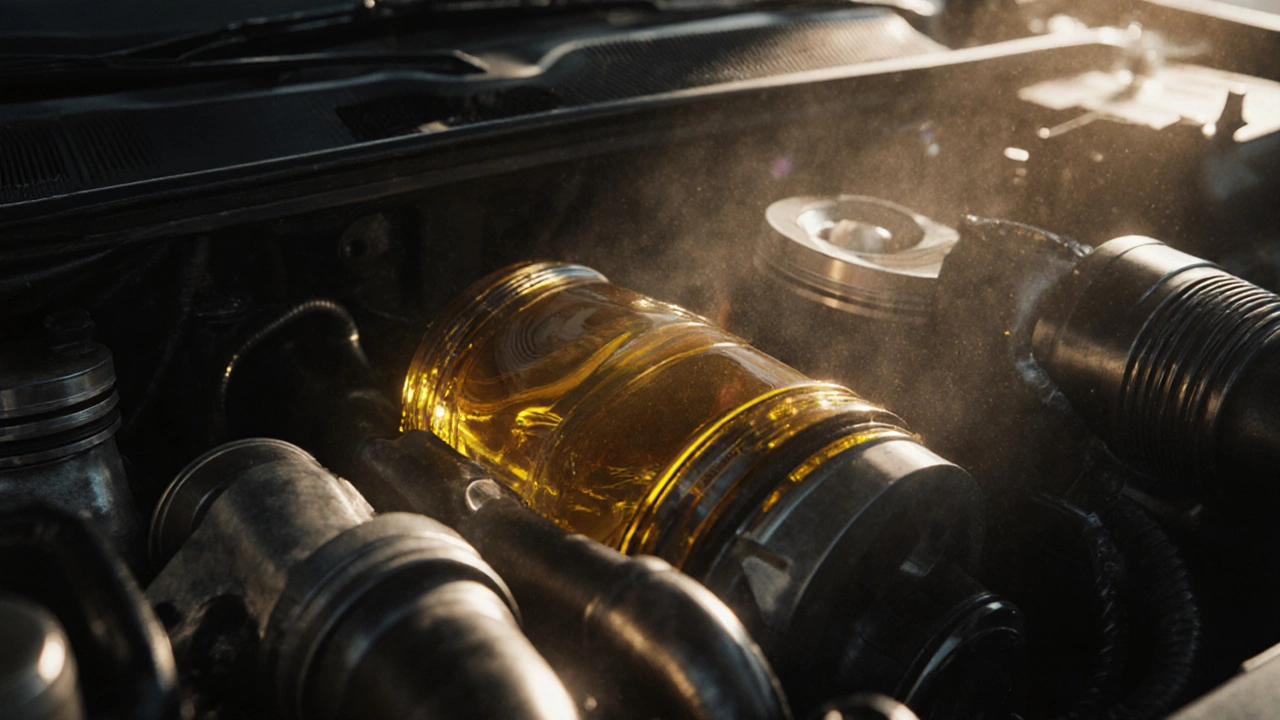
Oil Function in Cars: What It Does and Why It Matters
When you hear oil function, the role engine oil plays in reducing friction, cooling parts, and cleaning debris inside your engine. Also known as motor oil, it’s not just a lubricant—it’s the lifeblood of your engine. Without it, metal parts grind together, heat builds up fast, and your engine can seize in minutes. It’s not a luxury. It’s a requirement.
Dirty engine oil doesn’t just look bad—it loses its ability to protect. When oil gets contaminated with metal shavings, dirt, or fuel, it turns into an abrasive paste. That’s why you see posts about oil contamination signs, symptoms like dark sludge, low oil pressure, or engine knocking. These aren’t myths. They’re warning signals. A failing fuel pump or worn clutch might get attention, but if your oil isn’t doing its job, nothing else matters. Even the best brakes or suspension won’t help if your engine dies from overheating or lack of lubrication.
The oil function, its role in cooling, cleaning, and sealing engine components is why you need to check it every few thousand miles. You don’t need a garage to do it. Just pop the hood, pull the dipstick, and look. Is it thick and black? Does it smell burnt? That’s not normal. That’s a sign your oil has given up. And if you ignore it, you’re not saving money—you’re risking a $3,000 engine rebuild.
What you’ll find below aren’t just articles. They’re real fixes from real owners. From spotting bad oil before it kills your engine, to understanding why some cars lose oil pressure faster than others, to knowing when a simple oil change is enough and when you need more—this collection gives you the facts without the fluff. No jargon. No sales pitches. Just what you need to keep your car running, and your wallet intact.
-
28 Nov
- Recent
- Popular