Engine Oil Change Calculator
How Often Should You Change Your Oil?
Based on your driving habits and vehicle conditions
Your calculated oil change interval will appear here
Engine oil isn’t just something you pour into your car once a year. It’s the lifeblood of your engine. Without it, your car wouldn’t last more than a few minutes. But what exactly does engine oil do? It’s not just about keeping things from squeaking. It’s about survival.
Reduces Friction Between Moving Parts
Your engine has dozens of metal parts moving at high speeds-pistons, crankshafts, camshafts, valves. These parts rub against each other thousands of times per minute. Without oil, that friction would generate enough heat to melt metal. Engine oil forms a thin film between these surfaces, letting them slide smoothly instead of grinding together. Think of it like putting butter on a hot pan. Without it, everything sticks and burns. With it, things move cleanly.
Modern synthetic oils can reduce friction by up to 30% compared to older mineral oils. That means less wasted energy, better fuel economy, and less wear on expensive parts. A 2023 study by the Society of Automotive Engineers found that engines running on full synthetic oil showed 22% less internal wear after 50,000 miles than those using conventional oil.
Cools Engine Components
You might think the radiator does all the cooling. But that’s only half the story. Engine oil circulates through hot zones where coolant can’t reach-like the bottom of the pistons and the underside of the cylinder walls. As it flows, it picks up heat and carries it away to the oil pan or oil cooler, where it dissipates. In high-performance engines, oil cooling can account for up to 40% of total heat management. If your oil gets too old or too dirty, it loses its ability to absorb heat. That’s when engines start overheating-even if the coolant level looks fine.
Cleans Internal Engine Deposits
Combustion doesn’t happen perfectly. Tiny bits of carbon, soot, and unburned fuel build up inside the engine. Left alone, these turn into sludge that clogs passages and smothers moving parts. Engine oil contains detergent and dispersant additives that grab these particles and hold them in suspension. That’s why your oil turns dark after a few hundred miles-it’s doing its job. The dirty oil doesn’t mean it’s bad; it means it’s working.
Without these cleaning agents, sludge would form in the valve train, oil galleries, and around piston rings. That’s how engines lose power, start burning oil, and eventually seize. Modern oils are formulated to keep engines clean for 10,000 to 15,000 miles, depending on driving conditions.
Seals the Piston Rings
Pistons move up and down inside cylinders with a tiny gap between them. That gap is necessary for movement, but it also lets combustion gases escape into the crankcase. Engine oil fills that gap, creating a seal that keeps pressure where it belongs. This seal helps maintain compression, which is critical for power and efficiency. If the oil breaks down or becomes too thin, that seal weakens. You’ll notice it as reduced acceleration, rough idling, or blue smoke from the exhaust-signs that oil is leaking past the rings and burning in the combustion chamber.
Protects Against Corrosion
Even when your car sits idle, moisture builds up inside the engine. That moisture combines with combustion byproducts to form acids. Left unchecked, these acids eat away at metal surfaces, especially bearings and camshafts. Engine oil contains anti-corrosion additives that coat metal parts in a protective layer. This layer stays active even when the engine is off. That’s why changing oil regularly matters-even if you don’t drive much. A car driven only once a week is more at risk of corrosion than one driven daily, because condensation doesn’t get burned off.
Reduces Noise and Vibration
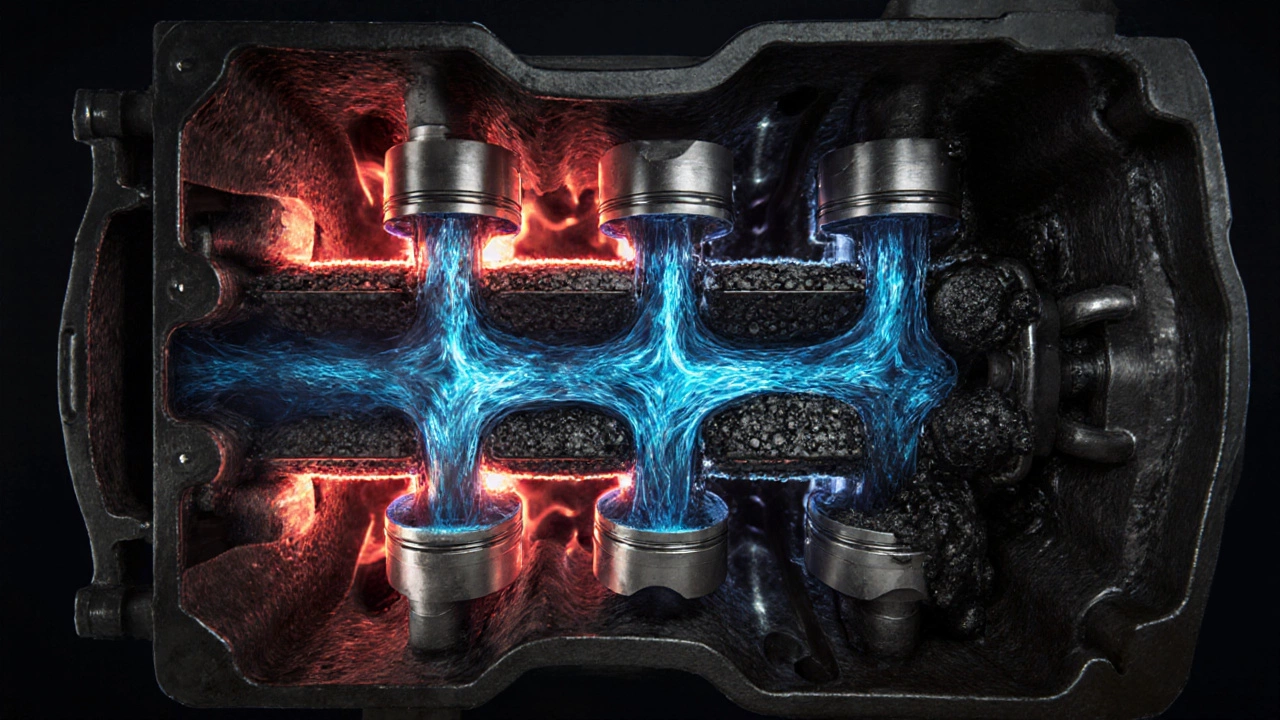
Ever notice how a well-maintained engine sounds smooth? That’s not just luck. Engine oil dampens the clatter of valves, the knock of connecting rods, and the rattle of timing chains. It acts like a cushion between metal components, absorbing shocks and vibrations. When oil is low or degraded, engines get louder. That ticking or knocking sound? It’s metal hitting metal. Not just annoying-dangerous. That noise often comes before serious damage.
Transfers Power in Hydraulic Systems
Many modern engines use oil to operate hydraulic components like variable valve timing (VVT) systems, hydraulic lifters, and turbocharger actuators. These systems rely on precise oil pressure to adjust timing and boost levels in real time. If the oil is dirty or too thick, these systems can’t respond quickly enough. Your car might feel sluggish, hesitate during acceleration, or throw a check engine light for “camshaft position correlation.” This isn’t a sensor issue-it’s an oil issue.
What Happens When You Skip Oil Changes?
Let’s say you drive 12,000 miles a year and skip oil changes for three years. What’s the real cost?
- Sludge builds up in oil passages, starving critical parts of lubrication.
- Piston rings stick, leading to oil consumption and loss of compression.
- Oil pump struggles to circulate thick, contaminated fluid, causing low pressure.
- Wear on bearings increases-main and rod bearings can fail without warning.
- Engine overheats more easily, especially under load or in hot weather.
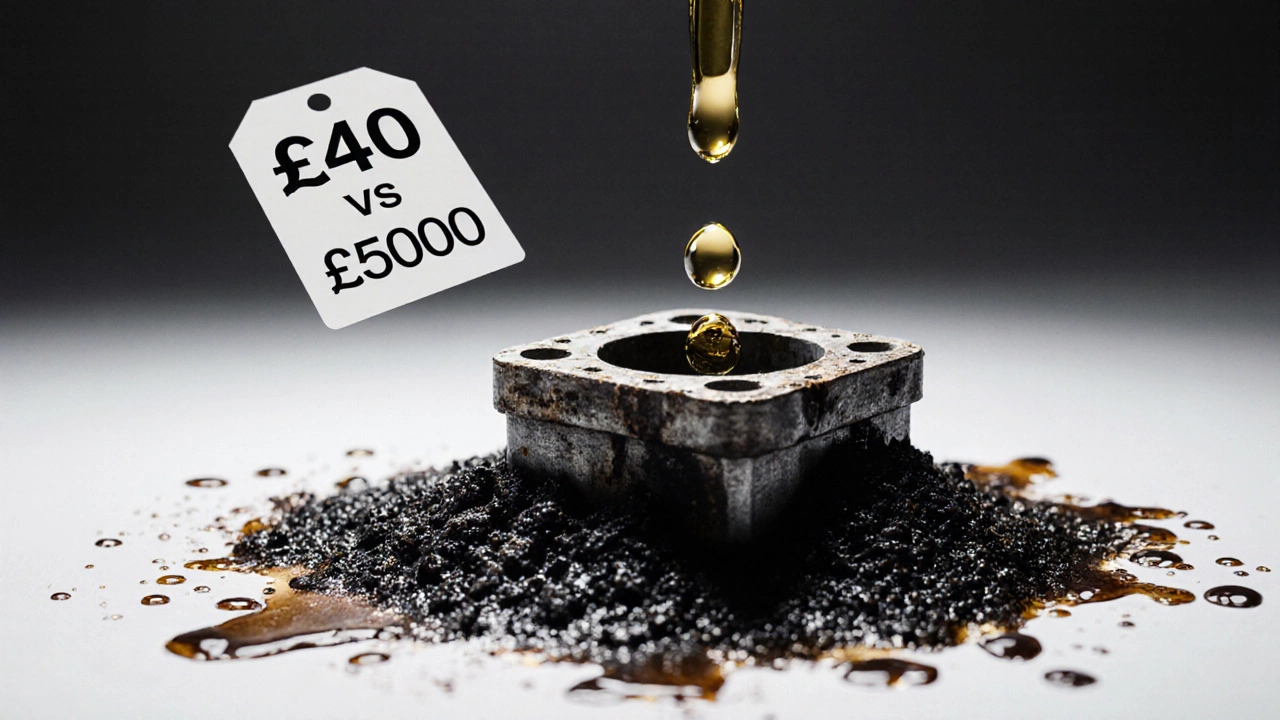
By year three, you’re not just risking a repair-you’re risking a full engine replacement. A new engine costs between £2,500 and £6,000 in the UK. An oil change? £40 to £80, depending on the car and oil type.
Choosing the Right Oil Matters
Not all engine oils are the same. The right one depends on your car’s make, model, and driving habits. Look at the viscosity rating-like 5W-30 or 10W-40. The number before the W tells you how well it flows in cold weather. The number after tells you how thick it stays when hot. Using the wrong viscosity can cause poor cold starts or inadequate protection at high temperatures.
Always follow your manufacturer’s recommendation. A 2022 Ford Focus needs 5W-20 full synthetic. A 2020 BMW 3 Series needs 0W-40. Using 10W-40 in either can cause premature wear or even void your warranty.
Also, synthetic oils aren’t just for performance cars. They’re better for everyday driving: longer life, better cold-start performance, and superior protection under stop-and-go traffic. Most new cars today come filled with synthetic oil for a reason.
How Often Should You Change It?
The old rule-every 3,000 miles-is outdated. Most modern cars recommend 7,500 to 15,000 miles, depending on oil type and driving conditions. But here’s the catch: if you drive short trips in cold weather, stop-and-go traffic, or tow heavy loads, you’re putting extra stress on the oil. That’s considered “severe service.” In those cases, change oil every 5,000 miles or six months, whichever comes first.
Check your owner’s manual. If it says “severe service” and you do that often, don’t ignore it. Your car isn’t lying. It’s telling you the truth about how hard you’re pushing the engine.
Signs Your Oil Needs Changing
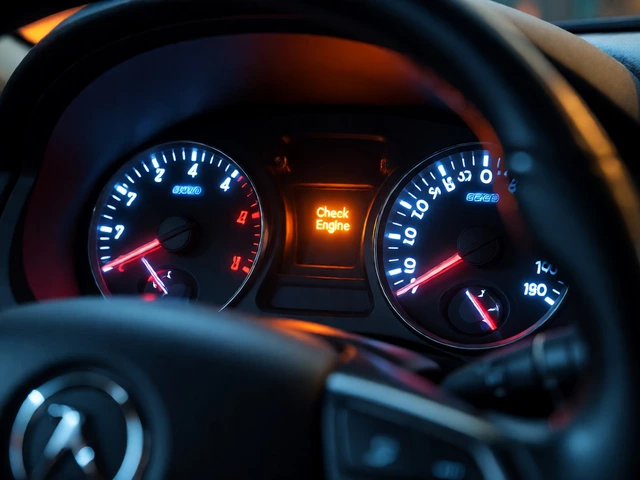
- Check engine light comes on (often linked to low oil pressure or sludge buildup)
- Oil looks dark and gritty on the dipstick
- Engine runs louder than usual
- Smoke from the exhaust (especially blue smoke)
- Oil warning light flashes
If you see any of these, don’t wait. Drive to a garage. Or check the oil yourself. A quick dipstick check takes 30 seconds and can save you thousands.
Final Thought: Oil Is Cheap. Engine Repair Isn’t.
Engine oil is one of the cheapest things you can spend money on to protect your biggest investment-your car. It doesn’t need to be fancy. It just needs to be right, and it needs to be changed on time. You don’t need to go to a dealership. You don’t need to buy the most expensive brand. Just use the correct type, change it when you should, and your engine will thank you for 150,000 miles or more.
Can I just top up my engine oil instead of changing it?
Topping up oil is fine if you’re between changes and the level is low. But it doesn’t replace an oil change. Old oil still has dirt, metal particles, and broken-down additives. Adding fresh oil just dilutes the bad stuff-it doesn’t clean it. Eventually, the sludge and contaminants will still damage your engine. Always follow the manufacturer’s oil change schedule, even if you top up regularly.
Does engine oil expire?
Yes, engine oil can degrade over time, even if the car isn’t driven. Unopened bottles last about 5 years if stored properly-in a cool, dry place away from sunlight. Once opened, it’s best used within a year. Old oil loses its additives and becomes less effective at protecting your engine. If you’ve had a bottle sitting in your garage for three years, don’t assume it’s still good.
Can I use diesel oil in a petrol engine?
Technically, yes-but only if it meets the right specifications. Diesel oils often have higher detergent levels and different additive packages. Most modern oils are formulated to work in both petrol and diesel engines, as long as they carry the correct API or ACEA rating (like API SP or ACEA C3). Always check your owner’s manual. Using oil not approved for your engine can cause damage or void your warranty.
What happens if I overfill the engine with oil?
Overfilling can cause serious problems. Too much oil creates excess pressure in the crankcase. This can force oil past seals and gaskets, leading to leaks. It can also cause the crankshaft to whip the oil into foam, which reduces lubrication and leads to overheating. In extreme cases, it can damage the catalytic converter. Always check the dipstick and never go above the max mark.
Is synthetic oil better than conventional oil?
Yes, in almost every way. Synthetic oil is engineered for better performance in extreme temperatures, lasts longer, flows better in cold weather, and resists breakdown under high heat. It also provides better protection against wear and sludge. While it costs more upfront, it often allows longer oil change intervals and reduces engine wear over time. For most modern cars, synthetic is the standard-and sometimes required.
Next Steps
Check your oil level now. Pull the dipstick, wipe it clean, reinsert it, and pull it out again. Is the level between the min and max marks? Is the oil dark but still fluid, or thick and gritty? If it’s low, top it up with the correct type. If it’s dirty, plan your next oil change. Don’t wait for a warning light. Your engine doesn’t scream before it fails-it just stops.
Keep a record of your oil changes. Note the date, mileage, oil type, and brand. That way, you’ll never guess when it’s due. And if you ever sell the car, a clean service history adds value.
Engine oil doesn’t make headlines. But it keeps your car alive. Treat it like the critical part it is-and your engine will last longer than you expect.