Overfill Oil: What Happens When You Put Too Much in Your Engine
When you overfill oil, adding more engine oil than your car’s crankcase can safely hold, you’re not helping your engine—you’re setting it up for trouble. It’s a simple mistake: you top off the oil, think you’re being careful, and don’t realize you’ve crossed the line. But engine oil level isn’t a "more is better" situation. Too much oil creates pressure, foam, and heat that your engine wasn’t designed to handle.
Oil overfill symptoms don’t always show up right away, but they’re serious. You might hear a knocking noise from the crankshaft churning through thick, aerated oil. Your exhaust could start smoking blue—oil burning in the combustion chamber because excess oil is being sucked past the piston rings. Your oil pressure sensor might go haywire, or your engine might lose power suddenly. Even worse, engine damage from oil can happen fast: bent connecting rods, damaged seals, or a ruined catalytic converter from oil entering the exhaust. And none of it is covered by warranty if you overfilled it yourself.
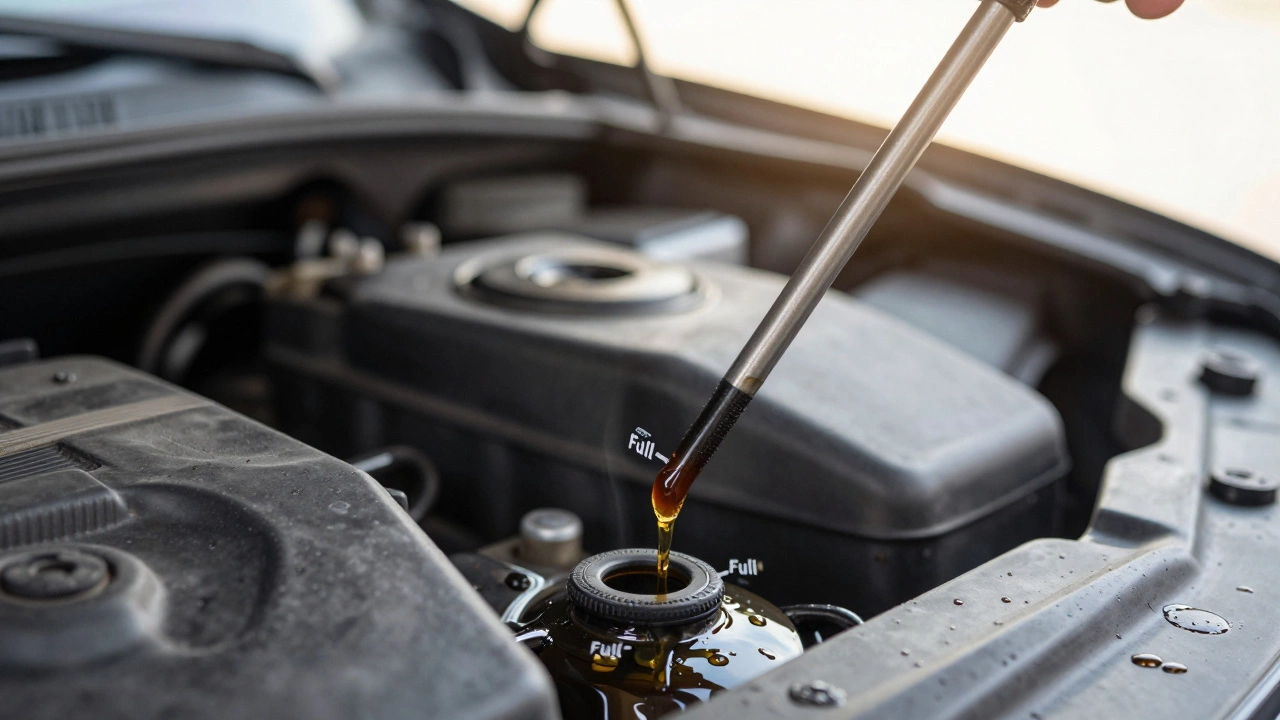
Most cars hold between 4 and 7 quarts of oil. The dipstick has clear marks for minimum and maximum. If you’re above the max line—even by half a quart—you’ve already entered risky territory. It’s not just about the amount, either. If you’ve recently had an oil change and the mechanic overfilled it, you might not know until it’s too late. That’s why checking your oil level yourself, a week after any service, is one of the smartest habits any car owner can have.
Fixing an overfilled engine is simple: drain the excess. You don’t need to replace the whole oil system. Just remove the drain plug slightly, let a little out, then recheck. But if you’ve driven with too much oil for days or weeks, you might need a professional inspection. Look for oil leaks, strange noises, or loss of power—those are red flags.
The motor oil capacity in your owner’s manual isn’t a suggestion. It’s the limit. Going over it doesn’t make your engine last longer. It doesn’t improve performance. It just increases the chance of expensive, avoidable failure. The posts below show real cases where overfilling led to breakdowns, what mechanics found inside the engines, and how to check your oil correctly—so you never have to guess again.
-
9 Dec
- Recent
- Popular